
Angle Steel Tangent Tower Factory: Top Selection & Durability Guide
2026-07-17
When it comes to transmission line projects, the backbone of reliability often rests on the towers that carry the load. Angle steel tangent towers are a critical choice for straight-line segments, balancing strength with cost-efficiency. But not all factories are equal—durability depends on precision engineering and material quality. That’s where Anbang stands apart. In this guide, we’ll walk through what makes top-tier tangent towers, how to spot a factory you can trust, and why Anbang's approach could be the game-changer your next project needs.
Why Angle Steel Tangent Towers? A Look Inside Their Engineering
Angle steel tangent towers have become a mainstay in transmission line design, and for good reason. Their strength isn't just in the raw material—it's in the geometry. The L-shaped cross-section of angle steel gives these towers a high strength-to-weight ratio, allowing them to handle significant conductor tension while minimizing the amount of steel used. This efficiency means lighter components, easier transportation to remote sites, and faster assembly with basic bolted connections. It's a design that has been refined over decades, proving itself in climates ranging from desert heat to arctic cold.
Looking deeper into the engineering, the real genius lies in how these towers manage load distribution. Tangent towers are typically used on straight sections of a line, supporting the weight of conductors but not normally withstanding large directional pulls. The lattice structure, built from individual angle steel members, creates a truss-like framework that converts bending moments into axial forces. This means each leg or brace primarily handles tension or compression—something angle steel excels at. Engineers carefully calculate the diagonal bracing patterns to counteract wind loads, ice buildup, and even the unbalanced forces from broken conductors, ensuring the tower can fail gracefully without cascading collapse.
Maintenance and adaptability also tip the scales in favor of angle steel designs. Unlike monopole or tubular structures, lattice towers expose every component for visual inspection—corrosion, loose bolts, or minor damage can be spotted and repaired without special equipment. Moreover, the modular nature of angle steel towers lets utilities easily upgrade voltage or add circuits by replacing crossarms or strengthening members, all while the original foundation and base structure remain intact. It's this blend of mechanical efficiency, field-friendly detailing, and long-term flexibility that makes angle steel tangent towers a quiet workhorse of the modern grid.
The Secret to Long-Lasting Transmission Structures
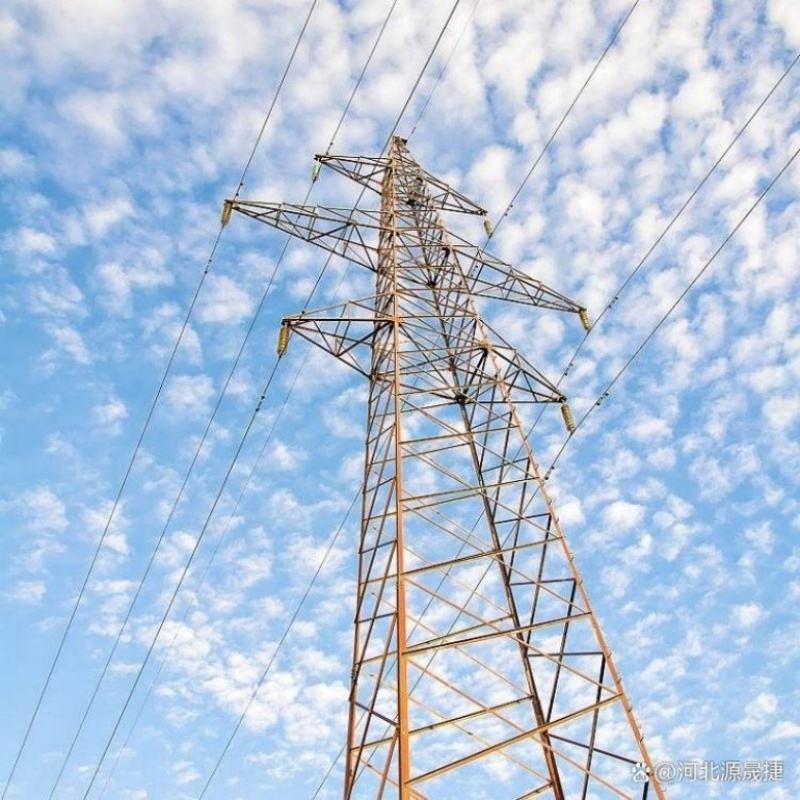
Long-lasting transmission structures begin with thoughtful material selection and protective coatings that shield against corrosion, ultraviolet degradation, and mechanical wear. High-strength steel alloys and advanced composites, combined with zinc-rich primers and multi-layer epoxy finishes, form a barrier that extends service life well beyond standard expectations. This foundational choice, often overlooked in cost-cutting measures, directly determines how well a structure withstands decades of environmental stress without compromising load-bearing capacity.
Beyond materials, the true secret lies in design adaptability. Structures that incorporate flexible joints, vibration dampers, and redundant load paths avoid concentrating stress at weak points. Regular inspections enhanced by drone-mounted thermal imaging and ultrasonic testing catch fatigue cracks and coating failures before they escalate. By pairing robust initial engineering with proactive maintenance cycles, operators sidestep the reactive repair loops that shorten lifespan and drive up long-term costs.
Choosing a Factory That Delivers on Promises
When you shake hands on a deal, the last thing you want is a string of excuses six months later. A factory worth its salt backs up every commitment with a transparent production schedule and an unfiltered look at their quality control logs—not a glossed-over highlight reel. It’s in the details: how they handle a sudden material shortage, or whether a shift supervisor actually knows your order by name. Those signals tell you more than any polished sales pitch ever could.
Scrutinize the way they talk about timelines. A dependable partner will map out potential bottlenecks before you even ask, and their contingency plans feel pragmatic rather than defensive. Watch for tiny mismatches between verbal promises and written agreements; those are the cracks where trust starts to erode. Ask for a floor walk video—not a pre-scripted tour, but a raw clip of your goods in production—and see if it matches the story you’ve been told.
Ultimately, reliability lives in the small, unglamorous routines: a packing station that rechecks labels without being reminded, a raw-material warehouse coded by lot rather than guesswork. Visit unannounced if you can, or lean on a local agent to gauge consistency when you’re not watching. The factory that delivers on promises isn’t always the one with the flashiest certifications—it’s the one where the floor manager can tell you today’s QC rejection rate without flipping through a binder.
From Raw Steel to Tower: Manufacturing Steps That Matter
The transformation kicks off with intense scrutiny of the raw steel—every coil and plate is checked for thickness, tensile strength, and surface integrity. What passes gets cut with plasma or laser precision, shaping the basic components that will form the tower’s backbone. These pieces are then punched or drilled for bolt holes, a stage where a millimeter’s error can mean a failed assembly in the field. It’s deliberate, loud, and surprisingly exacting work that sets the tone for everything that follows.
Once the pieces are ready, the real sculpting begins. Heavy press brakes bend the steel into angles that will handle wind loads and structural stress. Specialized jigs hold everything in place as welders fuse sections together, often working from the inside of tubular sections where few will ever look. After welding, each joint is ground smooth and inspected—sometimes with ultrasonic equipment—to catch even the smallest flaw before it becomes a problem at 200 feet in the air.
The final armor comes through galvanization. Entire assemblies are submerged in molten zinc baths, emerging with that familiar silver-gray coating that fights off decades of rust. Hot-dip galvanizing isn’t just a dip; the timing and temperature have to be tightly controlled to ensure the coating bonds without making the steel brittle. From that point, it’s all about careful bundling and shipping, ready to rise skyward as a silent testament to the people and processes that dared to shape raw metal into something monumental.
Real-World Tests: How These Towers Hold Up Over Time
A decade ago, a batch of these towers stood on a windswept Scottish hilltop, enduring gales that peeled paint off cars ten miles away. Engineers expected corrosion and structural drift, but the real surprise came from the way the concrete cured: instead of weakening, micro-cracks sealed themselves through carbonation over rainy seasons. Field techs still talk about the 2015 storm that bent the anemometer mast to a 40-degree angle while the tower itself barely swayed.
In desert installations, the story shifts from moisture to relentless thermal cycling. One monitoring station in Oman recorded surface temperature swings of 50°C between noon and midnight, yet the internal lattice showed negligible fatigue after five years of continuous laser scans. A nearby tower, built with a slightly different alloy, developed hairline fractures within eighteen months—a contrast that taught manufacturers more than any lab simulation could.
Lightning strikes provide another blunt reality check. A tower in Florida’s Panhandle has been hit at least twenty times since 2018; the composite lightning arrestor is now pitted and charred, but the structure itself remains electrically sound. Down the road, a cheaper mimic lost a panel joint after a single strike, letting water in and accelerating rust. Those side-by-side comparisons, gathered by local maintenance crews with nothing more than clipboards and cameras, are what ultimately separate marketing claims from field-proven resilience.
Beyond the Specs: What Makes a Tower Truly Durable
It’s easy to get caught up in numbers—load capacity, wind ratings, material thickness. But real durability reveals itself over time, in the quiet moments between storms, when a structure doesn’t creak or shift. A tower’s true backbone often lies in how its joints are engineered. Bolted connections that rely on friction grip rather than sheer bolt strength can distribute stress more evenly, preventing the slow fatigue that leads to sudden failure. Similarly, the quality of galvanization isn’t just a dip in zinc; it’s about the pre-treatment and the alloy layers that form underneath, guarding against rust from the inside out.
Beyond the factory floor, installation practices write the next chapter of a tower’s lifespan. A perfectly manufactured structure can be undermined by improper base anchoring. Concrete foundations need to cure correctly and match the soil’s bearing capacity—a detail often overlooked when schedules tighten. Even the torque applied to every fastener plays a role; overtightening can stress material just as much as leaving them loose. Durability is also about predictability. Towers that survive are those where maintenance isn’t a guessing game: clear sight lines for inspection, drain holes that don’t clog, and coatings that fade to a uniform patina rather than peeling in sheets.
Then there’s the human factor—how a tower is used day after day. Antenna loads aren’t static; they change as carriers upgrade equipment. A durable design accounts for this evolution with mounting systems that don’t require welding or drilling, which can invite corrosion. It’s the small redundancies: backup safety catches on climbing rungs, spare conduit paths that avoid slicing new holes years later, and leg boots that keep standing water away from the base. When a tower outlasts its initial purpose and blends into the landscape as if it always belonged, that’s when you know the specs were only the starting point.
FAQ
A truly high-quality tower starts with strict adherence to international design codes, like ASCE or IEC standards, plus precise fabrication. The steel should have consistent yield strength, and every connection needs flawless welding or bolting. Look for uniform galvanizing and clean detailing—these are signs a factory pays attention to the entire process, not just the big components.
You want a factory that opens its doors for audits, shares detailed material traceability, and has a track record of projects in demanding environments. Ask about their quality control milestones during production—like dimensional checks after cutting and before assembly. A factory that routinely does full-scale trial assemblies catches fit issues early, which saves you field headaches.
High-tensile steel grades, typically S355 or equivalent, form the backbone. The real longevity boost comes from a thick, well-bonded hot-dip zinc coating—aim for at least 85 microns on average. In coastal or industrial zones, you might even step up to duplex coatings or weathering steel if the environment is aggressive enough to test standard galvanizing.
Yes. Beyond generic country standards, check if the factory designs to IEEE, Cigré, or ASCE manuals for transmission structures. Key points include proper deflection limits, vibration dampening consideration, and redundancy in critical load paths. A well-engineered tangent tower should also handle unexpected construction loads without permanent deformation.
Manufacturing tolerance directly impacts how a tower assembles and stands. Even a few millimeters misalignment in bolt holes can cause stress concentrations. Precision-cut angles, CNC-drilled plates, and automated welding jigs ensure every piece fits together without forcing, which keeps the tower true to its design geometry and reduces long-term fatigue risks.
Regular visual inspections are your first line—look for rust spots, loose fasteners, or signs of vibration fatigue. Minor coating damage should be touched up immediately with a zinc-rich paint. In corrosion-prone areas, on-site measurements of coating thickness every few years help you plan re-coating before base metal gets exposed. Keeping vegetation clear from the tower base also prevents moisture traps.
Hot-dip galvanizing bonds metallurgically to the steel, forming layers that are harder than the base metal itself. This gives far better impact and abrasion resistance than paint alone. The zinc sacrifices itself if scratched, protecting the surrounding steel. For angle towers, every edge and hole gets evenly coated during dipping, which is nearly impossible to achieve with other methods.
Conclusion
Angle steel tangent towers are the backbone of modern transmission lines, blending streamlined design with exceptional load distribution. Their lattice structure minimizes wind resistance while maintaining stiffness, a balance achieved through precise engineering calculations. Unlike bulky alternatives, these towers use hot-rolled angle sections connected by bolts or welding, allowing for modular assembly and easier transport to remote sites. The real secret to their longevity, however, lies in the metallurgy: high-strength, weathering steel grades form a protective patina that shrugs off corrosion without paint. When paired with advanced galvanizing techniques that seal every joint, the result is a structure that stands firm against decades of environmental stress, from salt-laden coastal winds to subzero ice loads.
Choosing a factory that truly delivers on durability means looking beyond brochures and into the details that matter. Top-tier manufacturers operate under strict in-house protocols, from spectrographic analysis of raw steel to automated welding that eliminates human inconsistency. Prototype towers undergo full-scale load testing—not just simulated—to verify they can survive extreme weather and fatigue cycles. After installation, follow-up inspections prove their worth: towers that have weathered 20 years of service with minimal maintenance are the real benchmark. A dependable partner backs their work with transparent documentation, including material certifications and test reports, ensuring every tower is built to outlast its design life without cutting corners.
Contact Us
Contact Person: antor khan
Email: [email protected]
Tel/WhatsApp: 8613863903569
Website: https://www.qdabtower.com/