
Best Stem Caster Wheels Wholesale: Your Complete Buying Guide for Bulk Orders
2026-09-26
Buying stem caster wheels in volume can feel like a race to the bottom—until a batch fails under load or doesn't fit your mounting holes. This guide lays out the key specs, hidden cost drivers, and negotiation points that separate a smart bulk order from an expensive mistake. Along the way, we'll show you how CMCL helps buyers lock in consistent quality without the usual back-and-forth.
Why Wholesale Pricing Often Hides What You Need to Know About Stem Casters
Wholesale quotes for stem casters rarely tell you much beyond a price per unit. A batch of gray casters at $2.80 each might look like a win until you unpack them and find the stem is 3/8 inch instead of 7/16, the wheels are hard plastic meant for carpet, and the swivel race has enough play to wobble under a loaded cart. That's where the hidden money goes.
Bulk pricing also nudges buyers to compare only the line total, so load ratings get ignored. One vendor's 250-pound caster might be tested with the wheel locked straight ahead on smooth steel, while another's 200-pound rating assumes daily movement over cracked floors. The cheaper option often survives for a few weeks before the tread flattens or the stem bends. Replacing half the casters after a quarter wipes out whatever the wholesale discount saved.
There's also the matter of stem mounting style. Grip ring stems, threaded stems, and expanding stems all look similar in a thumbnail photo, but they are not interchangeable. Wholesale listings that don't spell out the stem length or finish leave you guessing whether the caster will seat fully in the frame tubing. That kind of uncertainty isn't a pricing detail; it's a fit-up failure waiting to happen.
Nylon, Polyurethane, and Rubber Wheels Without the Marketing Jargon
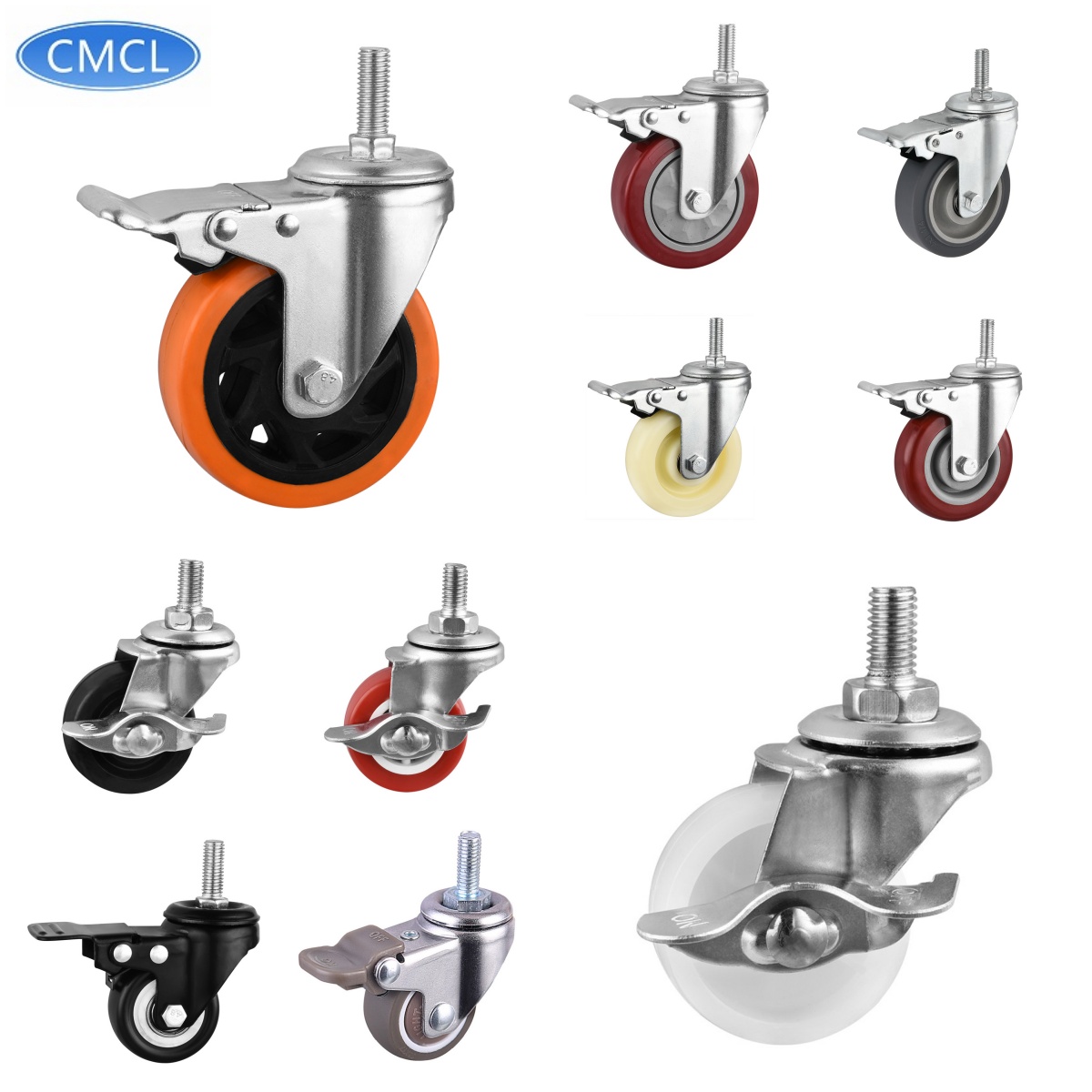
Nylon wheels are the workhorses you reach for when the floor is rough and the cart is heavy. They don't absorb much shock, so every crack in the concrete comes straight up through the handle, but they also won't flatten out if you leave a loaded pallet sitting over the weekend. If you're moving steel bins across a pitted warehouse floor, nylon is the boring, reliable choice that keeps rolling long after softer materials would have chunked out.
Polyurethane wheels sit in the middle ground: they have just enough give to quiet down the rattle on smooth concrete, but not so much that you're fighting the cart to get it moving. The trade-off is heat buildup—run them too fast with a heavy load and the tread can soften or even delaminate from the core. For most indoor carts and light assembly lines, though, they're the default because they protect the floor and your ears without feeling mushy.
Rubber wheels are the ones you pick when the load is fragile or the route goes over expansion joints, thresholds, and the occasional sidewalk. They grip well on wet ramps and take the edge off vibration, but they wear faster than the other two and can leave black marks on light-colored floors. If you've ever pushed a hospital cart down a tiled hallway and noticed it didn't chatter at every grout line, you were probably on rubber—and you also know why they get replaced more often.
How to Work Out Realistic Load Capacity Before You Order a Single Caster
Most people start by taking the total weight of a cart or machine and dividing it by four, assuming each caster carries an equal share. That rarely matches reality. Floors are rarely level, loads are seldom centered, and pushing or towing introduces extra force that shifts weight onto one or two wheels. Instead of guessing, place a scale under each mounting point with the load arranged as it will be used—rear-heavy, uneven, or fully loaded. Write down the highest reading you get. That number is your static load per caster, not the average.
Next, account for movement. A caster that only holds a static display can work near its rated limit, but anything that rolls over thresholds, cracks, or debris experiences impact loads well above the static figure. A practical approach is to multiply the worst-case static load by 1.5 to 2.0, depending on floor condition and speed. For example, if your heaviest corner measures 300 pounds and you cross door tracks regularly, plan for at least 450 to 600 pounds per caster. Choosing based on that realistic number prevents premature wheel or bearing failure and keeps the equipment easy to control.
Matching Stem Types and Sizes to the Equipment That Actually Moves
Getting the stem right starts with knowing what the wheel and tire assembly actually demands. A short rubber snap-in stem works fine on a standard passenger car steel wheel, but put the same stem on a dual-wheel truck or a high-speed trailer and you're asking for a slow leak or a blown-out valve. The material matters too: rubber for everyday low-pressure setups, metal bolt-in stems for high-pressure, heavy-load, or high-heat situations where rubber would flex and fail.
Length is where most mismatches happen. Measure the rim thickness and the space behind the spokes. A stem that's too short makes it nearly impossible to get an air chuck on, while one that's too long sticks out far enough to catch on curbs, rocks, or brake components. For alloy wheels with recessed valve holes, you often need a specific bent or angled stem just to reach a straight inflation path.
Don't forget the sensor. If the equipment runs TPMS, the stem type has to match the sensor mounting style—some sensors screw onto a metal stem, others clamp inside a rubber stem. Swapping wheels or changing tire sizes without checking stem compatibility is a quick way to create an intermittent warning light or a sudden pressure loss. When in doubt, pull the old stem and match its dimensions and mounting style to the replacement, not just the tire size.
Bulk Order Mistakes That Show Up as Wobbly Carts and Angry Customers
A lot of bulk order mistakes hide until the carts actually roll. You sign off on a spec sheet that says “heavy duty,” but the factory switches to softer wheel plastic to meet the price. The first customers load their groceries and the cart starts wobbling side to side. They don't blame the supplier—they blame the store. That's the start of a quiet wave of complaints that ends with abandoned carts in the parking lot.
Another common slip is ordering replacement parts in bulk without matching them to the original cart frames. A new batch of casters arrives with a slightly different stem size. The crew forces them in, and now every cart has a different wobble pattern. Shoppers end up fighting the cart through the dairy aisle, and the frustration shows up at the register as short tempers and one-star reviews.
The real cost of these mistakes isn't the money lost on bulk discounts—it's the daily friction. Customers remember the cart that pulled hard to the right, and they'll mention it to friends before they complain to a manager. If you want to avoid angry customers, check a sample unit from every bulk order before signing off, and test it with actual weight, not an empty push. That one step catches most wobble problems before they hit the floor.
What to Look For in a Supplier Beyond a Polished Quotation
A slick quotation rarely tells you how a supplier behaves when the timeline slips or the specs change. Before you get impressed by the design of the document, ask them to walk you through their production process for your exact order. If they hesitate or give vague answers about lead times, capacity, or raw material sourcing, that's a clearer signal than any polished price list.
Look at how they handle your questions during the quoting stage. Do they push back when something in your request seems unworkable, or do they simply say yes to everything? A supplier who flags potential conflicts early — like a material that won't hold up under your usage conditions — is far more valuable than one who hides those risks behind a flawless PDF. Ask for a couple of client references, but specifically for clients who had problems. How those issues were resolved tells you more than a wall of five-star reviews.
Pay attention to the small operational details that leak through in early exchanges. Do they confirm receipt of your files promptly? Do they clarify ambiguous points without being prompted? A supplier who manages pre-order communication loosely will likely handle production updates the same way. The best partners treat the quotation phase as the first test of how they'll work with you, not as a sales brochure to be admired and filed away.
FAQ
Look past the price tag and check the wheel bonding method. A mechanically locked tire on the core outlasts a glued one by months, especially on uneven floors. Also ask about axle hardness; poor steel bends quickly under side loads.
Measure the tubing depth where the caster presses in, then add about one eighth of an inch for the grip ring to seat properly. Standard lengths like one and a half or two inches cover most hand carts, but custom lengths cost little extra when ordering hundreds.
That depends on floor type and noise tolerance. Polyurethane handles most warehouse floors quietly and won't mark tiles. Nylon rolls easier but cracks on rough concrete. Rubber is kind to delicate floors but wears faster under heavy loads. For mixed use, polyurethane is the safer bulk choice.
Yes, many factories allow mixed packing as long as each variant meets the minimum run. Common splits are total lock brakes on swivel casters and no brakes on rigid ones, or brake on every other cart. Just confirm the packing labels clearly separate the types to avoid assembly errors.
Four to five inches handles most door thresholds and debris without making carts too tall. If your fleet crosses expansion joints or rough docks, step up to six inches. Smaller three inch wheels only suit light carts on smooth floors because they hang up on cracks.
Ask for the test report per wheel, not just a catalog number. A reliable supplier will provide dynamic load data not static load. Also multiply your heaviest cart weight by one point five to pick the right rating. Do not trust a caster that claims the same capacity for all stem sizes.
Four to six weeks from deposit to port is common for standard wheels. Custom colors or stem lengths can add two weeks. If a supplier promises under three weeks without a local warehouse, they may be rerouting stock from another buyer or cutting quality steps.
Conclusion
Wholesale stem caster pricing rarely tells the full story. A low per-unit quote can hide thinner wheel cores, softer tread compounds, or lower-grade bearings that fail within months under daily use. Real decisions start with the wheel material: nylon runs hard and quiet on smooth floors but transmits vibration, polyurethane grips and protects floors while carrying moderate loads, and rubber is forgiving on rough surfaces but wears faster and can leave marks. Before committing to a bulk order, work out the actual load per caster by dividing the maximum loaded equipment weight by the number of casters, then add a safety margin of at least 30 percent—many buyers forget that uneven floors shift weight onto just two or three wheels. Ignoring this step turns a “bargain” into a liability.
Matching the stem type and size to the equipment is just as important as the wheel itself. Threaded stems, grip ring stems, and expanding stems each fit different mounting plates or tubing; guessing here leads to loose casters or damaged sockets. Bulk orders also go wrong when buyers mix stem lengths or wheel diameters to save a few cents, which produces wobbly carts and misaligned loads. Beyond the technical specs, look at how a supplier handles samples, lead times, and replacement claims. A polished quotation means little if the company cannot provide batch consistency, honest load ratings, or clear warranty terms. The best wholesale partner will walk you through these details instead of pushing the cheapest SKU, because the real cost of a caster shows up after it is bolted on.
Contact Us
Contact Person: Ruby
Email: [email protected]
Tel/WhatsApp: +86 13360379367
Website: https://www.cmcl-casters.com