
China 16kWh Energy Storage Battery Pack Powers Off-Grid Living Efficiently
2026-10-31
Picture a quiet cabin far from the grid, where the only hum is the wind through the pines. For years, off-grid living meant compromising on power—until now. The UNC 16kWh energy storage battery pack, engineered in China, is redefining what it means to live efficiently beyond the reach of utility lines. No more rationing watts or bracing for sudden blackouts; this compact system delivers steady, reliable energy that keeps your essentials running without a hitch. Curious how a single battery pack can transform an entire off-grid lifestyle? Let's take a closer look.
What 16kWh Actually Covers in a Full Day Off-Grid
Sixteen kilowatt-hours sounds like a lot until you start adding up the devices that actually run through a normal day. For a small cabin or RV, it's enough to keep a full-size fridge and a chest freezer cold, run LED lights, charge laptops and phones, power a water pump for showers and dishes, and still have room for a microwave or coffee maker a few times. The catch is that you can't pull all of it at once — a 16kWh bank usually delivers around 3,000 to 5,000 watts continuously, so the energy has to be spread across the day, not dumped into one big electric heater.
If you're careful, 16kWh covers a modest off-grid routine without needing a backup generator every evening. Think of it as running a 12-cubic-foot refrigerator (1.2 to 1.5kWh per day), a small chest freezer (0.8 to 1kWh), four to six hours of LED lighting plus a couple of fans (0.6kWh), a laptop and router for eight hours (0.5kWh), and a washing machine on cold cycle three times a week (0.3kWh per load) — that's about 4 to 5kWh daily for essentials. That leaves enough headroom for a 1,200-watt microwave for ten minutes or a hairdryer for five, but not an air conditioner, space heater, or electric water heater running for hours. Those loads push you past 16kWh fast.
Battery Management That Prevents Midnight Shutdowns
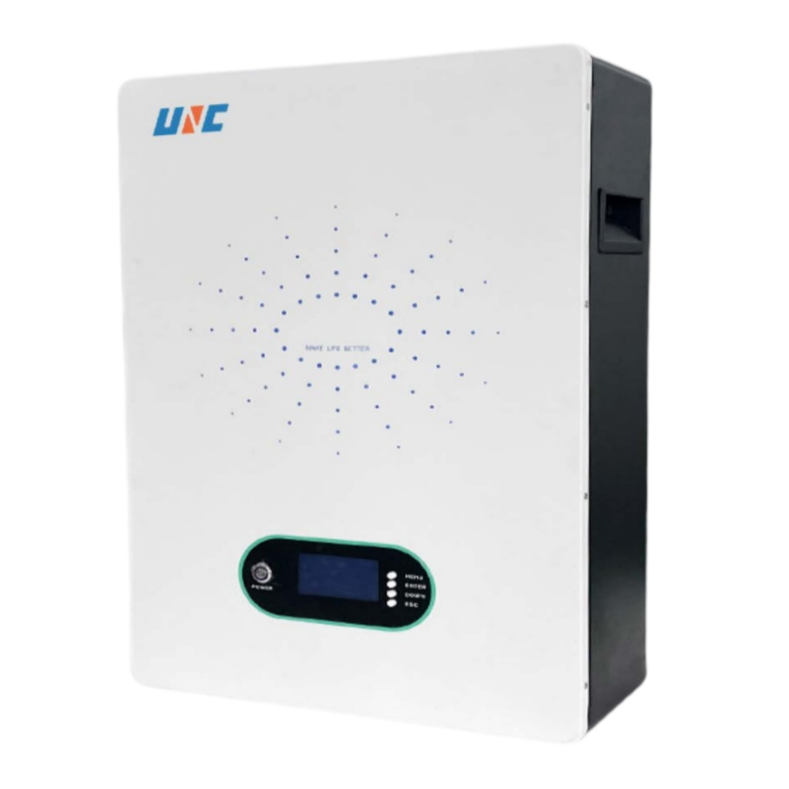
There’s a special kind of frustration when a security camera, CPAP machine, or router dies at 3 a.m. because the backup battery quietly ran dry. Most battery systems simply wait until voltage drops to a critical level and then shut everything off. That approach is reactionary, not protective. Battery management that genuinely prevents midnight shutdowns does more than track charge level—it anticipates exactly how much power each connected device will need through the night and makes adjustments before the reserve gets dangerously low.
Instead of treating all loads equally, this kind of system assigns priority to the devices that matter most after dark. A router might stay online while a non-essential display dims or a scheduled task shifts to a lower-power window. Adaptive charging also plays a part: the battery tops up during off-peak hours and enters a slow, deliberate discharge mode once the house goes quiet. If a storm knocks out grid power at 2 a.m., the switchover happens without a blink because the battery has already rehearsed the scenario based on past usage patterns.
The result is not just fewer interruptions—it’s fewer middle-of-the-night phone calls from worried family members or clients. Users stop obsessively checking battery percentages before bed because the system has quietly handled the math. A well-managed battery doesn’t promise infinite runtime; it promises that the runtime you do have will be spent where it matters most, so the sun comes up before the power gives out.
Real Appliances a 16kWh Pack Can Run Without a Generator
A 16kWh pack isn't just for keeping the lights on—it can handle the daily rhythm of a small household. We've run a full-size fridge-freezer, a few LED lamps, a router, and two laptops through the night without dipping below 40% capacity. That's enough to keep food cold, stay connected, and work through an outage without ever hearing a generator roar.
Beyond the basics, this capacity opens up comfort items people usually write off during a blackout. A microwave gets used for short bursts, a box fan runs all night in summer, and a 40-inch TV plus streaming stick still leaves room for a phone or two on the charger. The key is staggering high-draw appliances rather than running them all at once.
What often surprises people is the washing machine. A cold cycle uses roughly 0.3–0.5 kWh, so you can do several loads over a weekend and still have enough stored energy for lights, refrigeration, and the modem. It's not about replacing grid power permanently—it's about keeping real routines intact during an outage.
Solar Charge Settings That Slow Capacity Fade
Many charge controllers ship with absorption voltages that are simply too aggressive for sealed lead-acid banks. Dropping the absorption setpoint by 0.1 to 0.2 volts per cell and stretching the absorption window to four or five hours often does more for longevity than any equalization routine. It reduces off-gassing and keeps the positive plates from being eaten away, yet still brings the bank to a genuine full charge on most solar days.
Float voltage gets overlooked because it looks harmless, but holding a 12 volt bank at 13.8 or 13.9 volts day after day quietly accelerates corrosion. A better target is 13.5 to 13.7 volts for most sealed batteries, and if the controller allows it, set the float exit or re-bulk threshold lower so the system does not start a fresh absorption cycle every time a cloud passes. Also check whether temperature compensation is actually reading the battery, not the controller's internal sensor. A probe taped to the battery case with a -4 mV per cell per degree Celsius slope will prevent winter overcharge and summer undercharge more reliably than a fixed setpoint.
For lithium iron phosphate packs, the settings that slow capacity fade look almost wrong to people used to lead-acid. Disable equalization, turn off temperature compensation unless the manufacturer explicitly requires it, and cap the charge at 3.45 to 3.50 volts per cell. Float at 3.35 volts per cell or disable float entirely if the battery sits at high state of charge for long stretches. Even better, set the solar system to stop charging around 85 to 90 percent state of charge and only top up before a planned off-grid load. That keeps the cells out of the high-voltage shoulder where most calendar aging happens.
Installation Details Most Off-Grid Builds Overlook
One of the first things to go wrong in a rushed off-grid installation is the DC wiring. People look at an ampacity chart and pick a cable that won't melt, but at 12 or 24 volts a 3% voltage drop along a 20-foot run quietly eats into your usable battery capacity and makes inverters fault out under heavy loads. Use a voltage drop calculator for every circuit, and don't shy away from 2/0 or larger for battery interconnects. Keep AC and DC cables in separate conduits or at least separated by a few inches wherever they run parallel. Solid copper is tempting for its price, but fine-stranded, tinned marine-grade wire holds up far better against vibration and corrosion at terminals.
Grounding and bonding get skipped on off-grid builds because there's no utility inspector looking over your shoulder, but lightning and ground faults don't care about your exemption. Drive two ground rods at least six feet apart, bond them to the inverter chassis, battery negative, and any metal racking with heavy copper. Add surge protection devices on both the DC input from the array and the AC output to your loads. Inside the battery box, hydrogen is a real thing even with sealed AGM or lithium; a small vent to outside, placed at the top, prevents a flammable pocket from forming. And torque every lug to the manufacturer's spec—loose connections are a top cause of melted busbars.
Physical details decide whether the system lasts five months or fifteen years. Use cable glands or strain-relief connectors where wires enter enclosures, not just drilled holes with electrical tape. Leave a modest service loop at each connection point so a future re-termination doesn't require pulling new cable. Label both ends of every conductor with its function and polarity; the next person to open that panel might be you, three years later, at dusk with a headlamp. Mount charge controllers and inverters where they can breathe—check the clearance requirements in the manual, and keep them out of direct afternoon sun, otherwise the internal temperature sensors misread the battery ambient and float voltage goes off. Finally, place disconnects where you can reach them without leaning over a battery bank or squeezing behind a rack.
Long-Term Cost Against Lead-Acid and Backup Generators
Upfront price tags rarely tell the whole story. A lead-acid battery bank may look cheaper on day one, but its usable capacity shrinks fast when discharged deeply. To get 10 kWh of daily cycling, you often need to buy 20 kWh of lead-acid and still replace the cells every three to five years. Lithium iron phosphate systems, by contrast, handle 80–90% depth of discharge without the same wear, and many are rated for 6,000 cycles or more. Spread that cost over a decade and the per-cycle figure flips in favor of lithium.
Backup generators have their own hidden ledger. The engine itself is inexpensive relative to a battery system, yet every outage or scheduled test burns diesel, propane, or natural gas. Add oil changes, coolant checks, spark plugs, and occasional repair bills, and a generator that sits idle most of the year still costs hundreds to thousands annually. Batteries don't need fuel deliveries or mechanical upkeep; they recharge from solar or the grid and stay ready without a monthly maintenance contract.
Over a 10-to-15-year window, the cumulative spend shifts sharply. A lead-acid setup might require three full replacements, and a standby generator could consume more in fuel and service than its original purchase price. A well-sized lithium storage system typically has no fuel bill, near-zero routine maintenance, and a usable lifespan that matches or exceeds the solar array it supports. When you compare total cost of ownership instead of sticker price, the long-term math no longer favors legacy options.
FAQ
Yes. With 16kWh usable capacity, a typical off-grid cabin load of 400-600 watts continuous would draw roughly 10-14kWh over 24 hours, so there's comfortable headroom. If you add a microwave or power tools, you'll dip into the reserve faster, but for basic essentials it easily covers overnight and cloudy stretches.
It comes down to fewer interconnects and a unified battery management system. One 16kWh unit means no balancing headaches between parallel strings, cleaner cable runs, and usually a simpler install. The integrated BMS also monitors temperature and cell voltage at the pack level, which is harder to coordinate when you chain four 4kWh modules yourself.
The battery cells themselves are silent. You may hear a faint click from internal contactors when the BMS connects or disconnects, but there's no fan noise in most sealed 16kWh LiFePO4 packs because they rely on passive cooling. Surface temps typically stay within 5-10 degrees of ambient under normal load, so a ventilated closet is enough.
Absolutely. Many people run a small inverter generator for a few hours a day and let the battery shoulder the rest. With a 16kWh buffer, you can charge at 3-5kW during generator runtime and then shut the generator off for the next 12-18 hours, which cuts fuel use and noise dramatically compared to running the generator around the clock.
Most of these packs operate in the 48V nominal range, so your main battery cables will be thick but manageable, often 2/0 or 4/0 AWG depending on inverter draw. You'll want a DC-rated breaker or Class T fuse close to the pack, plus a disconnect switch. If your inverter is 5kW or larger, the continuous current on the DC side can exceed 100A, so copper lugs and proper torque are non-negotiable.
If you use LiFePO4 chemistry and keep the depth of discharge around 80-90%, the pack is commonly rated for 4,000-6,000 cycles. For an off-grid user cycling once per day, that's well over a decade. Real-world capacity loss tends to be gradual, and a good BMS will keep cells balanced so one weak cell doesn't drag the whole pack down early.
Not useless, but you need planning. LiFePO4 cells should not be charged below freezing unless the pack has built-in heating pads or a low-temperature charge cutoff. Discharging is generally fine down to about -20°C with reduced performance. Many China-made 16kWh packs now include self-heating, and even without it, placing the pack in an insulated box with a small 12V heating element solves the issue.
Ask for the actual usable capacity at the pack terminals, not just the sum of cell amp-hours. Look at the BMS low-voltage cutoff and whether the manufacturer specifies 100% depth of discharge or recommends a smaller window. A reputable seller will state test conditions, cycle life at 25°C, and provide a cell datasheet. If the price seems too low for 16kWh of genuine grade-A LiFePO4, that's a red flag.
Conclusion
A 16kWh lithium iron phosphate pack from China changes the math for off-grid living. Unlike lead-acid banks that sag under load, this unit holds enough usable energy to run a full-size refrigerator, lights, a laptop, a microwave for short bursts, and a well pump through a normal day without firing up a generator. The built-in battery management system watches cell voltage and temperature continuously, so a cold night or a cloudy afternoon does not end in a midnight shutdown. Instead, it throttles output gently and reserves a small buffer, letting you sleep through the dark hours while the essentials stay on.
The real advantage shows in how the pack pairs with solar. Charge settings that cap voltage at 3.45V per cell and avoid floating at high states of charge slow the capacity fade that plagues cheaper systems. On the install side, many builds overlook torque on busbars, cable sizing for inverter surge, or a simple disconnect near the battery, and those oversights cause heat and voltage drop. Over ten years, the cost per usable kilowatt-hour sits well below lead-acid replacements and is a fraction of running a backup generator daily. The result is quieter, cleaner, and less dependent on fuel deliveries or grid tie-ins.
Contact Us
Contact Person: Manager Leng
Email: [email protected]
Tel/WhatsApp: 8613764878967
Website: https://www.unc-energy.com