
China Active Valve Advances Precision Flow Control for Modern Industries
2026-11-02
Precision flow control is no longer a luxury—it’s the hidden backbone of everything from semiconductor fabrication to pharmaceutical dosing. Yet most systems still rely on passive components that drift with pressure and temperature. That’s exactly where AVM steps in: a China-based pioneer redefining active valve technology to deliver real-time accuracy where it matters most. In this post, we explore how AVM’s advancements are quietly reshaping modern industrial processes—and why your next upgrade might depend on it.
Precision Without the Drift
Precision isn't just about hitting a number once. It's about hitting it reliably hour after hour, when temperatures shift and components settle. The drift that creeps into poorly designed systems often starts small—a fraction of a micron here, a microvolt there—but it compounds into decisions made on false data.
A well-engineered approach treats drift not as an inevitability but as a design parameter. Feedback loops sample the output constantly, comparing it against a reference that itself remains stable across the operating range. Materials are chosen for their low thermal expansion coefficients, and signal paths are shielded from environmental noise. Calibration routines run silently in the background, adjusting for slow changes before they ever reach the readout.
The result is a measurement or control system that behaves the same on day one and day five hundred. In production lines, that means less scrap and fewer recalibrations. In research, it means data that doesn't need to be second-guessed. Precision without drift is less about a single clever component and more about an architecture that refuses to let small errors accumulate.
Why Traditional Valves Can't Keep Up Anymore
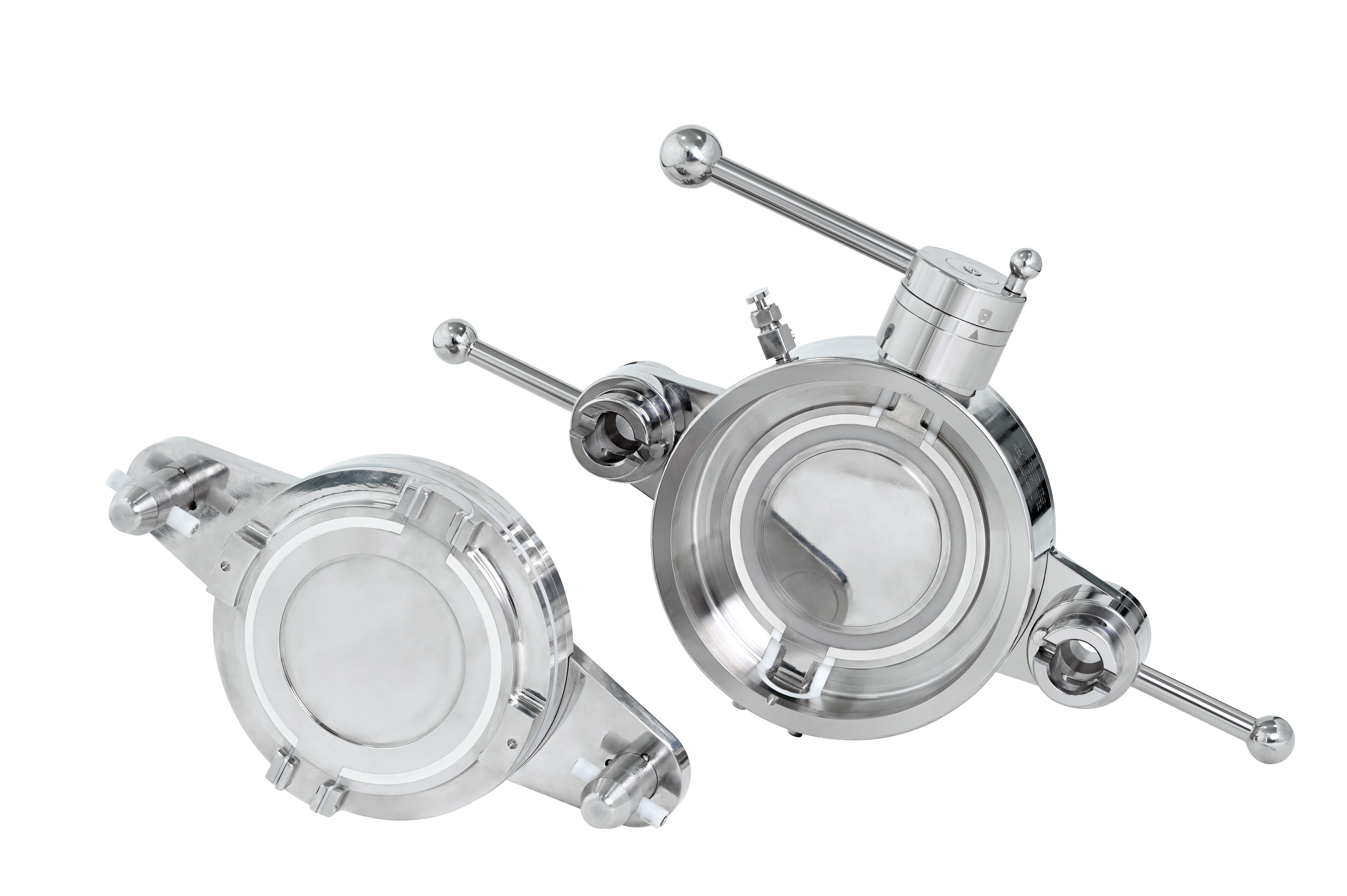
Traditional valves depend on manual actuation or basic pneumatic signals, which introduces lag in processes where seconds matter. In sectors like pharmaceutical batch production or water treatment, operators still walk lines to turn handwheels, and a single missed adjustment can ruin a batch or cause pressure spikes. That kind of latency simply doesn't fit modern control loops.
Wear and tear is another bottleneck. Packing glands, stem seals, and metal seats degrade under frequent cycling, leading to leaks, stiction, and unpredictable deadband. Plants spend too much downtime on scheduled rebuilds and unplanned shutdowns because these mechanical components were never designed for continuous, high-frequency modulation.
Legacy valve designs also lack onboard diagnostics. Without position feedback, torque sensing, or network interfaces, they remain invisible to asset management systems. Teams can't detect a failing actuator until it trips, and they can't optimize performance because there's no data stream to analyze. That absence of intelligence makes them a liability in automated facilities.
Materials That Survive Corrosive and Abrasive Media
Selecting the right material for a pump, valve, or pipeline that handles harsh slurries and aggressive chemicals often comes down to a single trade-off: hardness versus chemical inertness. Tungsten carbide and silicon carbide excel in abrasive services where erosion resistance matters most, but they can be brittle and vulnerable to thermal shock. On the other hand, high-nickel alloys like Hastelloy C-276 or duplex stainless steels withstand a wide range of corrosive acids, yet wear faster when solids are present. A practical solution is to use a base metal with a welded overlay or a ceramic-coated interior, combining structural toughness with a surface that shrugs off both attack mechanisms.
In many mineral processing and chemical plants, the real culprit is not a single damaging force but the combination of corrosion and abrasion acting together. For instance, a slurry with a low pH and sharp quartz particles will strip away any passive oxide film that normally protects stainless steel, accelerating metal loss far beyond what either factor would cause alone. This synergistic effect is why rubber-lined steel or polyurethane coatings often outperform exotic alloys in such environments—they absorb particle impact while remaining chemically resistant, provided the temperature stays within their limits. Elastomers also dampen vibration and reduce noise, a bonus in long piping runs.
Recent advances in binder chemistry have pushed cemented carbides and reaction-bonded silicon carbide into more demanding roles. By tailoring the cobalt or nickel binder content, manufacturers can shift the balance between fracture toughness and corrosion resistance. Similarly, sintered alpha-phase silicon carbide with virtually zero open porosity has proven reliable in concentrated sulfuric acid and boiling nitric acid, where even super duplex stainless steels fail. When specifying a material for a new application, it pays to run pilot tests with the actual process fluid rather than relying solely on published compatibility charts—small changes in temperature, pH, or particle size can flip the best choice.
Real-Time Adjustments for Semiconductor-Grade Accuracy
In semiconductor manufacturing, even a few nanometers of drift can scrap an entire wafer lot. Real-time adjustments close that gap by continuously comparing tool output against inline metrology data, then nudging process parameters before they wander out of spec. Instead of waiting for batch measurements at the end of a run, the control loop reacts within milliseconds—tuning temperature, pressure, or gas flow based on what the sensors are actually seeing right now, not what the recipe assumed an hour ago.
This shifts the burden from post-process inspection to in-process correction. For example, when a CMP tool starts to show slight erosion-rate variation, a real-time model can recalibrate downforce or slurry dilution on the fly. The result is not just fewer defects but tighter distributions across the wafer and across the lot. Over time, these micro-adjustments accumulate into dramatic yield improvements, especially for advanced nodes where the process window is razor-thin.
What makes this approach practical is the fusion of high-speed edge computing with robust feedback algorithms. Rather than relying on a single golden recipe, the system learns from each wafer and adapts to gradual tool wear, incoming material shifts, or even ambient changes in the cleanroom. The outcome is manufacturing that behaves less like a fixed script and more like a skilled operator who never blinks—constantly trimming the process to stay centered in the sweet spot of semiconductor-grade accuracy.
Cutting Energy Waste with Tighter Flow Regulation
Most industrial systems waste a surprising amount of energy simply because their flow rates are set far higher than the process actually needs. Traditional control valves and fixed-speed pumps often operate with a wide margin for error, pushing excess fluid or air through the line just to be safe. This over-delivery quietly drains power around the clock, and the cost compounds across every shift of the year.
Tighter flow regulation changes the equation by matching supply to real-time demand. Instead of a blunt on/off or roughly throttled approach, modern control strategies use fine-grained adjustments that keep flow within a narrow band around the setpoint. This means the pump or compressor only does the work that is truly required, reducing brake horsepower and avoiding the wasteful bypass loops that many older installations rely on.
The savings are not hypothetical. In chilled water systems, for example, trimming excess flow from 120% of design to 105% can cut pump energy by more than a quarter. Similar gains appear in compressed air networks, where lower average flow directly lowers motor load. Over time, these reductions also lead to less wear on valves and piping, fewer maintenance interventions, and a quieter, more predictable operation.
How Chinese Engineering Is Quietly Raising the Bar
Walk through any major port expansion in Southeast Asia or a high-altitude rail line in the Andes, and there's a decent chance the heavy lifting was done by Chinese firms. It's not just about scale anymore. The quieter shift is in tolerances, delivery timelines, and the ability to retrofit complex existing infrastructure without shutting it down for months.
Take modular bridge construction: crews now preassemble and test entire spans in factory conditions, then ship them to remote sites. That approach cuts on-site welding by half and keeps quality consistent even in extreme weather. The same logic shows up in ultra-high-voltage transmission projects, where engineers have pushed loss rates down far enough to make cross-border energy sharing economically sensible for the first time.
None of this tends to make headlines. But for local contractors competing on cost, or for governments trying to replace aging grids, the new benchmark is no longer just cheaper steel. It's a combination of speed, precision, and long-term maintainability that quietly resets what counts as standard practice.
FAQ
Instead of relying on manual adjustments or simple mechanical feedback, it uses embedded sensors and a closed-loop control system to hold flow rates within a tight tolerance. Pressure swings or load changes are compensated almost instantly, so the target flow stays stable.
Semiconductor fabs, biopharmaceutical production, and specialty chemical plants are early adopters because even tiny flow deviations can spoil a batch. Food and beverage lines and municipal water systems also use it to cut waste and maintain consistent product quality.
A dedicated controller continuously compares the measured flow against the setpoint and adjusts the valve opening several times per second. This closed-loop approach cancels out pressure fluctuations that would normally cause drift in a passive valve.
Chinese manufacturers have combined local R&D with scaled production to drive down unit costs while improving reliability. That has made active valves practical for mid-sized plants that previously could not justify the expense of high-end flow control.
Yes, typical models feature corrosion-resistant wetted parts, IP67 or higher enclosures, and seals rated for aggressive media. They are tested under high temperature and pressure cycling to ensure long service life in harsh conditions.
Not really. Most units include self-diagnostics that flag issues before they cause downtime, and the modular design means a faulty sensor or actuator can be swapped without replacing the entire valve. That reduces maintenance windows significantly.
By delivering only the required flow without overshooting, the active valve reduces the work done by pumps and compressors upstream. Over a full production cycle, this can lower energy consumption by 10 to 20 percent in systems that previously ran with generous safety margins.
Some models incorporate low-power actuators and embedded IoT interfaces as standard, allowing direct integration with plant-wide control networks. Rapid response times—often under 100 milliseconds—give them an edge in processes where flow demand changes abruptly.
Conclusion
The shift toward active valve technology in China is not about chasing novelty, but about correcting long-standing weaknesses in flow control. Conventional valves often drift under fluctuating pressures, forcing operators to rely on manual recalibration or accept uneven output. Active valves, by contrast, hold their setpoint through embedded feedback loops, which means the flow you dial in is the flow you keep. It's a quiet but consequential upgrade for sectors where a few percentage points of deviation can scrap a batch or compromise safety. Materials choice also separates these new valves from legacy equipment. Instead of generic stainless steel that pits and erodes after months of contact with aggressive chemicals or slurries, manufacturers now pair ceramics, high-nickel alloys, and advanced elastomers with the specific media they will face. This approach extends service intervals and reduces unplanned downtime in chemical processing, mining, and water treatment.
Semiconductor fabs and pharmaceutical lines need more than durability; they need valves that respond in milliseconds to changing process conditions. Active valves with real-time actuation and position sensing deliver that, allowing closed-loop control that would have required external controllers and complex wiring just a few years ago. The benefit isn't limited to product quality. Tighter regulation means compressors and pumps spend less energy fighting against valve losses, so overall utility consumption drops. Chinese engineering firms have been steadily integrating these improvements without fanfare, focusing on reliability testing and local supply chains that make precision hardware less dependent on imported components. The result is a practical, cost-effective class of active valves that is starting to reshape expectations for flow control across modern industries.
Contact Us
Contact Person: Ananda
Email: [email protected]
Tel/WhatsApp: 8619016718200
Website: https://www.wzaomi.com