China Grating Clips for Secure and Long-Lasting Industrial Flooring
2026-11-02
A grating panel is only as strong as the clips that anchor it. That’s a fact many overlook until a loose panel causes an accident or costly downtime. At Sino Grating, we’ve spent years perfecting China grating clips that lock industrial flooring into place—no matter the load, vibration, or weather. In this guide, we’ll show you what to look for and why these small parts deserve your full attention.
What Sets China Grating Clips Apart on Heavy-Duty Floors
On heavy-duty floors, the real test isn't just load bearing—it's enduring vibration, thermal shifts, and years of foot and vehicle traffic without loosening. China grating clips have moved beyond the standard U-bolt approach, adopting a clamping geometry that distributes stress across the saddle rather than concentrating it at two points. This design prevents the gradual elongation of bolt holes and keeps the grating panel from rattling, even when forklifts roll over the same seam hundreds of times a day.
Material choice also sets these clips apart. Leading manufacturers now use micro-alloyed spring steel with a hot-dip galvanized coating that exceeds typical zinc thickness by 30–40 microns. The added coating isn't just for corrosion resistance—it creates a sacrificial layer that absorbs surface scratches during installation, preventing rust from starting at the exact spots where torque was applied. On outdoor platforms or chemical processing floors, this detail means the difference between a clip that lasts five years and one that still holds tight after fifteen.
Installation practicality is another overlooked factor. Unlike older designs that require perfect alignment before tightening, modern China grating clips feature a self-centering saddle with a pre-set breakaway torque indicator. When the correct clamping force is reached, a small tab snaps off—giving installers a visual confirmation that every clip on the floor is equally tensioned. This removes guesswork, speeds up large-area projects, and prevents the common failure mode of over-tightening, which can crack the grating bar or strip the thread in the base plate.
How the Locking Mechanism Keeps Grating Panels from Shifting
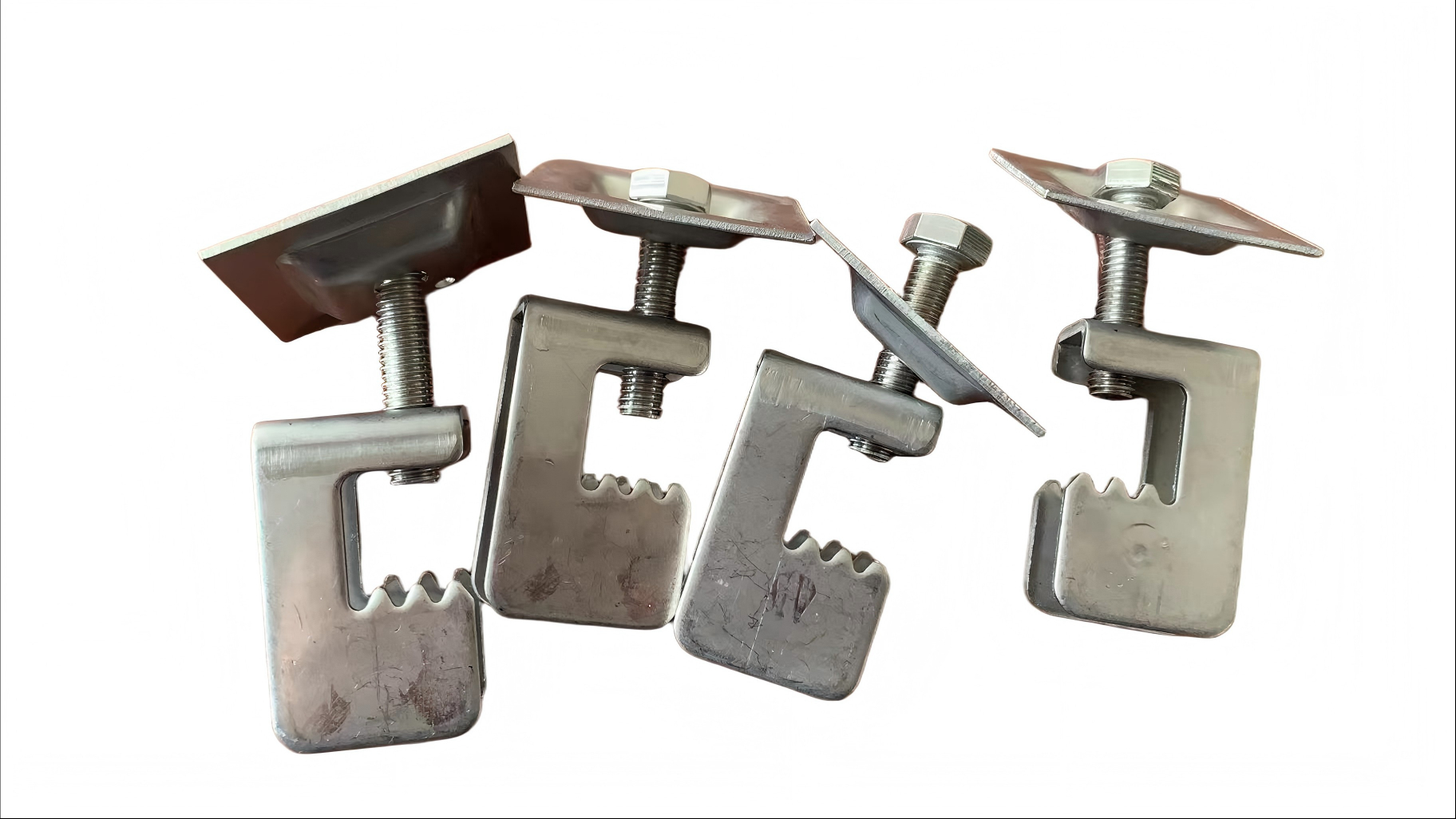
Saddle clips and locking clamps hold grating panels by wrapping around the load-bearing bars and anchoring them to the support frame. The serrated contact points dig into the metal surface, creating a mechanical interlock that stops the panel from sliding sideways even when heavy loads push against it.
Under constant vibration or rolling traffic, flat panels tend to creep, but the locking hardware keeps a steady clamping force across the joint. This preload resists both shear forces and the small twisting motions that happen when panels flex, so the corners stay down and the grid spacing remains even.
As temperatures rise and fall, metal expands and contracts enough to loosen ordinary fasteners. A well-fitted locking mechanism allows tiny movements within the grip without losing tension, which prevents the panel from drifting out of position over time and keeps drainage gaps from closing or misaligning.
Corrosion Resistance in Wet and Chemical-Exposed Plants
Choosing structural materials for plants where water, acids, or caustic solutions are part of daily operations is less about a single spec sheet and more about understanding how moisture and chemical vapors interact with surfaces over time. In many wet processing areas, carbon steel fails not from direct immersion but from condensation that forms under insulation, carrying chlorides into crevices where oxygen levels vary and pitting begins. That hidden corrosion often goes unnoticed until a flange or support bracket gives way.
The most practical defense is a layered approach: selecting base alloys with enough nickel or molybdenum to resist the specific chemistry at hand, then protecting welds and joints with coatings or linings that can flex rather than crack under thermal cycling. For concrete containment basins and trenches, a chemical-resistant topping or membrane is often more durable than simply increasing concrete cover, especially when spills involve sulfuric acid from scrubber systems or sodium hypochlorite from dosing lines.
Maintenance teams that track coating failures, pH levels in floor drains, and rust streaks under pipe supports usually replace equipment on their own schedule instead of reacting to leaks. Small changes like switching to duplex stainless fasteners in vapor zones or adding ventilation to reduce humidity near chlorine storage can extend service life more than any single premium material upgrade.
Choosing the Right Clip Size for Your Grating Profile
Getting the clip size right starts with understanding how your grating profile actually sits once installed. Too often, people grab whatever fastener is on hand and end up with clips that either pinch the bearing bars or leave so much play that the panel shifts underfoot. Look closely at the depth of the cross bar relative to the top of the grating surface. A clip that's too shallow won't bite properly into the support steel, while an oversized clip can protrude above the walking surface, creating a trip hazard or snag point for carts and equipment.
Different grating profiles need different engagement lengths. Heavy-duty welded steel grating with thick bearing bars typically calls for a clip that wraps further down the side of the support flange. For lighter press-locked or swage-locked grating, a shorter clip often works fine, but you need to verify that the clip's underside actually rests against the support beam rather than floating on top of a cross rod. When installing near edges or around penetrations, you might have to step up to a saddle clip or a hold-down clip with a longer reach just to catch enough of the profile for a secure connection.
One practical trick is to measure the gap between the bottom of the grating panel and the top of the support steel after the panel is laid in place. That measurement tells you exactly how much clip leg you need before any washer or nut comes into play. If you find yourself adding extra washers or bending the clip to make up for a mismatch, stop and reassess the clip size rather than forcing a bad fit. A correctly sized clip will sit flush against both the grating and the support without needing persuasion, and it will stay tight long after the initial installation.
Installation Pitfalls That Shorten Floor Lifespan
A floor might look flawless right after installation, yet hidden missteps in the first few hours can quietly set the stage for early failure. Subfloors that are not cleaned, leveled, or checked for moisture often cause adhesive to weaken or boards to shift long before anyone notices a visible problem. Skipping the manufacturer's recommended acclimation period is another frequent error, especially with wood and laminate, as materials expand or contract after being fastened down.
Equally damaging is the habit of butting planks tightly against walls or fixed objects. Without room to move, flooring can cup, buckle, or develop unsightly gaps at the seams. Rushing foot traffic across a newly glued or floated floor also prevents bond lines from curing properly, leaving the surface vulnerable to peeling or hollow spots within months.
Long-Term Cost Per Square Meter of Secure Grating Systems
When comparing the long-term cost per square meter of secure grating systems, the initial purchase price rarely tells the whole story. Galvanized steel options might seem economical up front, but installations in coastal or chemical-heavy environments often require recoatings and replacements sooner than expected. Factoring in maintenance cycles, corrosion allowances, and typical service life gives a more realistic figure that can shift the ranking between material choices.
Beyond raw material cost, the true per-square-meter expense includes fabrication complexity, load rating requirements, and how often the grating must be removed for access. Heavy-duty locked panels with tamper-resistant fasteners reduce the need for frequent inspections, but they demand more precise installation and sometimes custom cutting. These hidden costs accumulate over a decade or more and can make a seemingly premium product the cheaper option once downtime and labor are accounted for.
A practical way to evaluate long-term value is to divide total projected costs by the square meters covered and the expected years of service. This approach exposes differences that standard unit pricing misses, such as the benefit of modular panels that can be replaced section by section rather than resurfacing an entire area. By focusing on how the grating performs under real conditions rather than just its bid price, facility managers can avoid repeated budget overruns tied to premature failures.
FAQ
They're typically made from galvanized or stainless steel, with a clamping design that holds grating panels firmly against the supporting structure. That prevents shifting and rattling even when forklifts or carts pass over constantly, which is the main reason they last longer in factories.
Most suppliers offer hot-dip galvanized or 316 stainless versions. The coating or alloy resists rust, so they won't weaken or stain the surrounding floor. If you're installing near chemical washdowns, choose stainless hardware for better resistance.
Yes, many designs use a saddle clip with a bolt and nut. You just place the clip over the bearing bar, insert the fastener, and tighten. No hot work is needed, which saves time and avoids damaging the grating's protective coating.
Common practice is around four clips per panel or one every two to three bearing bars along the edges. But the exact number depends on load, vibration, and local codes. For high-traffic aisles, adding extra clips at mid-span helps prevent movement.
They generally work with most standard industrial grating. You need to check the bearing bar spacing and height so the clip's saddle sits properly. Some clips are designed specifically for 1-inch or 1-1/4-inch bars, so confirm the dimensions before ordering.
Look at the material thickness, the quality of the zinc layer if galvanized, and whether the bolt is also corrosion-resistant. It's also worth asking for a salt spray test report. Tightening them to the recommended torque prevents premature loosening without cracking the clip.
Some clips include a locking washer or a serrated saddle to bite into the metal and resist loosening. In particularly tough spots, using a double-clip arrangement or adding a rubber pad under the clip can dampen vibration and reduce noise.
Absolutely. For outdoor use, hot-dip galvanized clips are the usual choice because they handle rain, UV, and temperature swings well. Just make sure the grating itself is also galvanized or otherwise protected, otherwise the system won't last as long.
Conclusion
China grating clips have earned a solid reputation on heavy-duty industrial floors by combining rugged material choices with a no-nonsense locking design. Unlike generic fasteners that rely on friction alone, these clips use a positive mechanical grip to hold grating panels firmly against the support structure, preventing lateral shifting even under constant forklift traffic, vibration, or thermal expansion. The result is a stable walking surface that reduces tripping hazards and protects the underlying beams from abrasive wear. In wet or chemical-exposed plants, the clips are typically manufactured from stainless steel or hot-dip galvanized carbon steel, giving them long-term resistance to rust, acids, and alkalis. This means less frequent replacement and fewer shutdowns for floor repairs.
Choosing the right clip size for a specific grating profile is just as important as the material selection. Mismatched saddle height or throat depth can leave panels loose, concentrate stress on one edge, and accelerate fatigue cracking. Common installation mistakes, such as overtightening to the point of deforming the clip, skipping washers on uneven supports, or forgetting to stagger clips along the bearing bars, dramatically shorten the floor's lifespan. When installed correctly, the cost per square meter of a secure grating system including quality China clips is often lower over a ten-year cycle than cheaper alternatives that need frequent adjustment or replacement. The initial purchase price may be slightly higher, but reduced downtime, fewer accidents, and less maintenance labor quickly offset the difference. In short, these clips are a practical investment for any plant manager looking to keep industrial flooring safe, secure, and serviceable for decades.
Contact Us
Contact Person: Nicholas Zhu
Email: [email protected]
Tel/WhatsApp: 18921275456
Website: https://www.sino-grate.com