China High Pressure Drain Cleaning Machines Dealers: What to Look for Before You Buy
2026-11-25
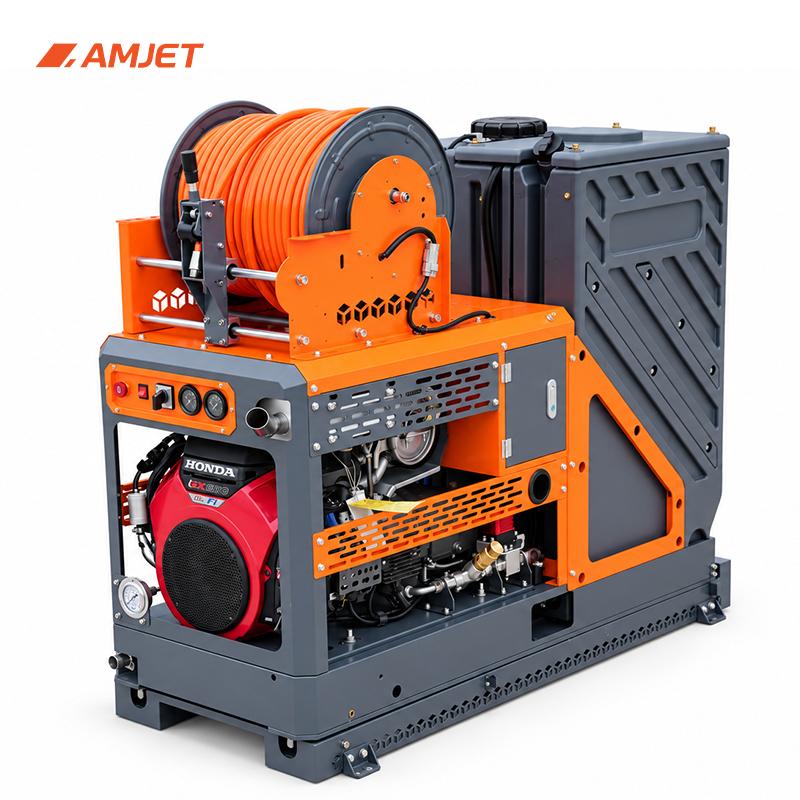
Sourcing a high pressure drain cleaning machine from China can feel like a gamble—flashy spec sheets and low prices often hide weak pumps, thin frames, and slow after-sales support. Before you sign off with a dealer, a few practical checks will separate equipment that actually holds up from machines that stall on the first blocked line. This guide walks through what to look for in a dealer, and why brands like AMJET are worth putting on your shortlist when consistent pressure and uptime matter most.
Read the Dealer’s Paper Trail Before Sharing a Single Requirement
Before handing over any list of must-haves, spend real time with the paperwork already on file. Invoices, repair orders, warranty claims, and even handwritten notes often tell a sharper story than a sales pitch or a service advisor's summary. A quiet pattern shows up there: the same seal replaced twice, a mileage gap that nobody explained, or a part billed under one number but described as another on the next page. Those details give you something concrete to stand on, so your requirements don't become a wish list shaped by whatever the dealership wants to emphasize.
Look less for perfection and more for friction. Compare dates, labor times, part numbers, signatures, and the tone of internal notes. If a concern was noted and then dropped without a follow-up, that's not clutter; that's leverage. It can turn a vague demand like "make sure it's fixed" into a pointed conversation about why a known issue sat untouched for weeks. The paper trail rarely hands you a complete answer, but it usually hands you the right questions.
Then when you finally share a requirement, anchor it to the record. Reference the service date, the exact line item, or the mismatch you found. That shifts the discussion from opinion to evidence and reduces the usual dance of promises and delays. You won't have to argue that a problem matters; the dealer's own documents will quietly make the case.
Match the Machine to the Pipe, Not the Brochure
A spec sheet can list an impressive diameter range, but it rarely mentions the corroded, out-of-round pipe waiting in the trench. Before trusting the brochure, measure the actual outside diameter and wall thickness at several points around the pipe. A machine that barely fits on paper may struggle once it meets scale, ovality, or a weld seam sitting slightly proud of the surface.
Pay attention to how the machine grips and feeds, not just its maximum cut capacity. Short tangent sections, elbows close to the cut line, and limited clearance between the pipe and the ground often rule out equipment that looks perfect in a catalog. If the frame cannot sit square and stable, the tool will chatter, the cut will wander, and the job will take twice as long.
The better approach is to let the pipe define the requirements. Check the material grade, wall schedule, and working space first, then choose a machine that handles those conditions comfortably rather than at the edge of its envelope. A slightly less glamorous tool that actually fits the pipe will usually outperform a larger, brochure-friendly unit that has to be forced into place.
Ask Where Spare Parts Will Actually Come From
A supplier's website or quote can list a part as "available," but that word hides more than it reveals. Before placing an order, pin down the physical path the component will take: Is it sitting on their shelf, being pulled from a regional distributor, or being ordered from the original manufacturer only after you pay? The answer changes your real lead time, your exposure to shipping delays, and the price you should be willing to accept.
It is worth asking for the warehouse location, country of origin, and whether the part comes in factory-sealed packaging with traceable batch numbers. A box with a familiar logo does not mean it moved through authorized channels. Some spare parts are repackaged returns, refurbished units, or grey-market imports that look fine until they fail early or void a warranty. If the seller can't name the source without hesitating, treat that as a warning.
This question also matters when a vendor claims to have "equivalent" or "compatible" parts. Ask who actually manufactured the item and which standards it was tested against. The goal is not to demand perfection, but to avoid discovering halfway through a repair that the critical component came from an unknown workshop with no documentation; by then, the lower price rarely feels like a bargain.
Insist on a Live Video Walkaround Before Payment
Most sellers will happily send you polished photos, but those only tell part of the story. Ask for a live video call where they walk around the machine, start it up, and zoom in on the areas that matter to you. If they hesitate, make excuses about poor signal, or suggest a pre-recorded clip instead, treat that as a red flag. A real-time walkaround lets you hear the engine, check for leaks, and confirm the serial number matches the listing without relying on someone else's editing skills.
Don't just watch passively. Have a short checklist ready: cold start, exhaust color, unusual vibrations, hydraulic functions if applicable, and the condition of the tracks or tires. Ask the seller to show the hour meter live, then compare that number with what was advertised. If the video quality is conveniently blurry or the camera never stays on one spot for long, request another call or walk away. Sellers who are confident in their equipment won't mind spending ten minutes showing it to you.
Paying before a live inspection puts all the leverage in the seller's hands. Once money changes hands, problems become much harder to resolve across state lines or international borders. A short live walkaround isn't a guarantee against hidden issues, but it removes a large chunk of uncertainty and filters out anyone trying to pass off stock photos as their own. If the deal moves forward after that, you'll at least have a record of the machine's condition on the day you agreed to buy it.
Break Down the Real Cost Beyond the Invoice
The price on the invoice rarely tells the whole story. Once you factor in setup fees, integration time, team training, and the occasional need for third-party workarounds, the actual cost of a solution can drift far beyond that initial number. Many buyers discover this only after the contract is signed, when hidden operational expenses start showing up in monthly reports instead of the original quote.
A more honest way to evaluate any purchase is to map the full lifecycle: implementation hours, ongoing maintenance, support tiers, and the time your own staff spends managing the tool. For example, a platform that appears cheap upfront might require a dedicated administrator or frequent manual data cleaning, while a slightly pricier option could automate those tasks entirely. Those differences rarely appear on a standard pricing page.
Before committing, ask vendors to walk through a typical month of usage with you, line by line. Request examples of unexpected charges from current customers, and estimate the cost of switching away if the relationship doesn't work out. The goal isn't to find a perfectly predictable price, but to avoid being surprised by the gap between the number on the invoice and the resources actually leaving your organization.
Find Out Who Else Still Runs the Same Machine Two Years Later
There is a particular kind of satisfaction in spotting a machine you once knew, still doing its job in someone else's workshop. The worn paint, the slightly bent lever, the sticker that never quite peeled off — they all tell you this isn't a display piece. It has been earning its keep long after the original buyer moved on, and whoever runs it now probably has no idea where it came from. Looking into that trail can feel less like an audit and more like tracing a quiet lineage of hands and hours.
The practical side is just as compelling. If a model keeps showing up in listings, repair forums, and trade-in lots years after its release, that is a stronger signal than any spec sheet. Short production runs fade fast. Machines that survive tend to have accessible parts, forgiving tolerances, and a community that has already solved the annoying problems. You find out who else still runs the same one not out of idle curiosity, but because those owners have already bet their time and money on it — twice, sometimes three times over.
There is also the moment when you recognize your own old machine in a photo, down to the scratch on the rear cover. It feels oddly reassuring, even if you sold it for a reason. Someone else looked at the same quirks you tolerated or fixed and decided it was still worth running. That continuity says more about the machine than any review. It says the thing works when nobody is watching.
FAQ
A dependable dealer usually offers more than a polished catalog. They can provide factory walkthroughs, real test reports, technical drawings, and clear answers about pump and engine sourcing. Risky dealers tend to hide behind stock photos, vague specifications, and only talk about price.
Focus on the combination of pressure and flow rather than a single high PSI number. Flow rate moves debris, so a machine with moderate pressure and strong GPM often performs better. Also check hose length, included nozzles, frame protection, thermal relief, and whether the pump is matched to the engine or motor.
Ask for a live video call that shows the assembly area, testing station, and the exact model you plan to buy. Request photos of welds, hose reels, and control panels from a current production batch. If possible, order a sample unit or hire a third-party inspection service before placing a larger order.
That depends on your market. If local customers expect a certain engine brand, hose length, or coupler type, a custom build can save you headaches later. But standard models have already been tested repeatedly, so they usually mean fewer delays and lower risk. Ask the dealer which options are proven rather than experimental.
Look for a dealer who supplies wear parts, spare nozzles, seals, and an English manual without being asked. A good support system includes video troubleshooting, a clear warranty period for the pump and frame, and a realistic response time. Avoid dealers who promise lifetime support but cannot name the spare parts they stock.
Clarify the Incoterm before paying. Ask whether the price is FOB, CIF, or DDP, because that changes what you are responsible for after the machine leaves China. Confirm packaging for ocean freight, estimated production time, the port of departure, and whether spare parts can be packed inside the same crate to save shipping costs.
Be cautious if they cannot show a factory address, refuse live video, or only send product images from other brands. Trading companies can still be useful, but the problem starts when they hide it. If prices are far below market level, technical questions go unanswered, or specs change between messages, treat that as a red flag.
Break each quote into the same parts: pump brand, engine or motor, hose reel, frame material, nozzle kit, and included spare parts. A lower price often removes a quality pump, uses a thinner frame, or leaves out the nozzles you actually need. Compare warranty length and parts availability as part of the total cost.
Conclusion
Before handing over a single specification to any dealer in China, ask for documentation that proves the company actually exists and has shipped machines under its own name—not just a virtual storefront. A legitimate paper trail includes export records, previous bills of lading, and a verifiable business license. Once you are comfortable with that, shift the conversation away from polished brochures. The pressure, flow rate, nozzle selection, and hose length need to match the diameter, length, and condition of the pipes you actually clean, not a generic spec sheet. A machine that looks powerful on paper can be useless inside a 50mm line or too aggressive for aging cast iron. At the same time, pin down where spare parts will come from. If the dealer cannot name a specific warehouse, list part numbers, or give realistic lead times for pumps, seals, and nozzles, a minor breakdown can leave the unit parked for weeks.
Insist on a live video walkaround before any payment is sent. Ask them to start the engine, show the gauge climbing, switch between nozzles, and walk around the frame so you can see welds, labels, and wear points in real time. Record the call and compare it with the serial number later. Then push the cost conversation past the invoice. Freight, customs brokerage, duty, local taxes, replacement hoses, and the extra fittings you will need often add far more than the headline price. A dealer who avoids those numbers is not doing you a favor. Finally, ask for names of buyers who have run the same machine for at least two years. Call one or two of them and ask about downtime, parts availability, and whether the dealer still answers messages after the sale. That kind of track record tells you more than any demo video or warranty promise.
Contact Us
Contact Person: Mike
Email: [email protected]
Tel/WhatsApp: +86 19545555505
Website: https://www.amjeting.com/