
China Road Roller Manufacturer: Driving Innovation in Road Construction Equipment
2026-06-26
Every smooth highway and stable runway begins with a powerful force on the ground—the road roller. But behind every reliable machine is a manufacturer pushing boundaries. In China, Dynamic is redefining what road construction equipment can achieve. From smart compaction technologies to energy-efficient engines, they’re not just building rollers—they’re shaping the future of infrastructure. In this post, we dive into how Dynamic drives innovation in an industry that demands precision and durability.
Rethinking Roller Tech for Modern Highways
Modern roller technology is moving beyond brute force into a realm of precision intelligence. On-board sensor suites now map pavement temperature and stiffness in real time, feeding data to adaptive vibration systems that automatically tune amplitude and frequency for each square meter of the mat. This closed-loop approach practically eliminates over-compaction and under-compaction, directly boosting long-term durability without slowing the paving train.
Sustainability has quietly reshaped roller design, with electric-drive and hybrid powerplants slashing idle time and fuel burns at stop-and-go jobsites. New compactors use biodegradable hydraulic fluids and capture regenerative energy from braking, while drum designs incorporate recycled steel and low-maintenance scrapers that cut water consumption. The machines are not only greener to run but also noticeably quieter, easing the impact on roadside communities.
Drum engineering itself is being rethought to match the rising complexity of polymer-modified and warm-mix asphalts. Oscillation technology, which exerts a rocking motion instead of a vertical pounding, proves kinder to delicate mixes and underlying layers. Meanwhile, textured drum shells and edge-to-edge compaction mechanisms ensure a tighter seal along joints, the perennial weak spot of any pavement. These shifts bring roller tech into a new era where material science and mechanical design evolve together.
The Shift Toward Smarter Compaction
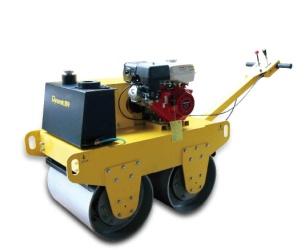
For decades, compaction relied heavily on operator intuition and post-work spot checks. You’d run a roller over soil or asphalt, take a few density readings, and hope the rest was solid. That approach left plenty of room for hidden weak spots, and fixing them later meant cutting into finished surfaces or starting a section over. It was a cycle of guess, test, and rework that often chewed through both time and material budgets without anyone ever feeling fully confident in the result.
The shift toward smarter compaction changes that equation by embedding sensors directly into the roller drums. These systems measure stiffness, vibration response, and sometimes temperature multiple times per second, painting a continuous picture of what’s happening beneath the machine. The data appears on an in-cab display as a color-coded map, so the operator can see in real time whether a pass actually improved the material or just flattened the top while leaving deeper layers loose. That immediate feedback loop turns compaction from a blind routine into a responsive, verifiable process.
What really sets this apart is how the data lives beyond the job site. It gets stored and can be reviewed later, creating a permanent record of every square meter compacted. This has quietly reshaped quality control: crews spend less time chasing core samples, engineers can validate coverage without drilling, and owners receive a digital log that proves the foundation meets spec. It’s a practical evolution that reduces material waste, cuts fuel use from unnecessary passes, and delivers a more uniform product without relying on someone’s gut feeling.
Inside the Factory Where Precision Meets Power
Stepping through the doors, you’re hit with a rhythm that’s equal parts machine hum and focused quiet. It’s not chaos—it’s coordination on a massive scale. Every corner of this place is built around a single idea: raw force doesn’t mean much without razor-sharp accuracy. Overhead cranes glide with millimeter precision, ferrying components that weigh more than a loaded truck. On the floor, technicians in safety glasses aren’t just watching dials—they’re reading the language of torque and tolerance, making adjustments that most CAD models can’t predict.
What catches you off guard is how hands-on it still is. For all the automated welding arms and laser-guided cutters, the real magic happens when a veteran machinist leans in to listen to a spindle’s whine. That instinct, earned over decades, can tell you more about material stress than a dozen sensors. The machinery itself seems alive—presses stomping out body panels with a bass-note thud, CNC mills carving engine blocks like they’re sculpting marble rather than 6000-series aluminum. It’s a place where horsepower and human judgment run in parallel, neither outranking the other.
By the time a finished assembly rolls toward the testing bay, it’s been through a gauntlet invisible to the naked eye. Alignment checks happen in microns, not inches. End-of-line dynos don’t just measure output—they torture-test against thermal runaway, torsional vibration, and the kind of abuse a chassis takes on a pothole at speed. The factory floor itself is a calibrated instrument: temperature-controlled zones, anti-static flooring, overhead lighting angled to eliminate shadows that could hide a defect. It’s not just a production line. It’s an ecosystem where every joule of energy is accounted for—and every tolerance is a promise.
How Vibratory Systems Changed the Game
Before vibratory systems entered the scene, everything from material handling to surface finishing relied on brute force and manual effort. The moment these systems arrived, they quietly rewrote the rules—transforming processes that were once slow, inconsistent, and labor-intensive into elegant, self-regulating operations. What made them truly disruptive wasn’t just the motion itself, but how they turned vibration into a precision tool, capable of sorting, compacting, or polishing with eerie accuracy.
The real shift happened when industries realized that vibration wasn’t just about shaking things—it was about control. By tuning frequency and amplitude, engineers could manipulate bulk solids to flow like liquids, separate materials down to the micron, or even accelerate curing and settling. This subtle revolution didn’t scream for attention; it just made everything faster, cleaner, and smarter, leaving traditional methods looking clumsy by comparison.
Meeting Global Standards Without Compromise
Navigating the complex web of international regulations demands a meticulous approach that doesn’t sacrifice brand identity or operational efficiency. Many companies chase certifications with a checkbox mentality, but true alignment means weaving compliance into the fabric of product development from day one. This requires teams fluent in regional nuances—from CE marking intricacies to FDA submission pathways—without diluting the core vision that makes a product distinctive. It’s not about following a template; it’s about building a framework where global requirements enhance, rather than constrain, the user experience.
Achieving this balance hinges on proactive collaboration across design, engineering, and legal departments. Instead of retrofitting solutions after prototypes are built, leading organizations embed regulatory checkpoints into iterative sprints. This prevents the costly rework that often delays launches and erodes market trust. By treating standards as a creative challenge rather than a bureaucratic hurdle, teams uncover innovative materials, sustainable practices, and accessible design choices that resonate across borders. The result is a product that feels locally relevant while meeting the strictest international benchmarks.
Ultimately, a no-compromise philosophy transforms compliance from a defensive tactic into strategic advantage. When customers recognize that safety and quality are inseparable from the product’s character, loyalty deepens. It sends a clear signal: this brand doesn’t cut corners to enter new markets. Instead, it invests in rigorous testing, ethical sourcing, and transparent documentation as pillars of its reputation. In a crowded global marketplace, that commitment becomes a compelling differentiator—proof that scaling internationally never means lowering the bar.
Real-World Durability That Speaks for Itself
Years of daily use in workshops, on construction sites, and in home garages have shown that this material doesn't just survive—it thrives. It resists scuffs and impacts that would leave lasting marks on lesser surfaces. The proof isn't in a lab report; it's in the floor that still looks clean after a decade of muddy boots and dropped tools.
When customers tell us their kitchen floors have withstood spilled wine, pet claws, and the relentless shuffle of family life without showing wear, we know we've built something right. These aren't staged stress tests—they're real stories from people who forgot to worry about their surfaces. That kind of quiet confidence is what we aim for.
FAQ
Chinese manufacturers have invested heavily in R&D, blending advanced automation with robust engineering to produce rollers that offer high compaction efficiency and reliability. Their focus on energy-saving technologies and adaptability to diverse terrains gives them a competitive edge.
They are integrating intelligent control systems, such as GPS-based compaction monitoring and automated vibration adjustment, which improve accuracy and reduce operator fatigue. Some models also feature hybrid power systems to cut emissions without sacrificing performance.
The range includes single-drum vibratory rollers, tandem rollers, pneumatic-tyred rollers, and combination rollers. Many are designed for specific applications like highway construction, airport runways, or smaller urban projects, with options in weight classes from 1.5 tons to over 25 tons.
Leading factories follow strict ISO-certified processes, using high-grade steel and components from reputable global suppliers. Extensive field testing in extreme conditions, along with continuous feedback loops from international clients, helps them refine designs for long service life.
Manufacturers often provide comprehensive training, spare parts availability, and remote diagnostic support. Some have established regional service centers and partner networks to offer quick response times, which is critical for minimizing downtime on construction sites.
Generally, they offer a lower initial purchase price without major compromises on performance. Lower operating costs due to fuel-efficient engines and readily available parts make them attractive for contractors looking to optimize fleet budgets.
There's a growing shift toward electric rollers and models that use alternative fuels. Noise pollution reduction and vibration damping for operator comfort are also priorities, aligning with stricter environmental regulations worldwide.
Yes, many manufacturers offer bespoke solutions, including drum width adjustments, special drum surfaces for difficult soils, and advanced telematics packages. This flexibility allows contractors to tailor equipment precisely to job requirements.
Conclusion
China's road roller manufacturers are redefining the standards of compaction technology by rethinking every component for modern highway demands. Advanced engineering teams have moved beyond conventional designs, integrating smarter sensors, automated controls, and real-time density monitoring that transform the roller into an intelligent tool on the job site. This shift toward smarter compaction isn't just about adding electronics—it's a fundamental reimagining of how force, frequency, and feedback interact during the paving process. Inside state-of-the-art production facilities, precision machining meets unrelenting power. Robotic welding lines, computer-guided cutting, and rigorous multi-stage testing ensure each drum and frame is built to withstand extreme stresses, while still delivering the finesse needed for smooth asphalt finishes.
The adoption of advanced vibratory systems marked a turning point, moving from static weight alone to dynamic, high-frequency impacts that achieve target density faster and with fewer passes. These systems are now being refined with variable amplitude and frequency settings that adapt to different mat thicknesses and material types, all while keeping operator comfort in focus. Global contractors trust these machines because they're engineered to meet international standards—CE, ISO, and more—without any compromises on durability or performance. That reliability becomes evident in real-world projects where rollers log thousands of hours under scorching heat, monsoon rains, and abrasive aggregates, yet continue to deliver consistent results. The evidence lies not in brochures but in the highways, airports, and city streets that remain smooth and resilient years after construction, quietly proving that Chinese innovation in road construction equipment is built to last.
Contact Us
Contact Person: Annie
Email: [email protected]
Tel/WhatsApp: 8613391442963
Website: https://www.dynamic-eq.com