
China Self Adhesive Protective Film Manufacturer Tips for Choosing the Right Protective Film
2026-11-24
Choosing the right self-adhesive protective film can feel like a gamble—especially when one product works perfectly on glass but leaves residue on brushed metal. As a China-based manufacturer, Shire has seen how small differences in adhesive, thickness, and elongation change the result on site. In this guide, we break down the practical checks that matter most, so your next order fits the surface, the process, and the budget.
The Surface Should Drive the Film Choice
Most film failures start with an overlooked surface variable, not the film itself. A semi-porous concrete floor, a freshly powder-coated panel, and an anodized aluminum extrusion each demand different adhesion mechanics. If the surface is dusty, chalky, or slightly textured, a thicker, more conformable adhesive layer often works better than a high-tack film that only grabs the highest points. On dense, low-energy surfaces such as powder coating or certain plastics, the real challenge is wet-out, not initial stick, so films with softer adhesive systems and longer dwell time tend to hold more predictably.
Surface energy is usually the first number worth checking, but it rarely tells the whole story. A low-energy substrate may look clean and smooth while still rejecting a film at the edges after a temperature swing. Porous and fibrous surfaces do not simply need more tack; they need an adhesive that can flow into the surface without trapping air or tearing fibers when removed. In those cases, moderate tack paired with high internal strength often outperforms an aggressive adhesive that leaves residue behind.
Rather than starting from a film data sheet, run a small test patch on the actual surface in the same conditions it will face. Watch for lifting at corners, ghosting, or changes in appearance after a few thermal cycles. When the surface drives the choice, short-term adhesion becomes less important than how the film behaves over time, and the final result looks intentional instead of forced.
Adhesion Testing Belongs on Your Line, Not in the Lab
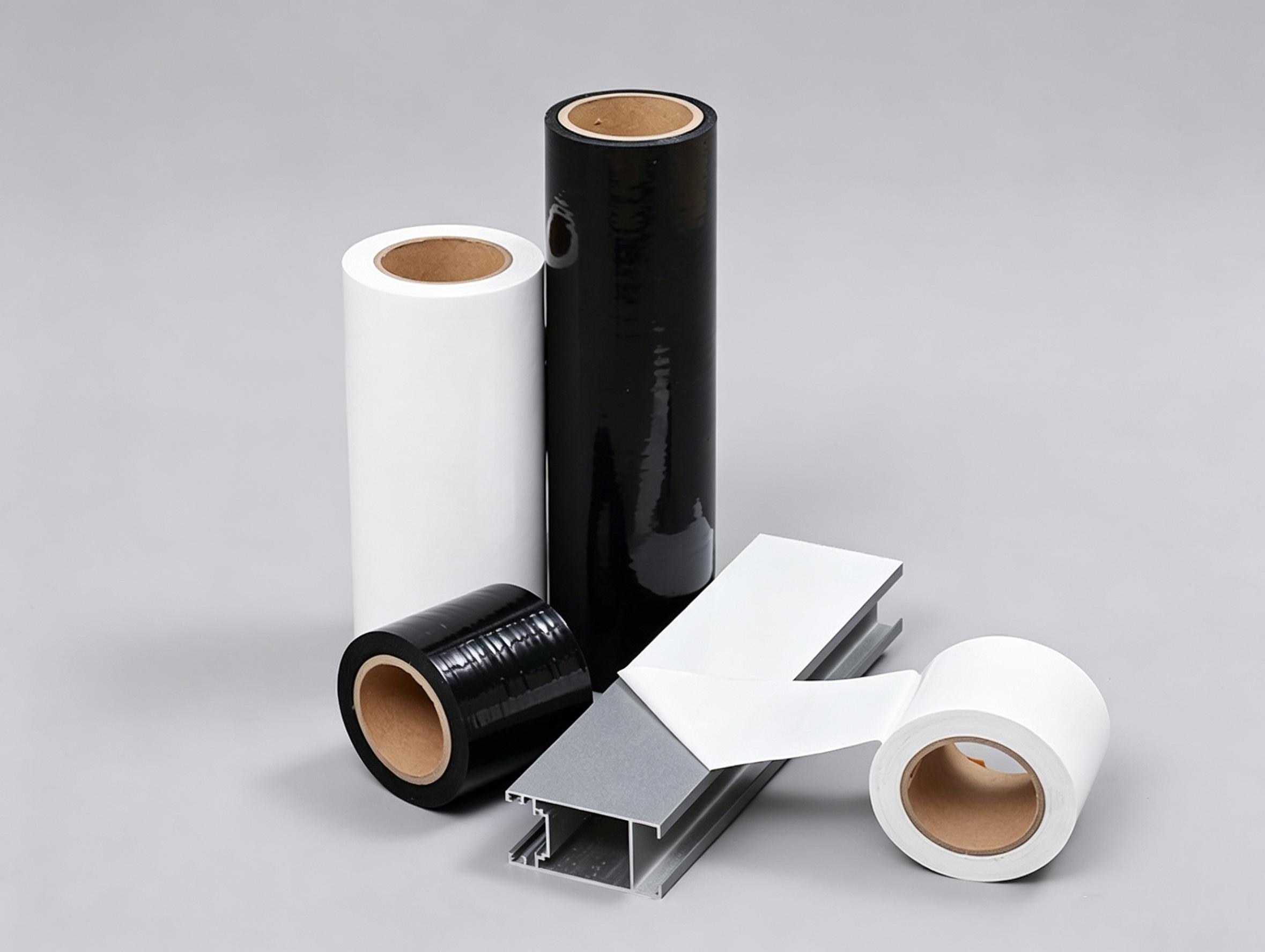
The real proof of coating performance shows up where the environment gets messy, not under a climate-controlled hood. Lab pull-off tests have their place for batch approvals, but they rarely tell you what happens after a month of thermal cycling, humidity swings, and incidental surface contamination. Moving adhesion checks onto the line means operators see failures when they actually occur—right at the point where surface prep, application thickness, and cure time all intersect.
A portable tester changes the conversation from “we passed the qualification panel” to “we can verify every shift.” Instead of shipping samples back and waiting for a report, a trained technician can run a quick tape or pull-stub test at the same station where the coating was applied. This shortens the feedback loop dramatically. If a blast profile drifts or a mixing ratio slips, the line catches it in minutes, not weeks. You stop discarding entire batches based on a single lab anomaly that may have nothing to do with the actual production conditions.
There is also a human factor that lab data misses. When workers perform adhesion checks themselves, they begin to notice subtle signs—how the coating feels under the cutter, how the edges lift, whether the failure is cohesive or adhesive. That tactile knowledge does not live in a spreadsheet. It lives in the hands of people who run the line every day, and it is exactly the kind of insight that keeps small problems from becoming warranty claims later.
Weathering Claims Need More Than a Data Sheet
A datasheet can tell you how a coating held up in a QUV chamber, but it rarely says much about the morning condensation pattern on a coastal facade or the grit that gets blasted against a north-facing wall every winter. Those controlled numbers are useful as a starting point, not a finish line. When someone shows you an accelerated weathering result, the real question is how that test translates to the specific stressors your building actually sees—temperature swings, salt, UV angle, moisture dwell time, and the occasional pressure washer.
Field history matters just as much as the lab report. Ask where the product has been installed for five or ten years, not just what happened in a 2,000-hour cycle. Look at joints, edges, and areas where water lingers. A strong weathering claim should be backed by documented case studies, physical samples from comparable climates, and a willingness to discuss failures—because products that only survive in perfect lab conditions tend to reveal their limits quickly once they face real weather.
Clean Removal Is the Real Test of a Good Film
Most discussions about quality fixate on what a film adds—spectacle, performance, plot. The harder skill is knowing when to stop. A clean removal means the story releases its grip at the right moment, letting the final image breathe instead of tidying every loose end into a bow. Films that manage this feel less like products and more like conversations that end before they wear out their welcome.
That kind of exit is rare because it asks for restraint. A filmmaker has to trust that the audience can carry the unresolved weight home. When a movie ends without over-explaining, the removal isn't empty; it's precise. The themes stay with you precisely because the film didn't force them into a summary. The absence of clutter becomes part of the texture.
This also applies to emotional residue. A good film doesn't leave a sticky, manipulative aftertaste. It lets you step back into your own life without dragging every beat behind you. Clean removal, in that sense, is not forgettable—it's the difference between a brief sting and a lingering infection. The best endings are clean cuts that still ache.
Thickness and Tack Are Negotiable—Performance Is Not
People tend to obsess over caliper numbers and surface tack before a roll even hits the floor. In practice, those specs drift with humidity, substrate porosity, and how long the liner has been sitting in the warehouse. A roll that measures a half-mil thin on Monday can feel completely different by Friday. Chasing an exact tack grade is how shops end up rejecting material that would have bonded perfectly well in their actual working conditions. The numbers matter only as a starting reference—not as a pass-or-fail verdict.
What actually shows up in the finished job is whether the adhesive holds through temperature swings, wash cycles, UV exposure, and the occasional impact from a cart or boot heel. A film with slightly lower initial grab can still outperform a stickier product if its bond builds steadily and resists edge lift over time. Conversely, a roll that feels aggressively tacky out of the box may leave residue, shrink back, or turn brittle after a few months. If the bond fails in the field, nobody cares that the spec sheet looked perfect on paper.
That is why testing should mimic the real abuse the graphic will face, not just a thumb-press on a clean glass panel. Mist the substrate, leave it in direct sun for a week, flex the panel, run it through a car wash, or leave it next to a loading dock in winter. When the material survives those conditions without curling or losing adhesion, the exact initial tack becomes irrelevant. A roll that feels modest at install and still looks tight a year later beats a showroom-sticky product that peels after the first temperature swing.
A Trial Batch Reveals What Brochures Leave Out
The first sample run exposed a gap between the polished spec sheet and the object sitting on the desk. Colors that looked balanced on screen arrived slightly warmer, and the matte finish described in the catalog had an unexpected sheen under office lighting. These are not failures; they are exactly the kind of details a brochure cannot carry.
More telling were the small production choices. The edge trim, the fold alignment, and the weight of the paper stock felt different from what the digital mockup implied. One corner showed faint cracking after a few test folds, something no layout file would ever mention.
Rather than guessing from a printed page, the trial batch became the reference point. It gave the team a physical baseline to adjust coatings, reinforce the fold lines, and recalibrate the color before committing to a full run.
FAQ
Not all films are the same even if they look identical on a spec sheet. Start with the surface you need to cover, whether it is metal, glass, painted panels or plastic. Then ask for adhesion data on that exact material, not a general range. A reliable manufacturer will also send a small test roll before you commit to a large order. That trial often reveals consistency issues no brochure can show.
Adhesion should match the surface energy and the job. High gloss acrylic or polycarbonate usually needs a low tack adhesive, while rough or powder coated metal can handle medium or high tack without leaving residue. Do not assume higher adhesion means better protection. Too much tack is what leads to difficult removal or adhesive transfer after heat exposure. A good supplier will ask about your substrate, finish and outdoor exposure before recommending a range.
Yes, but not in the way most people expect. A thicker film is not automatically stronger. The adhesive layer and core construction often matter more than total thickness. For indoor use on flat sheets, 30 to 50 micron may be enough. For bending, deep drawing or rough transport, you may need 60 to 80 micron or a film with higher elongation. Ask about tensile strength and puncture resistance instead of comparing microns alone.
Outdoor use changes everything. UV exposure, rain, temperature swings and surface heating all affect adhesive stability. If the film will stay on for more than a few weeks, choose a UV stable adhesive and a grade tested for outdoor exposure. Ask for real aging data from a comparable climate, not just a datasheet claim. Even with the right product, removal should be tested after the longest expected exposure period.
Think beyond width and length. Ask about slit tolerance, core size, printed logos, brand colors, perforation and whether the manufacturer can adjust tack within a range. Some factories only offer stock rolls, while others formulate or laminate in house. If you need a custom adhesive or a specific release liner, early communication matters. A supplier that asks detailed questions about your production line usually gives more reliable recommendations than one that immediately quotes a price.
Request a pre production sample and a small trial roll. Watch how the film unwinds, whether it lies flat, how it performs on your actual surface and whether it removes cleanly after a short aging test. For larger commitments, ask about batch records, incoming raw material checks and whether the manufacturer can provide a certificate of analysis. Consistent film is harder to produce than a single good sample.
Do not compare only the per square meter price. Look at what you are actually getting: film composition, adhesive type, roll length accuracy, edge quality, packaging and after sales support. A lower price can come from thinner film, lower grade adhesive or wider tolerances. Get a breakdown of the quote and ask where they can reduce cost if needed. That conversation tells you more about their production understanding than the headline number.
Conclusion
The surface itself should decide which self adhesive protective film you use. Polished metal, textured plastic, and coated glass each respond differently to tack, thickness, and flexibility, so those properties need to follow the substrate instead of being locked in as universal specs. Lab adhesion figures are only a starting point; the real test happens on your line, where films face edge pressure, stacking, temperature shifts, and handling that standard panels never reproduce. If the film lifts or shifts during those steps, a stronger lab number will not save the job.
Weathering data deserves the same scrutiny. A UV claim on a data sheet means little unless the test conditions match the exposure and duration your product will actually see. The stronger measure of quality is clean removal at the end of service: a film that tears, leaves adhesive behind, or requires solvent cleanup turns protection into a new problem. Thickness and tack can often be adjusted to suit the surface, but reliable long-term performance and residue-free release should stay non-negotiable. A small trial batch run through your own equipment will reveal application feel, edge hold, and removal behavior that brochures and spec sheets leave out.
Contact Us
Contact Person: Jack Xu
Email: [email protected]
Tel/WhatsApp: 8615257328825
Website: https://www.temporaryprotectivefilm.com/