
Chinese Labels Inkjet Coding Machine for Efficient Packaging Lines
2026-08-19
Think a tiny coding error on a Chinese label won’t ripple through your entire packaging line? It does—fast. A single unreadable character can trigger repacking, compliance fines, or a rejected pallet. Efficient lines treat coding not as a checkbox but as a precision step. Danmajet builds inkjet coding machines for exactly this reality: Chinese labels stay crisp at line speed, so your throughput doesn’t pay for bad prints.
How Chinese Inkjet Coders Keep Up With 300 Labels Per Minute Without Smudging
At 300 labels per minute, every droplet has less than 200 milliseconds to land, set, and survive contact with rollers and adjacent labels. Chinese coder manufacturers approach this not with a single breakthrough but by tightening the entire ink delivery chain. The inks use a hybrid solvent base that flashes off fast enough to avoid transfer, yet remains stable in the nozzle during micro-pauses. Printhead drive waveforms are tuned so that drop placement stays sharp even as the substrate speeds past, and the throw distance is kept unusually short—often under 3 mm—to reduce airborne drift.
Substrate handling matters just as much as chemistry. Many Chinese-built coders pair the print engine with a vacuum-assisted guide plate or a repositioned idle roller that prevents label flutter at high feed rates. Without that control, the label edge can lift into the print zone and smear the wet code. On the ink side, additives adjust surface tension for coated stocks and films, so the code bonds quickly without bleeding into paper fibers. The result is a readable, scannable code even when labels are immediately stacked or rolled under tension.
Field testing in Chinese packaging plants pushes these machines through abrupt start-stop cycles, dusty environments, and shifts lasting ten hours or more. That real-world abuse forces design choices like quick-release nozzle plates and self-cleaning purge routines that keep the jet stable without manual wiping every few minutes. By tuning both the fluid dynamics and the mechanical path, manufacturers hit the throughput target while keeping smudge rates low enough for pharmaceutical and food lines that cannot tolerate rework.
The Real Difference Between Cheap Printheads and Ones That Last a Full Shift
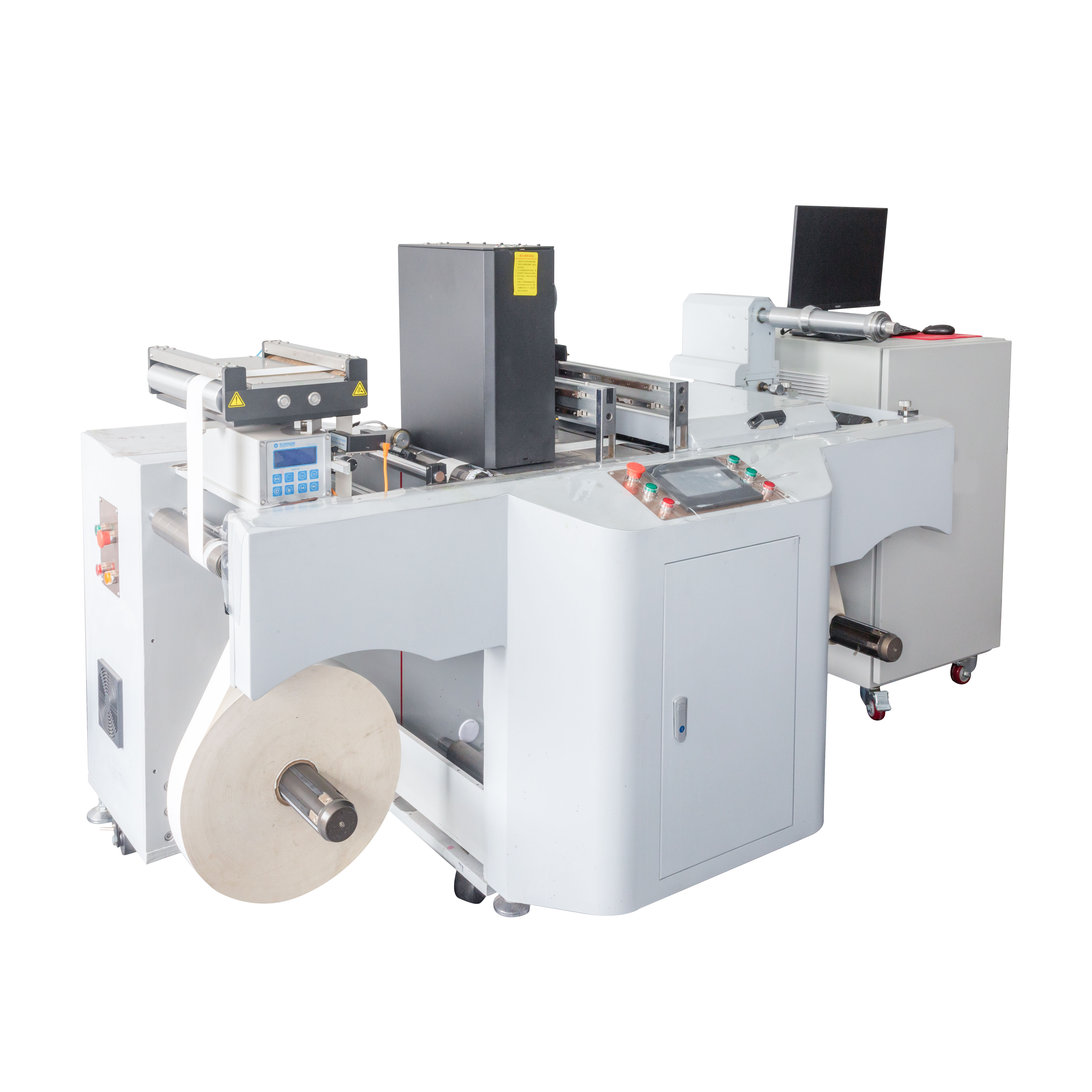
You can spot a cheap printhead the moment it starts skipping halfway through a rushed order. The nozzles clog faster, the ink flow turns uneven, and before you know it, you're wiping the same spot for the third time while the line behind you grows. These budget options often use lower-grade ceramics or thinner coatings, which means heat builds up unevenly and the microscopic channels wear down after just a few hours of continuous use. It's not that they fail all at once—it's the slow, frustrating death of a thousand tiny misfires that eats into your shift.
On the other hand, a printhead that's built to last a full shift feels almost boring in its reliability. The difference is in the details: denser nozzle arrays that hold their shape under thermal stress, coatings that resist dried ink buildup, and materials that don't warp when the printer runs hot for eight hours straight. You don't notice it because you're not thinking about it—you're just printing, label after label, without the constant stop-and-clean routine. That's the real benchmark: not a spec sheet promise, but whether the thing still prints crisp edges at hour seven without a single intervention.
The price gap looks tempting on paper, but the true cost shows up in labor and downtime. A cheap head might save you fifteen bucks upfront, yet you'll burn that in wasted labels, cleaning solution, and minutes lost to reprints before the shift is half over. The ones that last aren't just more expensive—they're designed with a different assumption: that your time matters more than the part's sticker price. And in a busy production environment, that's the only difference that ends up on the balance sheet.
Setting Up a Coding Station That Fits Your Current Packaging Line Without Downtime
A coding station rarely earns the luxury of a dedicated line overhaul. More often, it has to squeeze into an existing setup where space is tight, conveyor speeds are fixed, and every minute of stoppage hits the day's output. The first move is to study the current line's rhythm—where products pause naturally, which side offers access without reaching over moving parts, and how operators already move during a shift. Mounting options like a slim vertical post or an overhead bracket can turn dead space near the conveyor into a stable coding position without shifting other machinery.
Downtime often comes from forcing a station into the line rather than adapting it to the line. Brackets with quick-release plates let you remove the coder for cleaning or changeover while the line keeps running. A simple adjustable arm with locking levers means you can fine-tune print distance on the fly instead of stopping to shim or re-bolt. If the product backs up, a light sensor tied to the conveyor's existing trigger can pause marking automatically, so the station works with the line's hiccups rather than against them.
Finally, test the fit during a slow period or a planned sanitation window. Run a full batch with the station mounted in its final spot, watch for vibration or drift, and have operators note any awkward reaches. Small tweaks—a swivel base, a longer cable routed through existing conduit, a guard to deflect stray case flaps—often eliminate the need for a bigger redesign. When the coding station respects the line's current layout, it stops being an added complication and starts looking like part of the original build.
Choosing Ink for Glossy, Foil, and Recycled Label Stocks Without Guesswork
Glossy stock doesn't hide mistakes—it magnifies them. If you're using a standard dye-based ink, expect it to sit on the surface and smear the moment a hand or a drop of water touches it. Pigment inks with a quick-dry resin component are the safer bet here; they bite into the coating instead of floating on top. But gloss also demands a lower ink load than you'd use on uncoated paper. Too much ink and the sheet turns tacky, then sticks to the next label in the stack. Test a narrow strip before committing to a full run.
Foil is its own animal. The metallic layer repels water-based inks, so you need a solvent or UV-curable ink that can grab onto the surface without crawling or beading. Even then, cure time matters. A UV ink that isn't fully cured will feel slick and can lift off when the label flexes. On foil, contrast is your ally—dark, opaque inks read better than translucent ones. If you're after a soft metallic sheen through the ink, use a low-opacity formulation and accept that the foil's reflectivity will shift the final color.
Recycled stocks are less predictable because the fiber mix changes from batch to batch. The ink that worked last month might bleed or feather on the next shipment. Look for inks labeled low-bleed or formulated for high-recycled content, and reduce your print speed on porous areas. A quick alcohol wipe test on the actual stock will tell you more than any datasheet. If the ink smears or wicks into the fibers, adjust viscosity or switch to a hybrid ink before you waste a full roll.
Troubleshooting Faded Codes and Clogged Nozzles Before They Halt Your Line
Faded codes usually point to something simple before they become a production headache. Start by checking the ink viscosity and the condition of the filters in the delivery system. A drop in fluid pressure or a partially blocked in-line filter will starve the nozzles and leave you with uneven, washed-out prints. If the issue shows up only on certain characters or edges, inspect the nozzle plate for dried ink buildup and run a test purge while watching the jet stream for gaps or deflection.
Clogged nozzles often begin as a minor misalignment that goes unnoticed until the line is already running at full speed. Make it a habit to wipe the nozzle face with the recommended solvent at every shift change, not just when codes start to fade. For solvent-based inks, a short backflush cycle before startup can clear early blockages without pulling the head apart. If a nozzle refuses to recover after two or three short purges, isolate that channel and check for air leaks in the ink supply line before swapping parts.
Temperature and humidity shifts in the plant are overlooked causes of both fading and clogging. Cold ink thickens and changes how droplets form, while low humidity can cause solvent to evaporate faster at the nozzle edge, leaving behind residue. Log the ambient conditions near the coder and adjust the ink type or add a simple hood if the area sees wide swings. Catching these small changes before they halt the line keeps the printer in rhythm with the rest of the process.
What to Ask a Chinese Supplier Before You Commit to an Inkjet Coding Machine
Dig into their ink formulation and batch consistency. A reputable supplier should be able to tell you exactly which inks are compatible with your substrates—whether that's porous carton, glass, or flexible film—and how they handle adhesion testing. Ask for a printed sample on your actual production material, not a generic demo piece. If they hesitate or offer vague answers about ink drying time, chemical resistance, or long-term nozzle performance, treat that as a warning sign.
Don't overlook the machine's real-world maintenance demands. Find out how often the printhead needs manual cleaning, whether spare parts are stocked locally or shipped from overseas, and what the typical response time is for technical support in your region. A machine that's cheap upfront but eats through filters, pumps, or ink lines every few weeks will cost you far more in downtime. Ask for references from buyers in your industry who have run the same model for at least a year.
Finally, clarify the total cost structure beyond the initial quote. Some Chinese suppliers bundle a low machine price with inflated ink cartridge prices or mandatory service contracts. Request a breakdown of consumable costs per 1,000 prints, warranty terms in writing, and whether firmware updates are free or paid. If they can't give you a clear, itemized answer without dodging, keep shopping.
FAQ
Even at conveyor speeds around 120 meters per minute, the printhead's high-frequency drive lays down clean, scannable codes without blurring, thanks to a fast-drying ink formula tuned for coated labels and films.
It sticks reliably to standard paper labels, polypropylene, PET, and lightly varnished surfaces. For tricky substrates, you can adjust the print voltage and choose a slower-drying ink to improve bonding.
Mostly it is a one-minute solvent wipe of the nozzle face and a quick look at the ink level and viscosity readouts on the screen. No special tools are needed, and the whole routine fits into a shift handover.
Usually under two minutes. You loosen a hand knob, slide the printhead to the new position, and the integrated label sensor locks onto the new edge automatically, so you do not have to re-enter offsets manually.
The IP54-rated cabinet and fully enclosed ink path keep out most dust and moisture, which is enough for typical packaging halls. It is not meant for washdown areas, but it handles ambient humidity and stray cardboard dust well.
Yes, it ships with English, Spanish, Vietnamese, and Simplified Chinese as standard, and the font editor lets you load custom glyphs for regional characters or internal product codes.
You can print expiry dates, lot numbers, shift codes, linear barcodes, QR codes, and simple graphics. The on-screen message editor handles all of that without needing a separate PC.
The ink cartridge is designed to be swapped while the line is still moving, and the nozzle runs a self-cleaning cycle during any idle gap longer than a few minutes, so blockages are rare and stops stay short.
Conclusion
Running a packaging line that demands 300 clean labels per minute used to mean choosing between speed and legibility—until Chinese inkjet coding machines changed the game. The best units now pair high-frequency printheads with fast-drying inks that hold sharp edges on glossy, foil, and even recycled stocks without a single smudge. A lot of that performance comes down to the printhead itself: cheap nozzles clog mid-shift and force reprints, while ones built for a full eight hours keep firing consistently. Setting one up doesn't require tearing apart your current conveyor, either. A well-designed coding station bolts onto an existing line with adjustable brackets and a small footprint, so you're up and running during a normal pause, not a weekend shutdown.
Ink choice still trips people up, especially when switching between label materials. Instead of guessing, match the solvent base to the stock—fast-dry for coated paper, gentle adhesion for foil, and lower VOC for recycled fibers. When codes start fading or a nozzle spits air, most issues trace back to a dry printhead or wrong ink viscosity; a quick purge and a filter check beat waiting for a full halt. Before ordering from a Chinese supplier, ask about spare printhead costs, local ink availability, and whether they offer remote calibration help. The right answers tell you whether that machine will blend into your line for years or become a frustrating bottleneck.
Contact Us
Contact Person: Jacky
Email: [email protected]
Tel/WhatsApp: 086 15000607053
Website: https://www.danmajet.com