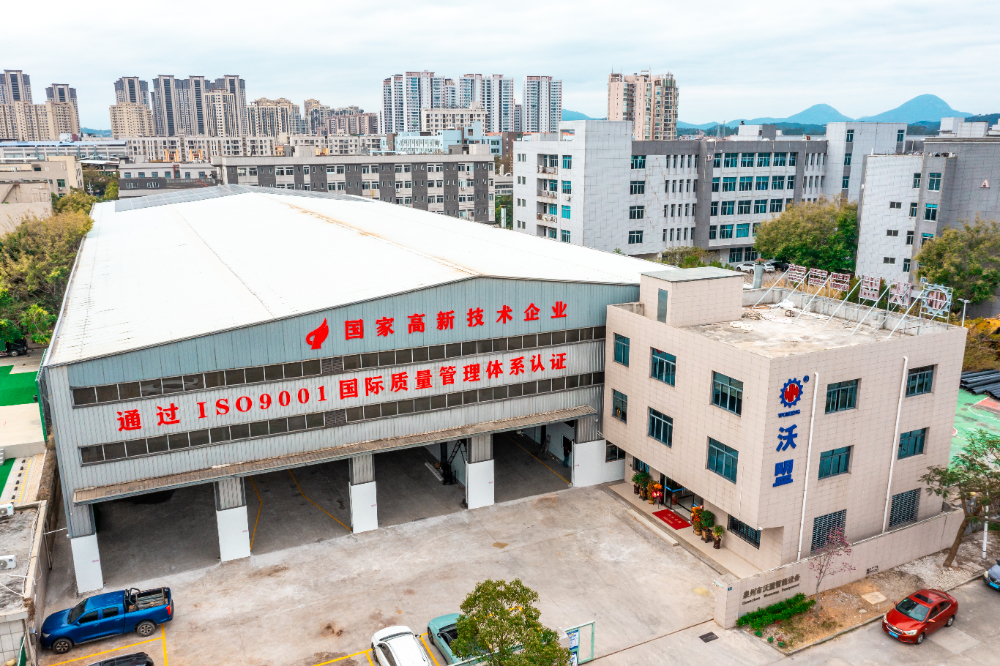
Diaper Manufacturing Machine Factory Guide: Everything You Need to Know
2026-09-08
Every diaper on a store shelf starts with a machine that’s precise, fast, and built to handle high-volume demand. But when you’re choosing a factory partner, the details matter—downtime, waste rates, and hidden bottlenecks can quietly eat your margins. This guide pulls back the curtain on what actually goes into a reliable diaper manufacturing setup, from core-forming units to packaging lines. Along the way, you’ll see why Womeng keeps coming up among engineers who value uptime over sales talk. Ready to look beyond the spec sheets?
Reading a Factory Floor Before You Sign Anything
Walk the entire floor without a guide for at least fifteen minutes. Watch how raw materials enter, where they queue, and whether finished goods have a clear path to the loading dock. A factory that looks tidy only near the entrance often hides congestion behind the first row of machines.
Check the floor itself, not just the equipment. Cracks, stains, and worn tape around workstations tell you how long the current layout has been static. Fresh paint can cover structural issues, but it won't hide uneven surfaces or drainage problems near washdown areas. Ask about the last time the electrical drops or compressed air lines were moved—if nobody remembers, the line setup is likely rigid and expensive to change.
Finally, talk to a line worker or maintenance person if you can. They'll mention things the owner won't: which machines break weekly, where the real bottlenecks sit, and whether the fire exits actually stay clear. Signing a lease or production contract without this ground-level read means you're betting on the floor plan, not the factory.
Machine Types That Matter for Your Target Diaper Style
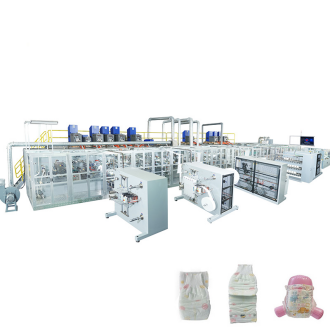
The machine you choose has to line up with the exact diaper style you are actually producing, not just the general category. A standard open-style baby diaper runs best on a full-servo line that can handle continuous web tension while placing elastic strands and hook-and-loop tapes accurately. If you push that same line into pull-up production without the right ultrasonic side-seam welding unit, you will see higher scrap rates and weaker waistbands almost immediately.
Pull-up pants and training pants demand a different kind of machine focus. Look for models with independent servo drives on the leg cuff applicators and a side panel cutting system that does not stretch the nonwoven before welding. That is where most budget lines fall short—they can make a pant-shaped product, but the fit and tear-away sides feel stiff or uneven because the machine was originally tuned for flat diapers.
For adult incontinence or specialty styles, do not overlook the core forming and fluff mat distribution. Machines with hammer mills that produce a wider range of fluff-to-SAP ratios give you more freedom to switch between thin day pads and high-absorbency overnight briefs without changing the whole forming drum. The same goes for packaging: a machine that only stacks flat can bottleneck a pull-up line if you later add a side-panel fold.
Material Choices That Quietly Decide Your Profit Margin
Most operators assume profit leaks come from labor or overhead, but the materials you select often have a silent and steady grip on your margins. A cheaper upfront component can trigger higher failure rates, more returns, or faster wear-out, each of which quietly drains revenue long after the initial sale. The real cost shows up in warranty claims, replacement shipping, and customer service time—none of which appear on the first invoice.
Consider two packaging options: one is thin and inexpensive, the other slightly thicker with better moisture resistance. On paper, the thinner option saves 12% per unit. In practice, however, product damage during transit spikes by 18%, and those refunds and reshipments erase the savings many times over. Smart businesses don’t choose the cheapest material; they choose the material that minimizes total cost per satisfied customer, not just cost per item produced.
A practical approach is to track the full lifecycle of each material choice: purchase price, defect rate, handling time, return frequency, and even customer perception of quality. Sometimes a marginal increase in material cost—like switching to a more rigid insert or a higher-grade fastener—can reduce downstream losses enough to lift net profit by several percentage points. The key is to stop treating materials as a fixed line item and start treating them as a strategic lever on your profit margin.
Throughput Numbers Worth Testing in Person
When vendors quote throughput figures, they're usually measured in shielded labs with ideal signal paths. A router that claims 4.8 Gbps on the box might deliver a third of that once you factor in drywall, neighboring networks, and a decade-old laptop's Wi-Fi chip. That gap between spec sheet and real-world is exactly why some numbers need to be verified with hardware in your own space. You can't simulate a crowded apartment complex or a warehouse full of metal shelving from a product page.
Wired gear has its own surprises. A switch with a non-blocking backplane sounds great until you enable QoS, VLAN routing, or link aggregation and watch total throughput drop because the CPU can't keep up with the ASIC. The same goes for NAS units—advertised sequential reads are useless if your workflow is mostly small random writes. Running iperf or a large file transfer in person reveals thermal throttling, buffer limitations, and firmware bugs that no datasheet will mention.
Then there are wireless mesh systems and 5G hotspots. Lab numbers often assume a single client, perfect placement, no competing traffic. In a real home, adding a second node can halve the available bandwidth on a backhaul channel, and outdoor 5G performance shifts with weather, glass coatings, and how many people are on the same tower. These variables are cheap to test in person, but expensive to ignore after you've already deployed a hundred units.
After-Sale Support Gaps That Stall New Lines
New product lines often stumble not because of design flaws or pricing missteps, but because the support structure behind them crumbles once the sale closes. A customer who can't reach a knowledgeable human within minutes of unboxing is likely to return the item and never revisit the brand. This gap between the promise in the marketing copy and the reality of post-purchase assistance quietly kills repeat business before it has a chance to form.
Without a dedicated onboarding flow or clear troubleshooting path, even loyal buyers start to feel like they're beta testing on their own dime. Phone queues that loop, chatbots that dodge direct questions, and warranty terms buried in fine print all send the same message: the company cares more about the transaction than the outcome. When that perception takes root, word-of-mouth shifts from praise to warning, and the new line stalls despite strong initial orders.
Sustainable growth demands that support gaps be treated as product defects, not afterthoughts. This means training frontline staff on the new line before launch day, publishing honest setup guides, and offering a no-questions-asked replacement window for early adopters. Closing these gaps doesn't just reduce returns—it turns first-time buyers into the kind of advocates who pull a new product line forward on their own.
When It Makes Sense to Retrofit Instead of Replace
Retrofitting often wins when the core structure is still sound but a few components are holding it back. Think of an old HVAC system in a commercial building: replacing the entire setup could mean weeks of disruption, whereas swapping in a modern control unit or adding variable-speed drives can deliver most of the energy savings at a fraction of the cost and downtime.
There's also the question of embodied value. A machine tool from the 1980s might still have a perfectly rigid frame and precision ways. Buying a brand-new equivalent could mean paying for features you'll never use, while a retrofit—new spindle, updated CNC controls, maybe a fresh set of bearings—brings it back to spec without discarding a half-ton of cast iron.
Budget constraints and lead times make the decision even clearer. If your existing equipment is already integrated into the facility's layout, power supply, and operator routines, a targeted retrofit can be completed over a weekend rather than waiting months for a new unit to arrive and be commissioned. That kind of continuity often justifies the upgrade on its own.
FAQ
Ask for a live production run, not just a showroom demo. Look at how they handle raw material tension control, blade sharpness, and waste splicing. A factory that can run a full roll change without stopping the line is usually worth a second look.
You need a pulp milling and core forming unit, a SAP dosing system, a top sheet and back sheet unwind stand, elastic application stations, a cutting and folding section, and a stacking or bagging module. Some lines combine these into compact units, but separating them makes maintenance much easier.
Ignore the maximum speed printed on the brochure. Ask for the stable running speed with a specific diaper size and GSM. For example, a machine may claim 800 pieces per minute, but if it only holds that for 10 minutes before jam, real capacity is closer to 500. Get a written guarantee tied to uptime.
Thin back sheet films tear easily if unwind tension is not tuned. Low-quality pulp creates uneven core density and leads to clumping. SAP powder with inconsistent particle size will cause dosing blockages. Always test materials on the actual machine before buying in bulk.
Preventive maintenance every 500 running hours is a good baseline for most mid-speed lines. Replace cutting blades after 200 hours, clean SAP dosing augers weekly, and check ultrasonic bonding horns monthly. Waiting for a breakdown always costs more than scheduled stops.
Besides the main line, you need air compressors with dryers, a chiller for cooling rollers, dust extraction for pulp and SAP, spare parts inventory, and training for operators. Often these add 25 to 35 percent to the machine price. Also factor in local power stability because voltage drops can damage servo drives.
Break down the quote by module: core forming, elastic application, cutting unit, stacking. Ask for the brand and country of origin of PLCs, servo motors, sensors, and bearings. A low price with unbranded electrical parts will cost more in downtime within two years than a higher price with Siemens or Omron components.
Servo-controlled elastic application lets you change leg cuff tension without mechanical adjustments. Vision inspection systems catch missing tapes or crooked waistbands before packaging. Automatic splicing for nonwoven materials reduces waste. But avoid touchscreen gimmicks that only add software complexity without changing the physical product.
Conclusion
Walking through a diaper production facility before committing to a purchase reveals more than any brochure ever could. The way operators move around the lines, how quickly they swap raw materials, and the general tidiness of the floor often predict long-term reliability better than a spec sheet. For your target diaper style—whether it's pull-ups, tape-on, or ultra-thin—matching machine capabilities to actual product design matters far more than chasing the highest speed rating. Material handling systems deserve equal scrutiny: poor tension control on nonwoven or film can quietly eat into margins through waste, while a well-tuned feeding system lets you run lower-cost substrates without sacrificing quality.
Throughput figures quoted in a sales deck rarely survive contact with real production conditions, so bring your own core materials and run a sustained trial that includes stops and restarts. Pay attention to how the factory's engineers respond when something jams—that same responsiveness will define your experience after installation. Many new lines stall not because of the machine itself, but because of weak after-sale support: missing spare parts, slow remote diagnostics, or training that ends too soon. Before replacing an older line, consider retrofitting. Upgrading drives, controls, or forming heads can often deliver modern output levels at a fraction of the cost, especially if the frame and web path remain sound.
Contact Us
Contact Person: Jessie Lai
Email: [email protected]
Tel/WhatsApp: 86-188594442931
Website: https://www.wm-machinery.com