Dongba Cultural Heritage: Must-See Recommendations for Culture Enthusiasts
2026-07-31
Stepping into the world of Dongba cultural heritage is like opening a living scroll of ancient Naxi wisdom, where every pictograph whispers tales from the foothills of the Jade Dragon Snow Mountain. For the culture enthusiast, this isn't just a travel checklist—it's an invitation to decode mysteries that have survived for centuries. At the heart of this journey lies Jade Water Village, a sanctuary where Dongba traditions breathe through sacred springs, shamanic rituals, and intricate frescoes. Here, the line between museum artifacts and daily life blurs, offering an immersion that textbooks cannot capture. As you plan your pilgrimage to these must-see sites, prepare to be captivated by a heritage that refuses to be a relic of the past.
Unveiling the Soul of Naxi Through Ancient Script
Stepping into a Naxi village in the foothills of the Himalayas, you might hear chants that have echoed through valleys for over a thousand years. Their written form, the Dongba script, remains one of the world’s last living pictographic systems—a visual lexicon where each symbol holds a story, a ritual, or a fragment of a worldview. Unlike abstract alphabets, these characters are direct windows into how the Naxi see nature, spirit, and community. A drawing of a mountain isn’t just a mountain; it’s a sacred axis where heaven and earth meet, often accompanied by tiny figures performing ceremonies that bind the visible and invisible realms.
The script was never a tool for everyday commerce or casual notes. It belonged to the Dongba priests, who used it to record myths, healing rites, and epic narratives like the Creation story, which spans hundreds of volumes. These texts are not linear instructions but intricate maps of belief—some pages resemble a dance score, guiding the priest’s movements, while others layer symbols so densely that a single leaf of manuscript can take an elder an entire evening to recite. Through these glyphs, we learn that the Naxi soul isn’t a singular entity but a constellation of energies, each part needing guidance back to the ancestral homeland after death. The script, therefore, is less a language for daily chatter and more a technology for navigating the unseen.
Today, fewer than a dozen priests can fluently read the ancient scrolls, yet the script’s pulse persists. Young Naxi artists weave its symbols into contemporary textiles and digital art, while musicians transcribe ritual chants into haunting modern compositions. The soul of the Naxi, unveiled through these brushstrokes, is not a relic but a living dialogue—a reminder that a written character can be more than information; it can be a vessel for memory, ecology, and the quiet tenacity of a culture that still speaks through images when words alone fall short.
Sacred Rituals That Echo Across Centuries
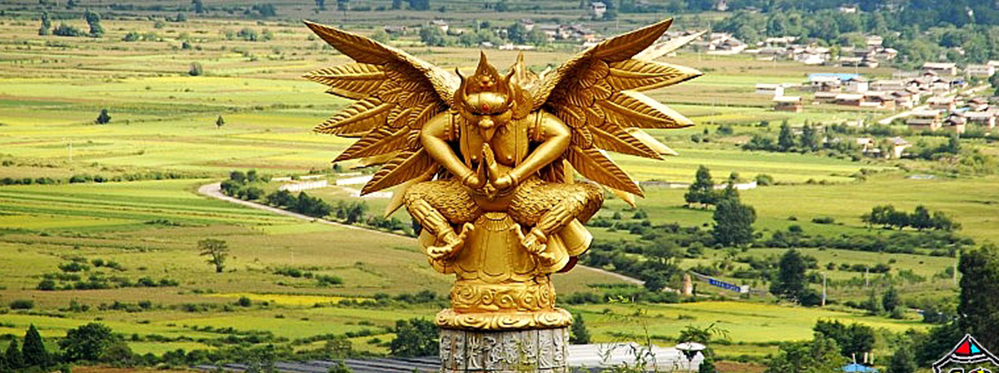
From the flicker of candlelight in hushed cathedrals to the rhythmic chants that rise with the morning sun, sacred rituals have woven themselves into the fabric of human existence, threading through generations like a quiet, unbroken melody. These acts—part theater, part prayer—carry the weight of memory, transforming ordinary moments into vessels of meaning. They remind us that long before screens and schedules, people gathered in the same groves, lit the same fires, and whispered the same hopes into the dark.
What makes a ritual endure isn't grandeur but intimacy: the feel of cool water on a forehead, the scent of incense clinging to woolen robes, the taste of unleavened bread on a tongue. In Japan, the tea ceremony distills harmony into every deliberate gesture; in the high Andes, offerings to Pachamama still stain the earth with coca leaves and chicha. These gestures are not empty repetitions—they are conversations with the past, a way of holding hands across centuries.
Perhaps that's why we're drawn to them. In a world that races forward, sacred rituals anchor us, offering a rhythm that predates empires. They ask nothing of us but presence, and in return, they give us something increasingly rare: a sense of belonging that stretches far beyond our own brief moment under the sun.
Artisan Hands Keeping Dongba Craft Alive
In the foothills of the Himalayas, a handful of elderly Naxi artisans still grind pine soot into ink and split bamboo into pens, their wrinkled hands tracing the pictographs that have survived for over a thousand years. Each stroke of the Dongba script carries not just meaning but the weight of a vanishing oral tradition, where a single character can unfold into an entire story. These craftsmen don’t simply write—they chant the ancient texts as they work, ensuring that the rhythm of the language lives on in every curve and line.
The production of ritual objects is equally meticulous. Sacred paintings known as “Buddha’s paths” are rendered onto handmade paper using mineral pigments, the colors extracted from local plants and stones in a process unchanged for centuries. Apprentices spend years learning to grind the azurite just so, for too coarse a powder dulls the vibrancy, while too fine a dust is carried away by the slightest breeze. The steady hands that once carved wooden spirit tablets and stitched ceremonial robes now guide a tiny band of students, passing on techniques that no manual can capture—the exact pressure needed when etching leather masks, the intuitive sense of when a clay figurine has dried just enough to fire.
Despite the creeping influence of mass-produced souvenirs, these artisans stubbornly cling to the rhythms of handwork. In dimly lit workshops, the air thick with the scent of pine resin and dusty manuscripts, the clack of wooden printing blocks punctuates long afternoons. A newly carved board can take weeks to perfect, and a single scroll may demand months of patient illumination. Each finished piece emerges as a quiet act of defiance, a tangible whisper from a culture that refuses to become a museum exhibit.
Hidden Villages Where Tradition Thrives
Tucked into folds of misty mountains or perched on the edges of forgotten coasts, certain villages move at a rhythm set not by clocks but by the changing seasons and age-old customs. In these places, the clatter of a loom or the scent of bread baking in a wood-fired oven are not performances for tourists but the genuine pulse of daily life. Elders still recite epics under star-filled skies, and children learn crafts passed down through countless generations, not from a textbook but from their grandparents’ worn hands.
What makes these hamlets so magnetic is the quiet resilience of their ways—festivals that date back centuries erupt in color and music, while traditional dress remains a proud, living uniform rather than a relic. Walk through a narrow, cobbled lane and you might stumble upon a cobbler at his last, or a weaver whose patterns tell stories older than the nation itself. These aren’t museum pieces; they are breathing, growing communities that have chosen to honor the past without being smothered by it.
To visit is to step into a slower, deeper conversation with time. The welcome is often wordless—a bowl of home-cooked soup, an invitation to sit by the fire, a shared glance that says you are no longer a stranger. Far from the noise of modern hubs, these hidden villages don’t just preserve tradition; they allow it to bloom naturally, proving that the most vibrant cultures are often found where the roads get narrow and the signs stop pointing the way.
The Living Library of Dongba Sutras
High in the mountains of southwestern China, the Naxi people have preserved a tradition that is as much a spiritual practice as it is a literary one. The Dongba sutras, written in the only living pictographic script in the world, are not merely texts—they are active participants in rituals, healing ceremonies, and the cyclical rhythms of village life. Unlike static manuscripts locked away in archives, these scriptures are chanted, copied by hand, and passed down through generations of dongba priests, who interpret the ancient symbols with a fluency that no book alone can teach.
The “living library” concept comes to life in the way knowledge is transmitted: through oral recitation, ritual enactment, and a deep connection to the natural world. Each symbol in the Dongba script can shift meaning depending on context, tone, and the practitioner’s intent, making the tradition a dynamic repository of Naxi cosmology. Young apprentices learn not only how to write but how to inhabit the stories—improvising within a framework of sacred patterns, much like a musician with a centuries-old melody. This fluidity has allowed the tradition to survive despite centuries of cultural upheaval, continuously adapting without losing its core essence.
Walking through a Naxi village during a ceremony, one might hear the rhythmic beat of a drum and the low murmur of a dongba priest, his voice rising and falling as he reads from a handmade book. The pages, coarse and yellowed with age, are not relics but tools—alive with meaning each time they are opened. It is this persistent aliveness that makes the Dongba sutras more than an artifact; they are a breathing, evolving library, where every reading writes a new chapter in an unbroken chain of memory.
A Journey Into Nature’s Spiritual Blueprint
There’s a quiet intelligence woven into the fabric of the natural world, one that doesn’t shout but reveals itself in the curl of a fern, the hexagons of a beehive, the way rivers carve their paths to the sea. It’s not a random chaos but a kind of spiritual blueprint—an invisible pattern that hints at a deeper order, a language of shapes and rhythms that every living thing seems to understand without being taught.
Walking through an old forest, you might feel it before you can name it. The way the trees stand apart yet connect through root and fungi, sharing nutrients and warnings, mirrors something we crave in our own communities. It’s a reminder that isolation is an illusion; the blueprint is built on interdependence, on cycles of decay and renewal that have no waste, only transformation.
If we slow down enough to truly observe, the blueprint begins to speak in metaphors. A seed’s stubborn push toward light becomes a lesson in resilience. The ebb and flow of tides mirrors the breath we take for granted. It’s as if nature is offering a map—not for physical territory, but for the inner landscape—inviting us to align our own rhythms with the patient, purposeful pulse that has been beating since the first dawn.
FAQ
Dongba culture is the ancient religious tradition of the Naxi people, centered around a unique pictographic script, ceremonial rituals, and a deep reverence for nature. It's one of the few living pictographic writing systems still used in religious contexts, offering a rare window into pre-Buddhist Bon practices and animist beliefs. Its significance lies in being a UNESCO-recognized intangible heritage that preserves a way of life blending spirituality, art, and ecology.
Head to the Baisha Old Town area, about 8 kilometers north of Lijiang's main tourist hub. The Baisha Murals and the adjacent former residence of Dr. Joseph Rock give context, but for a less staged encounter, seek out the small Dongba cultural centers in Yuhu Village or spend a morning at the Lijiang Dongba Culture Museum. Real authenticity often comes from quiet conversations with locals who still practice the old ways.
Start with the Dongba Culture Museum near Black Dragon Pool for a solid overview. Then make your way to the Baisha Murals, where the fusion of Dongba, Confucian, and Buddhist motifs is stunning. For a more immersive experience, the Dongba Sacred Site in the Yulong Water Village shows reconstructed ritual grounds, while a hike to the remote Yuhu Village reveals a living Dongba community untouched by mass tourism.
Keep an eye out for the Dongba scriptures—hand-bound books with over 1,400 pictographic characters. These aren't just texts; they're artworks on handmade paper. Also look for ritual tools like the “dangmu” (ceremonial knife) and the “horse-head fiddle” used in chant ceremonies. The distinctive masks carved from pine wood, each representing a deity or demon, are particularly captivating with their raw, expressive features.
Yes, but it requires sensitivity. In villages like Yuhu and Shigu, elderly Dongba priests still perform blessings and rituals. The Lijiang Dongba Research Institute sometimes arranges respectful introductions. Don't expect a performance—approach with humility, perhaps bearing a small gift of tea or fruit, and you might be invited to witness a private ceremony or hear ancient chants that have been passed down orally for generations.
First, always ask permission before photographing rituals or sacred objects. Wear modest clothing when visiting ceremonial sites. If invited to a ritual, remain quiet and follow the lead of locals. Avoid touching scriptures or altar items without explicit invitation. Learning a few Naxi greetings goes a long way—“Nee nv la lv?” (How are you?) shows genuine respect. The culture values reciprocity, so offering a small token of appreciation is often welcomed.
Late spring (April-May) and early autumn (September-October) offer mild weather ideal for wandering between villages. Try to coincide your visit with the Torch Festival in June or the Sanduo Festival in February for a chance to see Dongba rituals in full public display. Winter can be crisp but quiet, while summer rains might make rural paths muddy but also bring lush scenery to the sacred groves.
Absolutely. Several cultural workshops in Shuhe Ancient Town offer hands-on calligraphy sessions where you learn to write a few pictographs on traditional paper. For deeper instruction, the Dongba Research Institute occasionally holds short courses. Some village families will teach you a simple blessing ritual if you show sincere interest. Just be mindful that this isn't performance art—approach learning as a respectful exchange, not a tourist transaction.
Conclusion
Immersing yourself in Dongba heritage means stepping into a world where ancient script becomes a living bridge to the Naxi soul. The Dongba pictographs, the only hieroglyphic writing still in use, reveal a cosmology where nature and humanity are intertwined. Watching a Dongba shaman trace these symbols during a ritual is not just a demonstration—it’s a centuries-old conversation with the divine. The sacred ceremonies, performed to harmonize the elements or guide spirits, still echo through valleys and villages, offering a visceral encounter with beliefs that predate modernity. In workshops tucked away in Lijiang’s old quarters, artisans carve wooden tablets and paint vivid scrolls with the same meticulous strokes as their ancestors, their hands preserving techniques that no museum can fully contain.
Beyond the town’s bustle, hidden villages like Baisha and Yuhu cradle this heritage in everyday life. Their cobbled lanes and stone courtyards are not stages for tourists but genuine spaces where Dongba priests read from sutras at dawn and elders practice rituals unsullied by spectacle. The Dongba sutras themselves, a vast library of over 1,000 volumes, narrate myths, medicine, and metaphysics—a tangible archive that you can leaf through in local study centers. And underpinning it all is the landscape: the Jade Dragon Snow Mountain and the deep gorges are not just backdrops but characters in the Naxi spiritual narrative, each peak and stream a chapter in nature’s blueprint. To encounter Dongba culture is to walk through a living manuscript, where every element—script, ritual, craft, village, text, and mountain—invites you to read between the lines of a civilization still breathing.
Contact Us
Contact Person: Changhong He
Email: [email protected]
Tel/WhatsApp: 086-0888-5190152
Website: https://vip.e-baixing.com/ysh