HDP PPGI Factory: Premium Pre-Painted Galvanized Steel Solutions
2026-10-12
Most pre-painted steel looks fine on day one. The real test is what it looks like after five summers, three monsoons, and a few hailstorms. That’s where HDP PPGI from LANYUN changes the conversation. Our factory doesn’t just apply a premium coating—we engineer a complete pre-painted galvanized steel solution that holds color, resists corrosion, and stands up to the kind of abuse most building materials never see. If you’ve ever wondered why some metal panels fade while others stay factory-fresh, the answer starts here.
What Makes HDP's Pre-Painted Galvanized Steel Different
HDP starts with a tightly controlled galvanizing step that leaves the zinc layer smoother and more uniform than what you typically see from commodity lines. That matters because any roughness or uneven zinc crystallization becomes the foundation for every coating that follows. By keeping the substrate consistent coil after coil, HDP eliminates the patchy adhesion and micro-cracking that often show up later as rust spots or flaking paint on standard pre-painted sheets.
The coating system itself is built around a primer that flexes with the steel instead of fighting it. Where ordinary primers harden into a brittle shell, HDP's formulation stretches and recovers during forming, bending, and thermal cycling. The topcoat then locks in color through a combination of UV-stable pigments and a resin matrix that resists chalking far beyond the usual warranty period. This means a panel bent on a brake today won't show stress marks next season, and a roof exposed to harsh sunlight won't fade into a patchwork of different shades.
What really sets HDP apart is that every coil carries its own process fingerprint. Temperatures, line speed, coating thickness, and curing times are recorded in real time, not sampled after the fact. If a batch ever underperforms, the data points to the exact stage instead of leaving your team guessing. For fabricators and builders, that converts into fewer rejected panels, predictable touch-up work, and a finished product that looks the same from the first sheet to the last.
Inside the Coating Process: How We Lock in Color and Durability
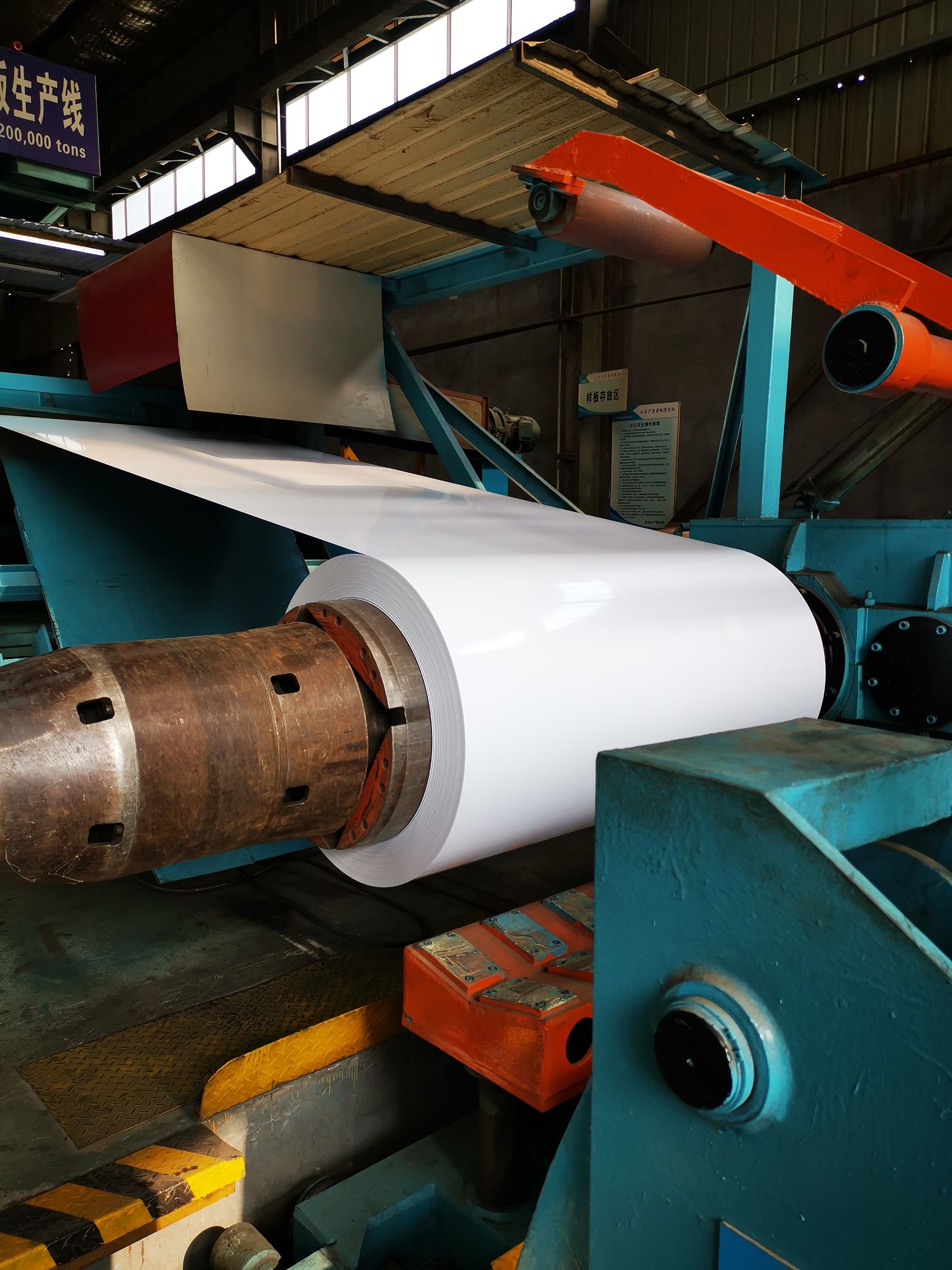
The coating line starts with a deep clean, because even a speck of dust can wreck the bond between metal and finish. We run every part through a multi-stage wash that strips oils and micro-debris, then force dry it before a single drop of coating touches the surface. This isn't just prep work—it's the difference between a finish that peels in a year and one that stays put through sun, salt, and road grime.
From there, we lay down color in controlled passes, not one thick burst. Each layer is cured at a specific temperature so the pigments cross-link into the base instead of sitting on top like a sticker. Our color matching uses a closed-loop system that checks the wet film before it bakes, so a batch mixed on Tuesday looks identical to the one you approved last month. That consistency matters when you're matching an existing product line or building a brand around a signature shade.
The final cure is where durability actually gets locked in. We ramp the heat slowly to let the finish flow out and fill microscopic pores, then hold it long enough to reach full hardness. The result is a surface that resists scratches, chemicals, and UV fading without feeling brittle. It's a balance of flexibility and toughness—hard enough to take a hit, forgiving enough not to crack when the substrate expands and contracts.
Custom Thickness, Width, and Finish Options Without Long Delays
When you need sheet metal or machined parts with a specific thickness and width, the last thing you want is a production schedule that drags on. We keep a broad range of raw stock on hand and pair it with in-house cutting and finishing equipment, so orders for non-standard dimensions move through without the usual back-and-forth. You don't have to settle for off-the-shelf sizes or wait weeks for a special mill run.
Finish options get the same treatment. Whether it's a brushed texture, anodized coating, powder coat, or a custom edge profile, the team adjusts the line quickly instead of batching jobs by finish type. That flexibility means a mixed order of different thicknesses and surface treatments can still ship as one complete package, often within days rather than the industry-standard lead time.
Because the quoting process includes real-time material availability and finishing capacity, you'll know upfront if your custom combination is feasible. And if something needs tweaking after samples are reviewed, revisions are handled in-house without restarting the queue. The result is a supply chain that adapts to your design, not the other way around.
Why HDP Sheets Resist Cracking, Peeling, and Rust
The molecular backbone of HDP sheets is built from long, tightly entangled polymer chains that flex under stress instead of snapping. This inherent ductility means temperature swings and minor impacts get absorbed as microscopic movement rather than concentrated at a single point, so hairline fractures never get a chance to form. Unlike rigid thermosets, the material redistributes load evenly, which keeps corners and drilled edges from developing the classic spiderweb cracks you see in acrylic or PVC.
Peeling is a non-issue because there's no separate surface layer to delaminate. The color and texture run through the entire thickness, so even after years of abrasion or UV exposure, you're simply exposing more of the same homogeneous material. Add to that an extremely low water absorption rate—well under 0.01%—and you avoid the internal swelling that normally pushes thin top coats off substrates. Chemical cleaners, salt spray, and mild solvents don't soften or lift the surface either.
Rust requires metal, and HDP contains none. The non-polar surface actively repels water and electrolytes, so the electrochemical reaction that causes oxidation never initiates. Even in marine environments or chemical processing plants where stainless steel eventually pits, HDP sheets remain inert. They won't form a patina, won't bleed rust streaks onto adjacent surfaces, and won't weaken from hidden corrosion beneath fasteners or along cut edges.
How We Package and Ship PPGI Coils to Arrive Damage-Free
Before a single coil leaves the warehouse, it gets wrapped in a double layer of VCI paper that stops moisture from sneaking in during long hauls. We then seal the entire coil in a tough polyethylene film with taped seams, so even if a container sweats on the ocean, the PPGI surface stays dry and free of white rust.
Each wrapped coil is placed on a steel-reinforced wooden pallet with a center hole that matches the coil ID. We use two high-tensile steel straps through the eye and around the pallet to lock the coil in place, then add wooden wedges between the coil and the pallet to prevent any rolling or shifting. The straps are tightened with a tensioner, not by hand, so there is no give during transit.
For container loading, we position the coils eye-to-sky and place rubber mats under every pallet to increase friction. If a container is not fully filled, we insert pressure-treated timber bracing between the coils and the container walls, and we never stack coils unless the buyer explicitly requests it and the lower coil is rated for the load. This way, the coils arrive at the destination looking exactly like they did when they left our line.
Real Projects: Where HDP PPGI Stands Up to Harsh Conditions
Take a walk along any industrial waterfront and you'll see exactly what HDP PPGI is up against. Salt spray rides the wind, moisture clings to every surface, and standard coated steel often starts showing rust blooms within a couple of seasons. Yet on the same stretch of coast, warehouses and processing plants clad in HDP PPGI keep their color and structural integrity year after year. The difference isn't a thicker coat of paint—it's the high-durability polymer system that bonds to the galvanized base, creating a barrier that shrugs off chloride attack instead of slowly surrendering to it.
Inland, the challenges shift but don't soften. A logistics hub near a cement plant deals with abrasive dust and alkaline runoff, while a chemical storage facility faces constant exposure to acidic vapors. HDP PPGI panels installed on these sites show none of the chalking or edge creep that plagues conventional pre-painted steel. One project manager noted that after five years, the only maintenance required was a routine wash to remove surface grime—no touch-ups, no replacement sheets, no hidden corrosion eating away beneath the film.
What makes HDP PPGI stand out in these real-world settings is not a lab-tested claim but a track record of surviving the unglamorous, everyday abuse that weather and industry throw at it. From coastal canneries to fertilizer depots, the coating holds its gloss, resists UV degradation, and keeps its adhesion even when temperatures swing from freezing nights to blistering afternoons. That kind of resilience doesn't come from following a generic formula—it comes from a polymer chemistry tuned for the specific ways metal fails outdoors, and it's why HDP PPGI keeps getting specified for projects where failure isn't an option.
FAQ
HDP uses a multi-layer coating system with a chromate-free primer and a UV-stable topcoat, which extends color retention even in coastal environments. We also run inline thickness gauging and adhesion testing on every coil, so the finish stays consistent from edge to edge.
Yes, we keep a wide range of stock colors, but if you need an exact match, our lab can formulate almost any RAL or Pantone shade. Small batch trials are available before full production, which helps avoid surprises on site.
We process coils from 0.14 mm up to 1.5 mm in thickness and widths from 600 mm to 1,250 mm. If your project falls outside that, we can often arrange slitting or cut-to-length services to meet the spec.
The galvanized base layer uses a zinc coating between Z60 and Z275 g/m², and we can add a thicker primer or a PVDF topcoat for marine or industrial exposure. That combination has held up in salt-spray tests beyond 1,000 hours without red rust.
Roofing and cladding are the biggest ones, but we also supply manufacturers of garage doors, sandwich panels, gutters, and home appliances. The coating flexibility works for both roll forming and bending without cracking.
We do matte, textured, and wrinkle finishes in addition to regular gloss. Some customers also request anti-fingerprint or anti-bacterial coatings for interior applications, which we can apply on the same line.
For stock sizes and colors, we can ship within 10 to 15 days. Custom colors or non-standard thicknesses usually take 20 to 30 days, depending on the coating trial and mill schedule.
Before dispatch, every coil goes through a T-bend test and an impact test to check coating flexibility and adhesion. We also work with a primer that promotes mechanical bonding to the zinc layer, so the paint moves with the metal during roll forming.
Conclusion
HDP PPGI Factory doesn't just coat steel—it builds a barrier that holds up when cheaper sheets fail. The pre-painted galvanized line runs every coil through a multi-stage pretreatment and primer system before the topcoat cures, so color sits locked into the zinc layer rather than simply floating on the surface. That's why our PPGI resists cracking along bend lines, peeling at edges, and the kind of rust that starts at scratches. We also keep thickness, width, and finish choices genuinely flexible: you can specify a non-standard gauge or a low-gloss textured topcoat and still get coils out the door without the usual six-week wait. Production scheduling is tight, not rigid.
Shipping matters as much as the coating. HDP coils are wrapped with edge protectors, vapor barriers, and steel cradles that stop shifting during transit. In coastal projects, high-humidity warehouses, and cold-climate roofing, the same PPGI has stayed intact season after season because the zinc layer, primer, and topcoat work as one system. Instead of promising “premium” as a buzzword, we let real installations do the talking—where paint adhesion, bend performance, and corrosion resistance get tested by weather, not by lab samples alone.
Contact Us
Contact Person: Nia
Email: [email protected]
Tel/WhatsApp: +86 18954360337
Website: https://www.sdppgi.com