
International Bill of Lading Database Business Strategies for Global Trade
2026-09-11
Every bill of lading is a fingerprint of a real shipment—and when aggregated, those fingerprints map the hidden flows of global trade. Most companies still ignore the International Bill of Lading Database, treating it as back-office paperwork instead of a strategy goldmine. That's where the advantage lies. In this post, we break down how to turn shipment records into supplier insights, demand forecasts, and competitive moves using Tendata's data platform. The data has always been there; the difference is knowing what to do with it.
Mapping Buyer Power Through Cargo Control
Control over cargo movement often reveals more about commercial leverage than contract terms or pricing models. When a buyer can dictate routing, storage conditions, or delivery windows, that operational grip translates into bargaining strength further up the chain. Suppliers become dependent on the buyer's logistics decisions, and that dependency quietly shifts the balance of power without a single renegotiation.
Mapping this influence requires looking beyond volume commitments. It means tracking who names the freight forwarder, who owns the warehousing data, and who absorbs the demurrage costs when schedules slip. In commodity sectors like agricultural products or industrial raw materials, a buyer that manages consolidated shipments from multiple origins effectively locks suppliers into a single channel, reducing their alternatives and raising switching costs.
The pattern repeats across retail, manufacturing, and even project-based supply chains. A large importer that insists on vendor-managed inventory at its own distribution hubs gains real-time visibility into supplier stock levels, while the supplier loses direct market feedback. That asymmetry, once mapped across lanes and product categories, provides a sharper picture of buyer power than annual spend alone ever could.
Why Consignee Patterns Matter More Than Volume
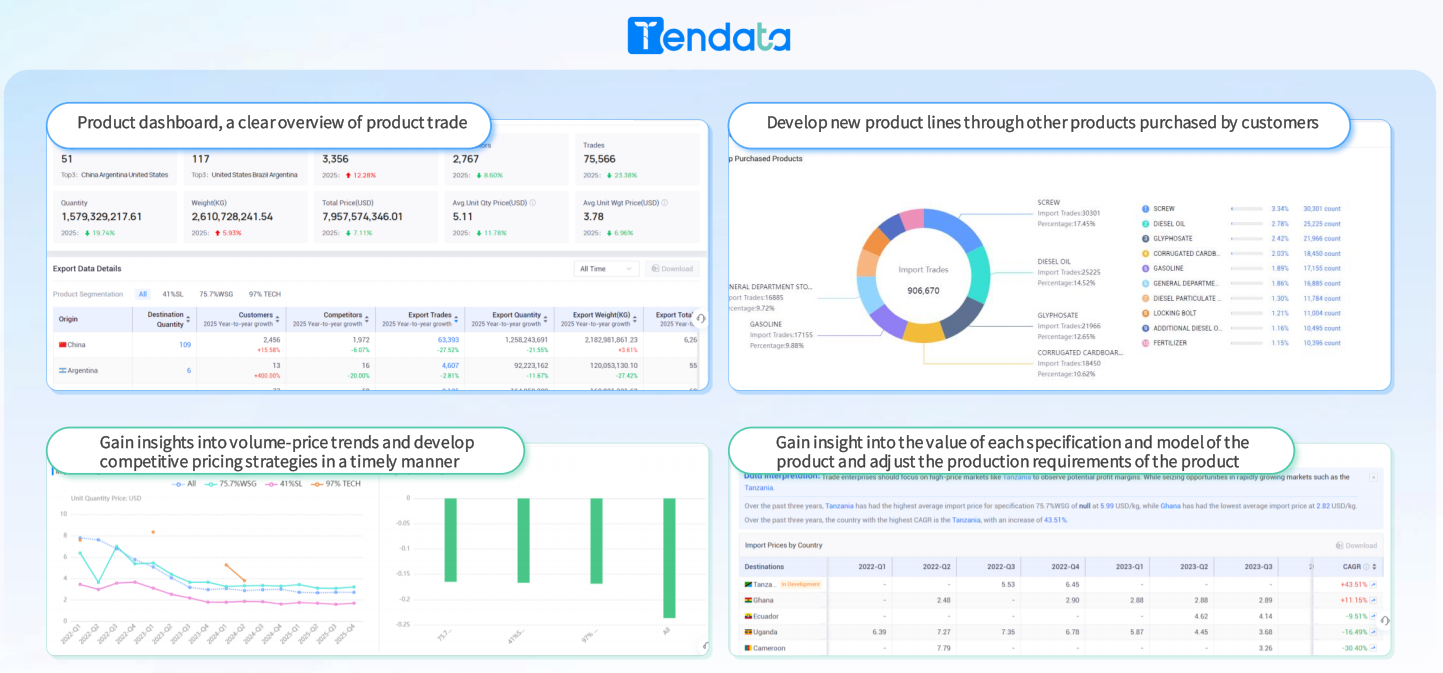
A single massive shipment can look impressive on a dashboard, but it rarely tells you anything about how a market actually behaves. Consignee patterns—who receives goods, how often, and under what terms—reveal the operational rhythm behind the numbers. A buyer that places one huge order and disappears is a very different signal from one that receives smaller, steady shipments every month. The latter points to an embedded relationship, predictable demand, and a supply chain that has already adjusted to local conditions.
Volume also tends to mask churn. If you only track total TEUs or kilograms, a drop in one consignee’s activity can be hidden by a surge elsewhere. But when you watch consignee-level patterns, you notice when a long-standing importer suddenly changes frequency, switches product categories, or starts routing through a different port. Those shifts often precede contract cancellations, payment issues, or shifts in regional demand—long before aggregate volume would show a problem.
There’s also a practical side: consignee patterns help you allocate attention where it actually pays off. Instead of chasing the biggest container counts, you focus on the relationships that are consistent, diversified, and resilient. A portfolio of ten reliable consignees with moderate but stable activity is often more valuable than one or two high-volume accounts that could vanish without warning. The pattern is the signal; volume is just the noise that makes it harder to hear.
Uncovering Alternate Suppliers from Discharge Ports
Trade data rarely lies, but it does hide things in plain sight. When you pull import records for a specific discharge port, you're not just seeing who ships there—you're seeing who else ships similar goods through that same gateway. A buyer stuck with one supplier can scan the port's inbound manifests for the same HS code and suddenly spot three or four other manufacturers using that port as their export point. The port becomes a filter for logistics feasibility: if those suppliers already move containers through there, their inland routing and lead times are likely compatible with yours.
The real trick is to ignore company names at first and focus on shipment frequency, volume consistency, and consignee patterns. Some of the most reliable alternate suppliers never bother with a polished web presence—they simply appear again and again in port-level filings. Cross-checking the shipper names against local export directories or chamber of commerce lists often reveals mid-sized factories that were invisible through conventional sourcing channels.
What makes this approach stick is the port's role as a natural bottleneck. Unlike browsing supplier directories built from self-reported data, discharge port records reflect physical movement that already happened. If a supplier's goods have cleared customs at your target port within the last six months, you're not starting from zero; you're starting from proven logistics. That alone cuts weeks out of supplier due diligence and makes cold outreach feel less like a shot in the dark.
Reading Freight Rate Trends in Old Bills
Old freight bills are more than payment records; they are a chronological ledger of market pressure. By lining up charges from the same lane across several months, you can spot when carriers quietly added fuel surcharges or adjusted base rates without formal announcements.
Pay attention to handwritten amendments and stamp dates, as these often reveal negotiated discounts that never made it into the printed tariff. Comparing the billed weight and cubic volume against the actual rate applied exposes how dimensional weight pricing crept into contracts over time.
Finally, cluster bills by season and destination. A steady rise in winter shipments to inland ports, for instance, points to capacity scarcity rather than general inflation, letting you separate cyclical patterns from long-term shifts.
Spotting Payment Risks in Document Release Timing
Releasing documents before payment clears can quietly unravel a deal. One common trap is sending the full set of shipping papers—such as a bill of lading or certificate of origin—while funds are still in transit. What looks like a gesture of goodwill often becomes a leverage point for the buyer to delay or dispute payment, especially if the goods are already in their hands. The risk multiplies when title transfers before the bank confirms receipt of funds, leaving the seller with little recourse beyond costly legal follow-up.
Timing gaps matter more than most teams admit. A two-day difference between courier delivery of original documents and the expected payment date may seem harmless, but it exposes you to currency swings, sudden credit freezes, or simple buyer indecision. The safer pattern is to link document release to a non-negotiable trigger: wired funds reflected in your account, a confirmed letter of credit, or an escrow instruction that cannot be reversed. Avoid partial releases—handing over some pages while holding others rarely protects you and often confuses the receiving bank.
Pay attention to the buyer's urgency. If they push hard for early documents while offering vague assurances about payment, treat that as a red flag. A legitimate buyer with strong credit will usually accept a short hold until their bank confirms the transfer. You can also reduce exposure by using electronic document systems that log exactly when files were opened or downloaded, creating an audit trail if a dispute arises. The goal is not to slow the deal, but to make sure the paper trail cannot outrun the money.
Turning Detention Charges into Negotiation Cues
Detention charges tend to be treated as annoying line items to dispute, write off, or absorb. But if you stop seeing them as just extra fees, they start reading like a log of operational friction. Every charge points to a specific stall: a dock that couldn't turn a trailer, a carrier that missed a pickup window, a warehouse that held a driver past the free time. Rather than chasing reimbursement after the fact, pull those invoices together and look for repetition. The pattern tells you more than any single charge ever could.
A carrier that consistently racks up detention at one distribution center, for instance, is quietly telling you something about that facility's scheduling or its own capacity buffer. Maybe the appointment system is overloaded at 7 a.m., or maybe the carrier has no drop-trailer option on that lane. When you bring that specific pattern to the negotiation table, the conversation shifts from blame to problem-solving. You can propose later pickup windows, dedicated doors, or a revised free-time threshold that reflects the real operating conditions instead of an arbitrary standard.
The real leverage comes from using those cues to restructure terms. Offer a slightly lower base rate in exchange for more realistic free time on lanes where detention spikes. Ask for priority capacity at the docks that generate the most charges. Tie future rate increases to shared metrics around wait times and turnarounds. Detention becomes less of a surprise cost and more of a shared signal, one that helps both sides adjust expectations and build a contract that holds up under daily pressure.
FAQ
A well-structured bill of lading database gives freight forwarders, exporters, and importers a single source of truth for shipment details that would otherwise be scattered across emails, paper files, and carrier portals. It cuts down on manual data entry, reduces disputes over cargo release, and makes it much harder for fraudulent bills to slip through unnoticed. The real value comes from being able to trace every container movement, tie it to purchase orders and invoices, and retrieve proof of delivery in seconds rather than days.
Instead of just storing documents, companies can mine the underlying data for patterns that competitors overlook. For example, tracking average dwell times at specific ports can reveal consistent delays that justify rerouting through a less congested hub. Analyzing carrier performance against contracted transit times helps in renegotiating freight rates with hard numbers. The data also supports faster customer response times, because a shipper can immediately tell a buyer exactly where their cargo is and when it will arrive, which builds trust that pure price competition cannot match.
One common mistake is underestimating how messy source data can be. Bills of lading come in dozens of formats, sometimes handwritten, often with abbreviations that vary by carrier and country. A database that assumes clean, standardized inputs will fail quickly. Another pitfall is focusing only on storage without thinking about retrieval workflow, so users end up with a digital filing cabinet that takes just as long to search as a physical one. Integration with existing ERP and customs systems is also frequently overlooked, leading to duplicate entries and conflicting shipment records.
A bill of lading often serves as a document of title, meaning possession of the original can control the right to claim the goods. Banks, insurers, and customs authorities rely on the exact consignee, notify party, description of goods, and marks and numbers. A single typo in a weight or container number can trigger customs holds, insurance claim denials, or rejection under a letter of credit. Unlike an internal purchase order, errors in a bill of lading cannot be quietly corrected after the fact without involving multiple external parties and sometimes legal processes.
Look beyond basic upload and storage. Strong full-text search across PDFs and scanned documents is essential, as is the ability to extract key fields automatically via OCR and validate them against shipment references. Role-based access control matters because different departments need different levels of visibility without exposing commercially sensitive rates. API access is important for connecting the database to freight forwarding software, customs brokers, and customer-facing tracking portals. An audit trail showing who accessed or modified a record can also protect against internal misuse and support compliance audits.
Some jurisdictions still do not recognize electronic bills of lading as equivalent to paper originals, which forces companies to maintain parallel paper and digital workflows. Data localization laws may require shipment records involving certain countries to be stored on servers within that region. Export control regulations can restrict what information appears in a bill of lading and who is allowed to view it. A global database strategy must therefore build in country-specific rules for document retention, data residency, and redaction rather than assuming one standard template works everywhere.
Yes, if the database is updated in near real time and connected to carrier status feeds. During port strikes, canal blockages, or severe weather, teams can quickly filter all shipments transiting affected nodes and assess exposure. The ability to pull up alternative routing options, compare historical transit times on backup lanes, and share diversion instructions with customs brokers from one platform reduces reaction time from days to hours. That agility is exactly what separates companies that absorb disruptions from those that lose customers to missed delivery deadlines.
Banks often require a full set of original bills of lading to release payment under a letter of credit. A database that stores scanned copies alongside metadata like vessel name, voyage number, and date of issue makes it much easier to prepare and verify documentation packages before submission. It also helps exporters spot discrepancies such as a consignee name that does not match the credit terms, reducing the risk of costly refusals. For trade finance providers, a shared database can streamline due diligence by confirming that the same bill has not been presented for financing multiple times.
Conclusion
A close reading of the International Bill of Lading Database turns each shipment record into a map of commercial leverage. The party named as consignee, the party controlling cargo release, and the sequencing of document transfers reveal who truly holds power in a transaction. Rather than measuring total volume, companies gain sharper insights by tracing repeated consignee names across routes and time. Such patterns expose stable buyer relationships, sudden shifts in loyalty, or the quiet entry of a new intermediary. Discharge ports add another layer: when the same buyer starts receiving goods at unfamiliar terminals, it often signals a search for alternate suppliers or a reconfiguration of logistics to avoid bottlenecks or tariffs.
Old bills of lading preserve not only shipment dates but also freight rate annotations that can be tracked over months or years. Comparing these rates across carriers and routes uncovers pricing cycles, capacity squeezes, and moments when a shipper accepted unfavorable terms simply to move cargo. The timing between vessel arrival, document release, and payment also offers a window into credit risk. Delays in releasing negotiable documents frequently precede payment disputes or cash-flow stress. Detention and demurrage charges, normally treated as routine penalties, become bargaining chips when examined at scale: frequent disputes over these fees often point to deeper contractual friction. Together, these signals convert a static trade archive into a forward-looking tool for supplier discovery, negotiation, and risk control.
Contact Us
Contact Person: Grace
Email: [email protected]
Tel/WhatsApp: +86 18721992033
Website: https://www.tendata.com