
Metal Buckle Factory Guide to Custom Metal Hardware
2026-11-16
Behind every rugged backpack, tactical belt, or premium pet collar is a metal buckle that quietly does the heavy lifting. But not all buckles are created equal—and off-the-shelf parts rarely fit your exact vision. That’s where Kingming comes in. This guide walks you through what a dedicated metal buckle factory can do, from material selection to custom finishing, so your next product stands out for all the right reasons.
How a Metal Buckle Factory Actually Runs a Custom Order
A custom buckle order rarely starts with a formal spec sheet. Most of the time, it begins as a napkin sketch, a photo of a vintage bag clasp, or a buyer saying “we need this, but stronger and in antique brass.” The factory’s first job is to translate that loose vision into something castable. Our engineers pull apart the reference image, measure the load points, and then ask the questions nobody thinks to ask: Will this bend under repeated use? Does the prong need a safety stop? Can the finish survive salt spray in a coastal warehouse? That back-and-forth might take ten emails or one video call, but by the end we’ve locked the geometry, material grade, and surface treatment into a working drawing.
Then comes the part that separates a real metal buckle factory from a trading office: the tooling room. For a new shape, we machine a prototype mold—sometimes brass, sometimes steel, depending on expected volume—and pour a test shot within a week. The first sample never feels right. It’s too heavy, or the edge catches on webbing, or the electroplating clouds in the recesses. So we file, adjust the gate position, tweak the zinc alloy mix, and run another sample. One client recently went through six iterations just to get the logo deboss to read clearly at 12mm width. That’s normal. Good custom work is less about getting it perfect on the first try and more about not hiding the ugly intermediate steps from the customer.
Once the pre-production sample is signed off, the line flips from prototype to repeatable. Dies are hardened, plating baths are titrated, and the first 200 pieces get pulled for dimensional checks against the approved CAD file. We don’t just eyeball it—a coordinate measuring machine verifies the critical slots and hinge points to within a tenth of a millimeter. Then the order moves through barrel polishing, barrel plating or powder coating, and a final hand sort where workers flick each buckle against a steel plate listening for dull cracks that indicate porosity. Only after a salt spray test and a pull test on the loop does the batch get packed and shipped. A custom buckle order isn’t a single event; it’s a series of imperfect trials that only look effortless once the cartons are sealed.
Choosing Alloys That Survive Real Wear and Tear
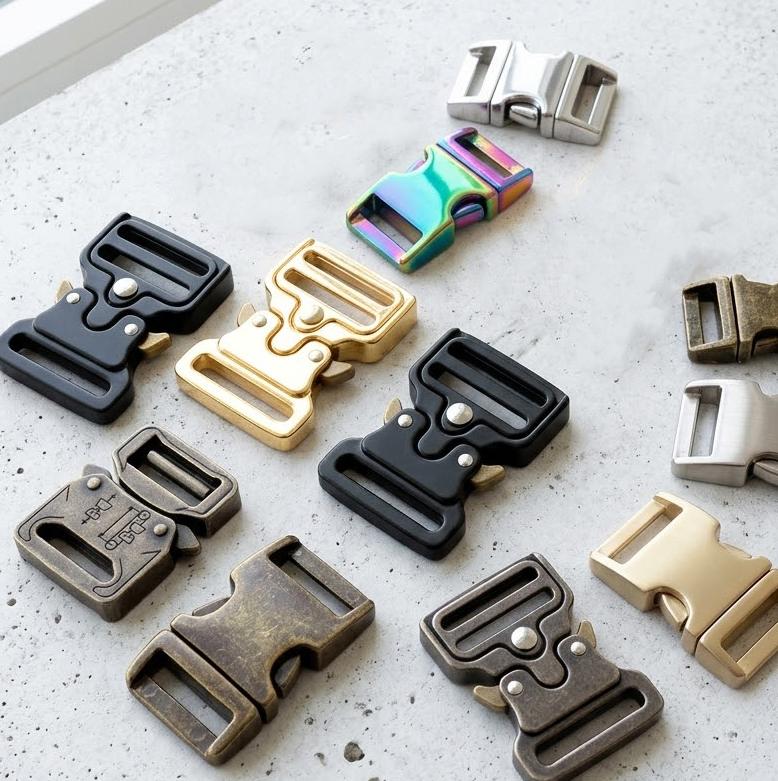
Real wear and tear is rarely a single mechanism. It combines abrasion, impact, corrosion, and thermal cycling in ways that lab tests often fail to capture. An alloy that ranks high on a pure abrasion scale may shatter under unexpected impact or lose surface integrity in humid, acidic conditions. The first step is to map out exactly how the part fails in service: sliding contact, particle erosion, repeated stress, or a mix of these.
For heavily abrasive environments with minimal impact, high-carbon steels and chromium carbide overlays resist gouging well. But when impact joins the equation, a martensitic steel like AR400 or AR500 provides a more practical balance between hardness and toughness. In corrosive-wear settings, stainless steels or nickel-based alloys prevent rust from softening the surface and accelerating material loss, even if their initial hardness is lower.
Fabrication and maintenance realities often outweigh a marginal gain in wear resistance. A highly wear-resistant alloy that is difficult to weld, cut, or machine can lead to poor field repairs and premature replacement. Sometimes a slightly softer alloy with better workability and local availability yields a longer service life simply because it gets maintained correctly. Real-world performance data from similar equipment remains the most dependable guide for selection.
The Tooling Question No One Asks Until It's Too Late
Six months into a project, the daily stand-up takes on a familiar tone: another build broken by a mismatched library version, another afternoon lost to a local environment that works on nobody else’s machine. The team blames itself first—maybe we’re not disciplined enough, maybe the onboarding docs are stale—but the real culprit sits in plain sight: the tooling was never questioned. Not the flashy frameworks or the trendy CI badges, but the mundane glue—the package manager lockfiles, the Docker entrypoint scripts, the bespoke linting cascade. Nobody asked whether these choices would still make sense at fifty contributors or a thousand microservices.
Tooling debt accrues silently because it rarely produces a visible error; it just shaves a few minutes off every task until the collective cost becomes untenable. Developers start working around the tools instead of with them: they cache node_modules in personal forks, they skip pre-commit hooks by force-pushing, they write one-off shell scripts that only one person understands. The organization mistakes these symptoms for individual skill gaps and hires more people, adding overhead to a system that was already leaking efficiency. The question that should have been asked early—does this tool reduce friction or merely relocate it?—gets buried under quarterly OKRs and urgent feature requests.
Asking the tooling question later is still better than never, though it requires honesty and a tolerance for unlearning. Start with a blunt audit: which steps in the current workflow would a fresh hire describe as “just the way we do things,” and which ones would they actively avoid? Treat the answer as a bug report against the team’s own infrastructure. Then make one small change—simplify a single stage in the pipeline, remove a redundant CLI wrapper, or replace a manual setup step with a scripted one—and measure the time saved over two weeks. The goal is not to adopt the latest tooling gospel but to restore a sense that the tools serve the team, not the reverse.
Finishes That Change Both Look and Lifespan
A finish is never just a surface treatment—it’s the final negotiation between a material and the world it has to endure. A well-chosen oil, wax, or coating can shift the visual weight of a piece overnight, deepening grain, muting gloss, or adding a tactile warmth that raw material rarely offers on its own. The right product doesn’t stop at aesthetics; it soaks into pores, forms an abrasion-resistant film, or creates a moisture barrier that prevents warping, cracking, and the slow bloom of rust.
Consider how a hardwax oil on oak changes the story. The wood stops looking like a blank slab and starts reading as furniture with history, while the finish itself shrugs off spilled water and daily scuffs that would otherwise raise the grain and invite decay. Similarly, a phosphate or powder coat on steel can turn a cheap bracket into a component that ages with character instead of flaking into orange dust. These aren’t separate benefits; the color shift and the added decades are two outcomes of the same chemical bond.
The real trick is matching the finish to the failure you’re trying to delay. A high-build polyurethane might save a tabletop from scratches but hide the wood’s natural feel under plastic. An oil finish may need reapplication, yet it repairs locally and deepens over time. Lifespan isn’t just about hardness—it’s about how a surface accepts wear, moisture, UV, and cleaning chemicals without losing the very look you fell for in the first place.
Prototyping Without the Usual Back-and-Forth
A clickable draft tends to settle debates that a static image can’t. When someone can hover over a card and feel the timing, the note “make it snappier” disappears. I’ve made it a habit to drop rough prototypes into early reviews instead of polished mockups. Most mornings, the thread stays quiet because the motion already answered the question.
Keep the prototype deliberately rough around the edges, but use real copy and genuine data structure. Placeholder boxes invite placeholder feedback. Once the flow works end to end, the remaining comments shift toward small, useful tweaks rather than long chains of “what did you mean by that?”.
When Custom Hardware Needs to Meet Safety Specs
When custom hardware needs to meet safety specs, the usual quick-turn prototyping mindset has to shift. A board that works on the bench might still fail creepage and clearance checks, or run hot enough to violate touch-temperature limits. Engineers often discover that the mechanical enclosure, connector choices, and even the soldermask color can become part of the compliance conversation.
The earlier safety requirements enter the design review, the less painful the path becomes. Rather than treating UL, IEC, or CE marks as final-stage paperwork, teams that map insulation diagrams, fuse ratings, and single-fault conditions ahead of layout avoid expensive respins. This also means keeping a documented rationale for every part that sits across a safety boundary.
Testing adds another layer of realism. Surge, hipot, and ground-bond tests expose weaknesses that simulations miss, especially when custom mechanical parts introduce unexpected creepage paths. Working with a test lab before freezing the enclosure can reveal whether that clever snap-fit needs a secondary retention screw or a thicker wall section.
FAQ
Zinc alloy and brass are common for decorative buckles, but if the piece will bear real load, stainless steel or iron with a thick plating tends to survive longer. Avoid hollow zinc castings for anything that gets pulled hard on a daily basis.
A clear photo or a hand sketch with approximate dimensions and notes on where the buckle will be used is often enough to start. The factory can propose a 3D model and suggest structural changes before making the mold.
Brushed or matte finishes read more modern and hide scratches well. High-polish gold or chrome gives a classic, dressy look. Antique brass or gunmetal works nicely for vintage or outdoor styles, and a thin clear lacquer can protect the plating from tarnishing.
Some factories will run 300–500 pieces if you accept a higher unit price and possibly a shared mold setup. It’s worth asking, but expect at least a few hundred pieces unless you go with a stock buckle modified by engraving or a custom finish.
Sharp edges, weak attachment points, and plating that chips at the corners are the most common issues. Request rounded edges on high-contact areas, ask for a pre-production sample, and test it on the actual strap or webbing before approving mass production.
For a new mold, figure on one to two weeks for design confirmation, one to two weeks for mold making, about a week for sampling and revisions, then two to four weeks for production and finishing. A smooth project often takes five to seven weeks total.
Yes, but it’s usually done through enamel filling, powder coating, or colored plating rather than painting. Enamel fill works well for recessed logos, while powder coating can give a durable solid color across larger metal surfaces.
Conclusion
A custom metal buckle order rarely moves in a straight line, and the factories that handle it well tend to front-load decisions most buyers don't think about until a sample fails. The first step is not sending a sketch but pinning down the actual stress the hardware will face: is it load-bearing, exposed to salt spray, or clipped and unclipped hundreds of times a day? That answer narrows the alloy choice quickly. Zinc die-casting is cheap and fine for decorative pulls, while stainless steel or brass becomes necessary once corrosion or repeated flexing enters the picture. The tooling conversation follows close behind. Some shops quote a low unit price while quietly building a prototype mold that won't survive the full production run, leaving the buyer to pay for new steel later. Pushing for a clear tooling life guarantee and asking whether the initial mold can be modified instead of replaced prevents that surprise.
Finishes get treated as an afterthought, but they shift both the appearance and the failure mode of the part. A thin electroplated layer looks bright in photos and wears through on high-contact edges within weeks; a heavier e-coat or PVD finish holds up but changes the surface feel and the cost structure. Prototyping needs to test the finish and the fit together, not just the silhouette. A useful prototype run includes the actual plating, the real spring or roller mechanism, and the same edge radius as production, because a raw sample that feels fine will often bind or scratch once coated. When the hardware has to meet safety specs, such as load ratings for fall protection or child-resistant closures, the factory should supply material certificates and test reports from the same batch, not generic data sheets. Sorting these issues at the front end keeps a custom buckle order from becoming an expensive guessing game.
Contact Us
Contact Person: Jamie Zeng
Email: [email protected]
Tel/WhatsApp: +86 13728219269
Website: https://www.kmhardware.com