
OEM Carbon-Based Fertilizer Manufacturing for Sustainable Crop Nutrition
2026-09-08
Ask a grower what limits yield and you'll hear about water, weather, pests—rarely the carbon architecture of their soil. That blind spot is exactly where carbon-based fertilizers are reshaping sustainable crop nutrition. For brands ready to enter this space without building from scratch, OEM manufacturing turns a complex formulation into a scalable product line. Tundrr helps make that transition as practical as it is promising.
From Agro-Byproducts to Slow-Release Carbon Granules
Agricultural residues like rice husks, coconut shells, and maize stalks usually end up burned or left to rot, but they hold a surprising promise when treated with slow pyrolysis. By heating these materials in a low-oxygen environment, their raw lignin and cellulose transform into porous carbon granules that can hold nutrients inside their microscopic cavities. The result is a carrier that releases nitrogen, potassium, or micronutrients over weeks rather than a single flush, matching the actual uptake rhythm of roots.
The key lies in adjusting the production temperature and residence time. At around 500–600°C, the char keeps enough oxygen-containing functional groups to bind ammonium and phosphate ions, yet remains structurally stable in soil for several seasons. Farmers can then load these granules with organic fertilizers or compost tea, creating a slow-release system that cuts leaching losses and reduces the need for repeated top-dressing. Field trials on sandy soils have shown that crops using this carbon matrix stay greener during dry spells, likely because the granules also buffer moisture and microbial activity around the root zone.
What makes this route distinct from polymer-coated urea is its simplicity and local feasibility. Small-scale producers can build drum kilns from scrap metal, using farm waste that would otherwise cost money to dispose of. The granules themselves become a soil amendment after their nutrient cargo is spent, improving cation exchange capacity and giving a long-term home to beneficial fungi. Instead of treating agro-byproducts as a disposal problem, this approach turns them into a tool that aligns fertilizer timing with plant demand—no high-tech equipment required.
The Quiet Chemistry of Root-Ready Carbon Fertilizers
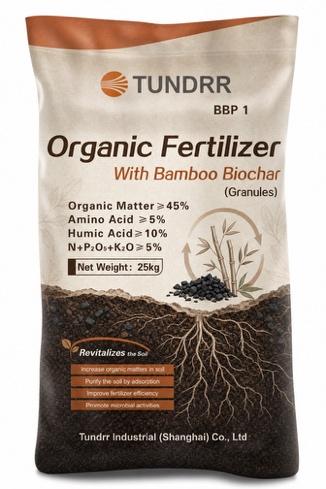
Carbon is often treated as a background player—something that improves soil tilth over the course of years, but doesn't demand much thought at the root line. Yet root-ready carbon fertilizers work on a different schedule. Their carbon isn't locked in complex lignins waiting to decompose; it's already in mobile, low-molecular-weight forms that slip into the rhizosphere quickly. The result is a set of mild but persistent reactions: a shift in cation exchange, a nudge to certain bacterial consortia, a slight change in how root tips perceive available moisture.
These products don't rely on a single chemical event. Instead they supply carbon skeletons that roots and microbes can use in parallel. Some of the carbon feeds heterotrophic bacteria that produce extracellular polysaccharides, improving soil aggregation within millimeters of the root surface. Another fraction interacts with iron and manganese, keeping them soluble just long enough for root uptake. There's no visual explosion of growth; the chemistry is too quiet for that. What appears is a more even root development, fewer nutrient deficiency patches, and a soil profile that holds structure after irrigation.
The quietness also comes from what these fertilizers don't do. They don't spike osmotic pressure, don't force a rapid pH swing, and don't leave behind a salt crust. Because the carbon is matched to root-zone conditions, the reactions are buffered by the soil's own colloidal system. That makes root-ready carbon fertilizers useful in settings where other amendments create stress: containers, greenhouses, or fields with sensitive transplants. Over weeks, the benefit shows not in a single measurement but in the resilience of the root mass when heat or dry air arrives.
Custom OEM Blends Without Factory Friction
Most supplement brands have been burned by OEM partners that treat custom formulation like a negotiation instead of a partnership. We stripped out the usual blockers—no surprise minimums after you've committed, no week-long quote revisions, and no reformulation fees when a raw material price shifts. You give us the actives, dosages, and delivery format; we handle sourcing, blending, and filling without adding approval layers that stall your launch.
The real friction usually isn't the mixing itself—it's the back-and-forth. That's why our custom OEM process runs through a single point of contact on a locked timeline. You get a pilot batch in days, not months, and every adjustment is logged in plain language, not a spreadsheet that needs a chemist to decode. If a supplier fails a spec, we swap it and re-run stability checks before you ever hear about it.
Why Carbon Carriers Outperform Conventional Fillers
Conventional fillers like calcium carbonate or talc simply occupy space, adding weight without contributing much to performance. Carbon carriers play a different role entirely. Their high surface area and conductive structure allow them to interact with the surrounding matrix at a molecular level, improving mechanical strength while enabling functions such as electrical conductivity or thermal dissipation. This dual capability—reinforcement plus functionality—is why engineers increasingly turn to carbon-based options when standard fillers hit their limits.
Another distinction emerges under demanding conditions. Conventional fillers can lead to brittle failure or uneven dispersion, especially at higher loadings. Carbon carriers, with their tailored porosity and particle geometry, distribute stress more evenly and maintain toughness even in thin-walled or complex parts. For applications ranging from automotive sensors to EMI shielding, that reliability translates directly into longer service life and fewer material compromises.
Weight savings further tip the balance. Because carbon carriers achieve the same or better reinforcement at lower addition rates than mineral fillers, manufacturers can reduce part mass without sacrificing stiffness or durability. This efficiency not only simplifies processing but also opens design possibilities that conventional filler systems simply cannot match.
Feeding Soil Life Before Chasing Yield Spikes
Most yield-focused programs treat soil as a holding medium for fertilizer. But a field that's alive with earthworms, beetles, and fungal threads does more than hold nutrients—it trades them, stores water, and defends roots against pathogens. If you feed that life first, the yield spikes you get later don't collapse the system.
Think of a corn field after a heavy rain. The dead-soil version crusts over, puddles, and loses nitrogen to the air. The living version drinks the water down through old root channels and earthworm burrows. That difference starts months earlier with cover crop residue, compost, or simply not wrecking the soil with deep tillage every fall.
Chasing a spike with more soluble nitrogen is like sprinting on an empty stomach. You'll get a burst, then a crash. Feed the soil with diverse organic residues, keep living roots in the ground as long as possible, and the biology will mineralize nutrients at the pace the crop actually needs. The yield curve flattens, but the average climbs—and the field stays productive through drought, flood, and price swings.
Scaling Sustainable Fertilizer Without the Guesswork
Many sustainable fertilizer programs collapse when they move from a pilot plot with uniform irrigation to rainfed acreage with uneven drainage. Scaling demands a different posture: instead of replicating one fixed recipe, you need a system that reads the signals from each field and adjusts the blend, timing, and dosage accordingly. That means abandoning blanket recommendations and building feedback loops that capture what actually happens after application—leaf color, root growth, runoff, and yield.
The hard part is not finding a greener formula—it is managing the variability across soil types, weather patterns, and crop stages. A clay-heavy field in a wet spring might lose urea to volatilization within days, while a sandy plot in a dry spell needs a coated granule that releases slowly. Without a way to measure those differences, teams fall back on regional averages and end up over- or under-supplying nutrients. The alternative is to treat every expansion site as its own data set, using straightforward field observations, soil moisture probes, and tissue samples to guide the next round of decisions.
That kind of precision does not require a laboratory on every farm. It does ask for a clear protocol: mark a few half-acre strips, apply the current blend to one and a candidate blend to another, then compare soil nitrate levels and stand counts at key growth stages. Feed those lessons back into the scaling plan, and the next site starts with better odds. Once the process is structured around evidence rather than intuition, sustainable fertilizer stops being a risky experiment and becomes a repeatable practice that can grow as fast as demand does.
FAQ
OEM production here means a manufacturer formulates, blends, and packages carbon-rich fertilizers under another brand’s name. The process typically starts with source material like biochar, composted plant residue, or humic substances, then moves through grinding, mixing with targeted nutrients, granulation or pelletizing, and final quality checks before private-label packaging.
The carbon matrix acts as a slow-release carrier for nutrients, reducing leaching and volatilization losses. It also feeds soil microbial life, improves cation exchange capacity, and helps build stable organic matter. This means crops get steadier nutrition across the season while the soil’s long-term fertility improves instead of degrading.
Common inputs include pyrolyzed biomass such as wood chips, rice husks, or coconut shells; composted manure or green waste; leonardite or lignite-derived humates; and sometimes seaweed or bone char. These are combined with nitrogen, phosphorus, potassium, and micronutrient sources depending on the target formulation.
Yes, one of the strengths of OEM carbon-based manufacturing is flexibility. A manufacturer can adjust the carbon-to-nutrient ratio, change the granule size, add beneficial microbes, or modify the NPK profile to suit acidic soils, sandy fields, high-value horticulture, or broad-acre row crops.
Reliable facilities test raw materials for heavy metals and pathogens, monitor moisture and carbon content during blending, screen pellet hardness and size distribution, and run germination or greenhouse trials on finished batches. Batch-level records and third-party lab verification are also common for export or certified organic lines.
Unlike many synthetic options that deliver a quick nutrient spike, carbon-based fertilizer offers a buffered release pattern and adds structural organic matter to the soil. It may have a lower immediate NPK analysis, but the efficiency over a full growing cycle is often higher because fewer nutrients are lost to runoff or gas emissions.
Many formulations can meet organic standards if the carbon source and nutrient additives are approved inputs. For example, biochar from untreated wood, composted plant materials, and mined humates are typically allowed. OEM manufacturers can provide documentation and certificates to support organic compliance for the final product.
Conclusion
Turning agricultural residues into slow-release carbon granules starts with low-temperature pyrolysis and careful sizing, not with synthetic binders or aggressive chemical baths. The resulting material holds nitrogen, phosphorus, and micronutrients inside a porous carbon lattice, so roots encounter nutrients gradually instead of facing a soluble spike. Because the carbon skeleton resists rapid breakdown, nutrient release follows soil temperature and microbial activity, which matches uptake patterns in maize, rice, and protected vegetable crops. This quiet chemistry matters more than flashy solubility claims: a root-ready granule should release less in cool, wet soils and more when roots are actively pulling water and ions. OEM partners can specify granule hardness, size distribution, and nutrient loading without waiting on long reformulation cycles. Small-batch trials shift into commercial runs using the same milling and blending line, which removes much of the friction usually tied to custom fertilizer production.
Carbon carriers earn their place by doing what conventional clay or lignite fillers cannot: they feed the soil food web while delivering crop nutrition. A filler occupies space in the bag; a carbon carrier provides habitat for fungi and bacteria that mineralize nutrients and build aggregate structure. That distinction changes application advice. Instead of chasing a one-season yield spike with high salt loads, growers can apply modest nutrient rates and let microbial turnover supply the rest. Feeding soil life first tends to flatten yield curves across dry and wet years, because roots explore a larger volume and access water held in microaggregates. For manufacturers, scaling this approach depends on consistent feedstock, moisture control, and on-farm strip trials rather than blanket regional recommendations. When granule density and ash content stay within spec, blending and spreading behave predictably. The result is an OEM carbon-based fertilizer that supports crop nutrition without asking the soil to pay for shortcuts.
Contact Us
Contact Person: Ellen Zhang
Email: [email protected]
Tel/WhatsApp: +86(21) 2287 6756
Website: https://www.tundrr.com/en/