Oil Immersed Transformer Supplier Checklist for Reliable Industrial Power Systems
2026-11-16
What separates a dependable oil immersed transformer supplier from a costly compromise rarely shows up in a datasheet. It shows up in the supplier checklist: thermal design, insulation testing, factory documentation, and service response. Below, we break down those checks for reliable industrial power systems and look at how XIAOPAI approaches each one when downtime is not an option.
How to Read an Oil Immersed Transformer Supplier Beyond the Brochure
A glossy brochure rarely tells you how a transformer behaves after its fifth summer of heavy loading. When evaluating an oil immersed transformer supplier, I prefer to ask for the numbers that don't make it into the photography: temperature rise guarantees at continuous overload, noise measurements taken at 0.3 m and at full load, and moisture content in the cellulose insulation after drying. Those details reveal whether the manufacturer understands thermal aging, not just assembly.
Beyond the data sheets, visit the winding shop or ask for a video walkthrough. Watch how they handle conductor insulation, the cleanliness of the tank welding area, and whether the drying ovens are logged hour by hour. A supplier that can show you its rejected parts and explain why they failed is more useful than one that only shows a polished final product.
The way a supplier responds to an unusual specification matters. If you ask about harmonic-rich loading, tap changer duty under frequent switching, or low-temperature start-up, a capable manufacturer will ask follow-up questions about the network and the operating profile. A weak one will simply say "no problem" without showing calculation or reference cases.
The Oil Quality Data That Separates Dependable Suppliers from the Rest
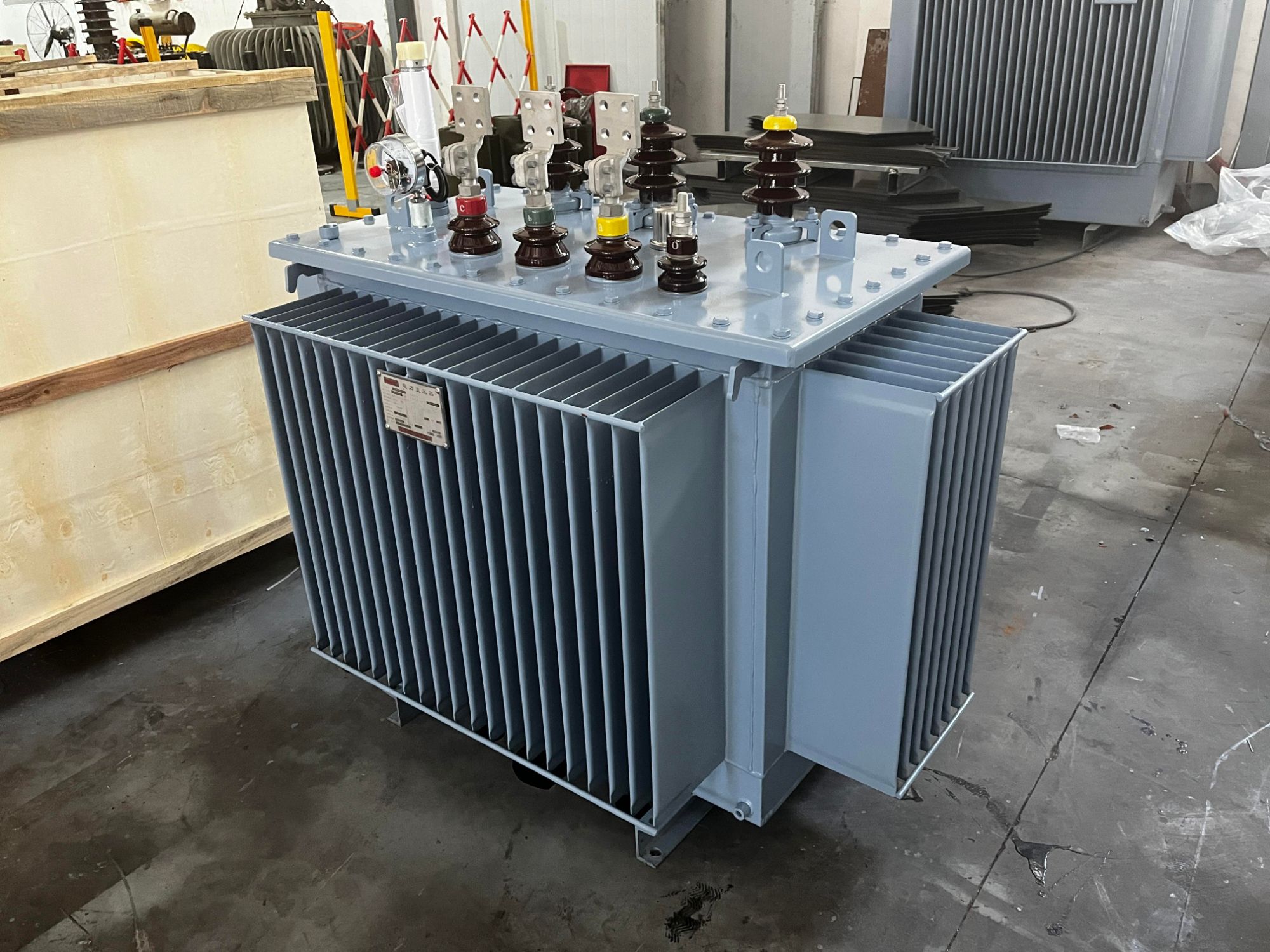
Dependable suppliers tend to send data that raises more questions than it answers, and that is exactly the point. Instead of a single spec sheet with broad ranges, they share batch-specific reports covering oxidation stability, viscosity index, trace metals, and particle counts. The numbers move slightly from lot to lot, and they are comfortable showing that movement. When a supplier hides behind “meets specification,” they are usually avoiding the exact data that would reveal contamination, additive dropout, or base stock inconsistency.
Two measurements separate serious operators quickly: NOACK volatility and RPVOT or TOST oxidation life. High volatility often points to lighter base stock cuts that will shear down in service, while weak oxidation stability forecasts sludge and varnish before the oil ever reaches a drain interval. Trace metals tell their own story. Elevated silicon, aluminum, or iron in fresh oil is not a minor footnote; it indicates poor handling, wear debris from processing equipment, or inadequate filtration. Dependable suppliers do not just provide those numbers—they can explain why a particular batch shifted and what they adjusted.
The most useful request is not another certificate of analysis. Ask for trend data across several batches, third-party test results, and records of out-of-spec investigations. A supplier with genuine process control will have those files ready. If the answer is a polished brochure with no data behind it, that is the real signal.
Winding and Insulation Details That Matter for Industrial Power Longevity
Industrial motors and transformers rarely fail because the steel stack gave out. More often, the end-of-life trace leads back to a thin enamel film on a magnet wire or a resin-starved section of groundwall insulation. One detail that gets overlooked is how the winding is braced against mechanical forces during start-up and through-line faults. If the coils move even slightly, abrasion wears through the turn insulation long before thermal aging would have caused a problem. On machines that run across a wide load band, repeated thermal expansion and contraction works the copper against the slot liners, so semi-conductive slot coatings and tight wedging are not optional extras.
The insulation system's thermal class only tells part of the story. A Class H system may look robust on paper, but the actual hot-spot temperature inside a tightly packed coil can be 15–20°C higher than the average winding reading. Over time, that margin decides whether the resin stays flexible or turns brittle. Vacuum pressure impregnation helps, but only if the resin fully wets the conductors and fills the voids between turns. Air pockets left after a quick dip-and-bake cycle create sites for partial discharge, especially on variable frequency drive applications where fast switching pulses stress the first few turns.
Moisture, oil mist, and conductive dust are the quiet killers. They settle into creepage paths and reduce surface resistance between phases. Winding details like phase separators, end-turn spacing, and a continuous layer of corona-resistant coating matter more in harsh environments than any single insulation rating. For long service life, the winding should be treated as a system: conductor film, turn insulation, groundwall, impregnation, bracing, and lead routing all need to survive together. A weak point at a knuckle or a poorly taped connection can shorten the life of an otherwise well-built machine.
Test Evidence That Tells You How the Transformer Will Age
Dissolved gas analysis is still the most candid aging test because it records slow chemical conversations inside the tank before anything visibly degrades. A modest rise in carbon monoxide and carbon dioxide often points to paper losing tensile strength, while hydrogen, methane, and acetylene reveal where heat or partial discharge is concentrating. The diagnostic value is not in any single sample but in how those gas ratios move across seasons and load cycles.
Furan compounds add a layer that gas readings cannot fully capture. When cellulose breaks down, it leaves measurable traces such as 2-furfural, and their concentration aligns more closely with the actual degree of polymerization of the paper than with oil color or dissolved moisture alone. A transformer with wet, acidic oil can hide behind acceptable gas limits for years, yet rising furans usually expose that insulation is becoming brittle and less able to survive a through-fault.
Dielectric response tests round out the picture by measuring how the insulation stores and releases charge. Shifts in the dissipation factor, capacitance, and polarization-depolarization current indicate moisture movement and rising conductivity in the cellulose, often before a standard insulation resistance reading shows alarm. Together these tests act less like a single verdict and more like a physical exam that identifies where aging is accelerating.
Matching Thermal Ratings to the Way Your Plant Actually Uses Power
Most thermal ratings assume a steady load at a fixed ambient temperature, but that rarely reflects what happens on a real plant floor. Motors, transformers, and switchgear are often sized for a peak that occurs only a few times a year, while the rest of the time they run well below nameplate. That mismatch is not harmless: it can hide hotspots in connectors or windings when loads cycle unevenly, and it can also lead to unnecessary capital spending on cooling or oversized equipment.
A better approach is to look at the actual duty cycle, harmonic content, and the way airflow moves through the enclosure before deciding whether a thermal rating fits. For example, a transformer that feeds intermittent loads may have plenty of thermal headroom even if its kVA figure looks tight on paper, while a motor starting frequently under load can run hotter than its continuous rating suggests. Paying attention to those patterns allows you to set overload settings and maintenance intervals that reflect real stress, not just catalog values.
The goal is not to squeeze every degree out of the equipment, but to stop treating thermal ratings as a one-size-fits-all number. When the rating matches the way power is actually used, failures become easier to predict, and upgrades are driven by measured temperature trends rather than assumptions.
What Post-Sale Support Should Look Like for Critical Power Assets
Post-sale support for critical power assets rarely fails because technicians lack access to manuals. It fails when the people responsible for the equipment at 2 a.m. don't have one clear path to a decision, a site-specific sequence of operation, or a realistic sense of how long a repair should take. That means support needs to start before an outage, with every asset's history, test results, firmware versions, and known quirks tied to the location rather than stored in a generic portal.
The most useful support model treats the relationship as a continuous operating review rather than a break-fix contract. Load bank results, battery impedance trends, thermal scans, and event logs should feed into a short monthly summary that flags small changes before they become failures. When a UPS module or transfer switch does go down, the supplier should already know which spare parts are stocked on site, where they are, and which technician has clearance to enter the room, so the first call doesn't begin with basic discovery.
For aging assets, support also has to cover the less glamorous work of obsolescence planning. Capacitors, firmware, communication cards, and replacement breakers all have different lead times and end-of-life dates. A good support partner lays those timelines out early, proposes substitute parts only with compatibility testing behind them, and gives the site team enough warning to schedule downtime around patient care, production, or peak cooling loads rather than waiting for the equipment to make the decision.
FAQ
Ask for a thermal study based on your load cycle rather than nameplate kVA alone. The supplier should show winding hot-spot rise, oil temperature rise, and cooling class assumptions such as ONAN or ONAF. A good answer includes margin for overload periods and does not simply quote the standard limits.
Look at the type of conservator, desiccant breather, and whether the supplier offers a sealed or bladder-type oil preservation system. Check that all gasketed joints are accessible for retightening and that radiators are properly supported. Small details like a sludge drain valve and thermal relief on the conservator often matter more than paint finish.
IEC 60076 and IEEE C57 cover most performance and testing expectations, but ask the supplier which parts they test to rather than simply claiming compliance. For industrial sites with frequent switching or harmonics, ask about the transformer's ability to handle the specified harmonic load factor and any derating guidance.
Ask to see the winding area, core cutting line, and the final test bay. Pay attention to cleanliness, humidity controls in insulation storage, and whether workers handle the conductor and paper with gloves. A factory tour often reveals more than a quality manual.
Request oil test reports for moisture content, dielectric breakdown, dissolved gas analysis, and particle count from the filled unit. The supplier should explain the oil processing method, such as vacuum filling and circulation time, rather than only stating that it meets the standard.
Ask how they handle commissioning supervision, oil sampling after energization, and emergency technical support. A supplier with a clear response time for field issues and local service partners will reduce downtime risk after the warranty period.
Look for a warranty that covers the active part and tank for a defined period, often two to five years, with explicit coverage of oil leaks and winding failures. Clarify exclusions such as improper operation, lightning, or failure to maintain the oil. The best terms include a replacement cost formula rather than a vague promise to repair.
Be cautious if the supplier cannot provide a bill of materials for the core steel grade and copper purity, or if they offer unusually short delivery for a custom design. Missing documentation for routine tests, resistance to third-party inspection, and a low price justified by saying it is the same as standard are common warning signs.
Conclusion
A reliable oil immersed transformer supplier earns trust through evidence rather than polished brochures. Start by asking for raw factory test reports and a list of operating references that mirror your plant's load pattern, not just nearby projects. The oil quality data often reveals more than the nameplate. Moisture content, acidity, interfacial tension, and dissolved gas trends should be evaluated as a history, since a single clean sample can hide slow thermal aging or moisture ingress through breathing cycles. Winding and insulation details matter just as much: check the conductor material, enamel and paper grades, curing process, and how firmly the coils are clamped. These factors directly influence short-circuit withstand and long-term mechanical stability under industrial duty.
Test evidence should show how the transformer will age, so look for temperature rise under realistic cooling conditions, lightning impulse results, and partial discharge levels that leave a clear margin below the acceptance limit rather than just scraping past. Thermal ratings need to be matched to the way your plant actually uses power; a continuous load near rated capacity, frequent motor starts, or harmonic-rich processes can demand a more conservative temperature margin than a standard specification allows. Finally, post-sale support should include more than a warranty certificate. A dependable supplier offers oil treatment guidance, spare gaskets and bushings, clear diagnostic limits, and access to engineers who can interpret future oil or electrical test data before small problems become critical outages.
Contact Us
Contact Person: Kellen Chen
Email: [email protected]
Tel/WhatsApp: 8613806536768
Website: https://www.cnxiaopai.com