
Performance Cylinder Head Supplier: How to Pick the Right One for Maximum Engine Power
2026-08-04
Unlocking every ounce of power from your engine starts with a single, often underestimated component: the performance cylinder head. But with so many suppliers claiming to deliver race-winning flow and durability, how do you separate genuine engineering from empty promises? The choice you make can mean the difference between a dyno queen and a track monster. Enter DDR, a name synonymous with precision-crafted heads that don’t just meet specs—they redefine them. Forget generic catalog parts; we’re about to dive into the real factors that matter when picking a supplier who truly understands airflow, material science, and your hunger for maximum output. Ready to see what sets the top contenders apart?
Decoding Airflow: Why Your Cylinder Head Choice Defines Engine Output
The cylinder head isn't just a lid—it's the gatekeeper of your engine's breathing. Every intake and exhaust pulse must navigate its narrow passages, and the shape, size, and texture of those runners directly dictate how much air and fuel actually reach the combustion chamber. A restrictive or poorly designed head will choke even the most aggressive camshaft, while a properly ported one can unlock latent power without changing a single other component. It's the difference between an engine that just runs and one that truly performs.
Valve size and placement further amplify this effect. Larger valves or a multi-angle valve job reduce the pumping losses that occur at low lift, allowing the cylinder to fill more completely across a wider rpm band. The throat area just beneath the valve seat is especially critical—a mere millimeter of additional diameter there can flow exponentially more air, yet many overlook it. When you combine the right valve geometry with a combustion chamber that encourages swirl and fast burn, you're not just moving air; you're shaping a more efficient explosion that pushes the piston harder.
Even subtle details like the short-turn radius in the intake port can make or break high-rpm stability. Air behaves like a stubborn fluid: it doesn't like sharp corners, and it will separate from the wall if asked to turn too abruptly, causing turbulence and killing flow. Expert porting smooths this transition without simply hogging out material, which could actually slow velocity. In the end, your cylinder head choice is a balancing act between volume and velocity, and getting that balance right is what separates a dyno queen from a responsive, streetable engine that pulls hard from idle to redline.
Blueprinting Power: Aligning Chamber Design With Your Build Goals
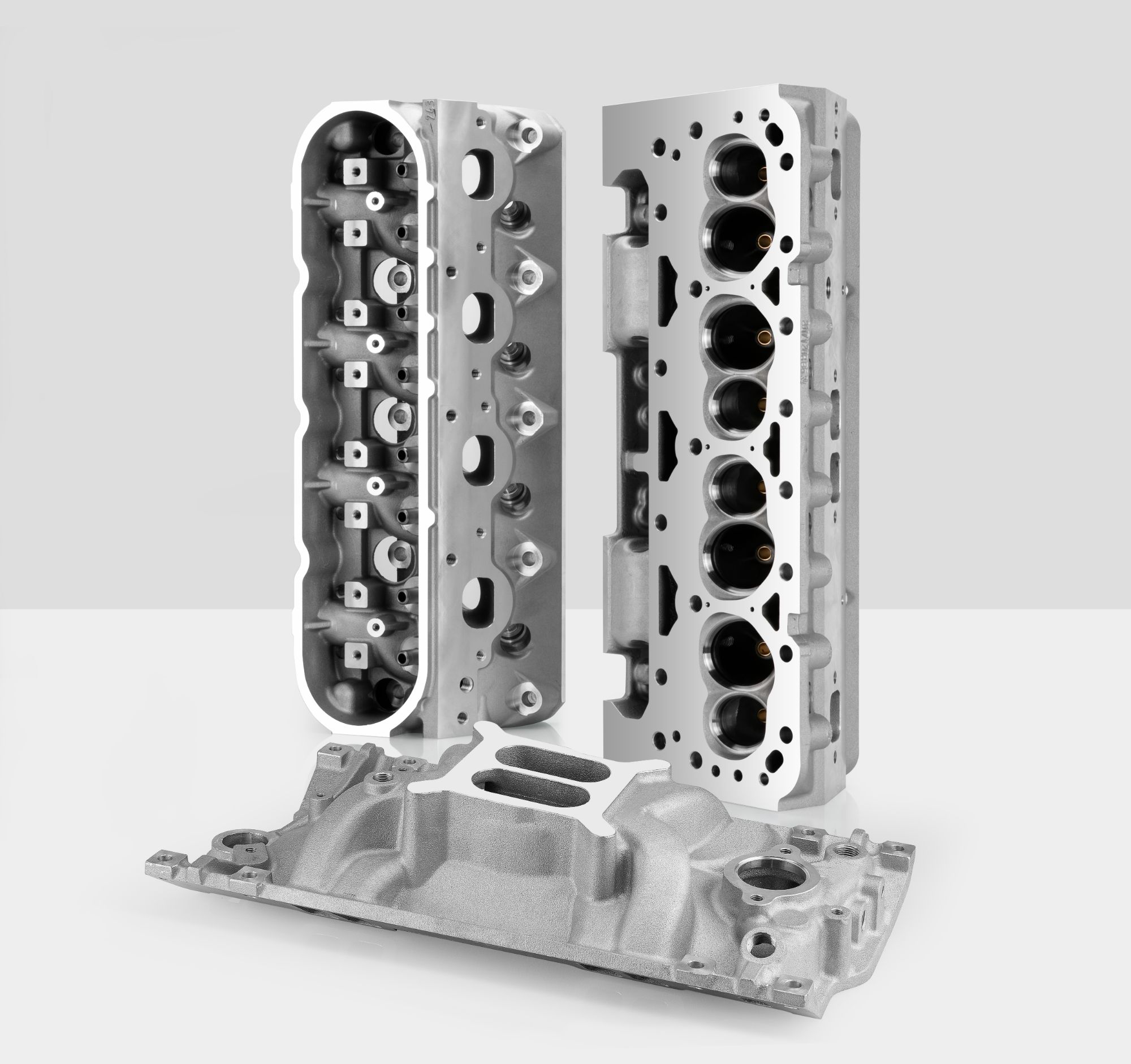
When you start sketching out a chamber, whether it's for a new engine or a vacuum system, the first thing to lock down is what you actually want it to do. It sounds obvious, but plenty of builders jump straight into dimensions and materials without really nailing the purpose. Your build goals dictate everything from the volume and shape to the port placement—get those wrong early on, and you'll be fighting the design later.
Take the time to map out the flow paths or the pressure cycles you need. If you need rapid cycling, your chamber's geometry needs to support that without becoming a bottleneck. For steady-state operation, wall thickness and thermal management often take priority. The art is in steering the design toward those specific requirements without overcomplicating things. Less is more when it comes to a clean, effective blueprint.
The Metal Behind the Muscle: Evaluating Casting and Machining Standards
Strength isn't just about the alloy chosen—it's also a story of how the metal is shaped. In automotive and heavy machinery, the casting process determines grain structure, porosity, and inherent weaknesses that machining later has to work around. Sand casting might leave a rougher skin but can be more forgiving for large, complex parts, while investment casting delivers near-net shapes with finer detail, reducing the machining burden. Each method carries its own signature in the final part's fatigue resistance and load-bearing ability.
Once the raw casting cools, machining steps in to refine surfaces and hit tolerances that casting alone can't achieve. The transition from cast to machined surface isn't just cosmetic—it influences stress risers, sealing surfaces, and how the part wears over time. Aggressive machining can introduce subsurface micro-cracks or residual stresses that undo the benefits of a well-poured casting. Precision shops balance cutting speeds, tool geometry, and coolant strategies to preserve the metallurgical integrity while carving out the final shape.
Standards like ASTM and ISO provide a common language, but their real value is in preventing failures before they happen. Specifying the right grade of cast iron or aluminum is only the start; defining allowed defects, heat treatment cycles, and post-machining inspection criteria is where durability is earned. A part that meets a generic standard might still fail if the interplay between casting porosity and machined surface finish isn't accounted for. The best manufacturers look beyond the certificate and into the process chain, knowing that true performance comes from how cast and cut surfaces coexist under real-world loads.
Proven Performance: How to Vet a Supplier’s Track Record Ethically
Digging into a supplier’s past doesn’t mean you have to cut corners. Ethical vetting starts with open conversations—ask for references, yes, but also talk to former employees or community members who can share unfiltered insights. A factory’s safety record or its treatment of workers often surfaces in these quiet, candid exchanges. Look beyond polished reports and see if their actions align with their claims.
On-site visits offer another layer of truth. Walk the floor without a guided tour when possible, and notice how people interact. Is safety gear actually used? Are supervisors approachable? You can also cross-check certifications with independent databases, but don’t stop there—reach out to local NGOs or industry watchdogs that track compliance. A supplier with nothing to hide will typically welcome the scrutiny, not just tolerate it.
Tuning Synergy: When a Supplier Becomes Your Power Partner
The moment your supplier stops just delivering parts and starts problem-solving with you, the entire dynamic shifts. It's no longer a transaction—it’s a collaboration where their expertise becomes an extension of your own team. That’s when lead times shrink not because you demanded it, but because they anticipated a bottleneck and rerouted materials before you noticed. The relationship evolves from vendor to a true power partner, someone who bets on your success as much as their own.
This tuning process rarely happens by accident. It requires shared visibility into workflows, mutual trust, and a willingness to experiment. When your supplier suggests a material alternative that cuts cost without sacrificing performance, or redesigns a component for easier assembly, they’re doing more than saving you money—they’re investing in a long-term alliance. You start sharing market insights, co-developing products, and moving with a speed that competitors watching from the outside can’t explain.
What really cements this partnership is a rhythm of continuous improvement. Quarterly reviews stop being about pricing and turn into strategy sessions. Their engineers become familiar faces on your shop floor, and your pain points become their daily challenges. When disruptions hit—a raw material shortage, a sudden demand spike—you don’t fire off frantic emails; you just pick up the phone, and they already have a plan. That level of alignment transforms a supply chain into a competitive advantage no one can easily copy.
Long-Haul Reliability: Support, Service, and the Real Cost of Ownership
When you’re thousands of miles from home, “reliability” means more than a brand’s marketing promise. It’s the certainty that your truck won’t leave you stranded in the middle of nowhere, waiting days for a part that’s out of stock. We’ve learned that real long-haul dependability hinges on two things: how a manufacturer backs its equipment and how easy it is to get service along the routes you actually drive. A warranty that looks impressive on paper is worthless if the nearest authorized shop is 400 miles off your lane, or if the claims process buries you in red tape. We’ve walked fleets through the numbers, and the pattern is clear—the trucks that keep rolling aren’t always the ones with the highest initial ratings; they’re the ones backed by a support network that treats every breakdown like it’s their own emergency.
Service isn’t just about fixing what breaks. It’s about how often you’re forced to visit a shop for routine work and whether your downtime is measured in hours or days. Over a five-year ownership cycle, a truck that needs twice as many unscheduled repairs can silently erode profits in ways that don’t show up on a purchase order. We’ve seen operators get lured in by a lower upfront cost, only to watch their per-mile maintenance expenses climb past the competition within two years. And then there’s the hidden drain: time. Every hour a truck sits idle is an hour it isn’t generating revenue, and for owner-operators and small fleets especially, every missed delivery window chips away at the relationships that keep the business alive. That’s why the conversation has to shift from “what’s the price?” to “what’s the real cost per mile, support included, over the life of the asset?”
We also can’t ignore the human side of the equation. A driver who trusts their truck is a driver who stays focused on the road, not on the next warning light. When support is proactive—think over-the-air diagnostics that flag a problem before it becomes a breakdown, or a service advisor who remembers your name and your typical route—it changes the entire ownership experience. The most successful long-haul operations we’ve worked with don’t just buy a vehicle; they build a partnership with the network behind it. They know that the true cost of ownership includes every roadside call, every loaner truck, and every night spent in a motel waiting for a repair. Strip away the glossy brochures, and reliability becomes a simple equation: How quickly can you get me back on the road, with a fix that lasts, and how much will it actually cost me when you factor in the downtime? That’s the metric that matters.
FAQ
Look at their track record with builds similar to yours. A shop that consistently delivers heads for your specific engine platform will have refined their process and likely knows the weak points to address. Ask for examples of recent work, not just a gallery of polished ports.
Request details on the source of their raw castings and the alloy used. Reputable suppliers will be transparent about whether they’re using OEM, aftermarket, or proprietary castings. Ask about heat treatment and stress relief procedures—these directly affect longevity under high cylinder pressures.
It’s part of the puzzle but not the whole story. A high peak flow number might come at the expense of velocity or swirl, killing torque. You want to see data across the full lift range, and even better, paired with velocity profiles. Be wary of anyone who only quotes a single number.
Testimonials are helpful but can be curated. Dig deeper by visiting forums where real enthusiasts share unscripted experiences. Direct message a few users who posted about the supplier to get their honest take. Also, check if the supplier engages with negative feedback constructively.
Vague promises like “big horsepower gains” without specifics. A quality supplier will discuss expected power curves, throttle response, and drivability changes for your camshaft and intake setup. If they can’t explain the physics behind their port work, keep looking.
It’s critical. The best head porters treat the cylinder head as part of a system, not an isolated component. They’ll ask about your camshaft timing, compression ratio, fuel type, intake manifold, and even exhaust setup before recommending a head or a port program. Without this, you’re gambling.
CNC ported heads offer repeatability and are often a great value for proven combinations. However, for truly custom applications—like a unique stroke/rod ratio or a specific racing class—a skilled hand-porter can optimize an area a CNC program might miss. Discuss your specific goals with the supplier; they should guide you based on data, not just preference.
Inquire about their inspection process: do they pressure test every unit? How do they measure valve seat concentricity and guide clearance? Also, ask about their policy if something goes wrong—will they rework a head that doesn’t perform as agreed or has a defect? A supplier confident in their work stands behind it.
Conclusion
When building an engine for maximum power, the cylinder head supplier you choose is more than a parts vendor—they are the architect of your engine’s breathing capacity. The fundamental truth is that airflow dictates output; a head that cannot flow efficiently will choke even the most aggressive cam and bottom end. Beyond flow numbers, the combustion chamber shape must harmonize with your specific build goals, whether it’s a high-revving drag setup or a boost-ready street monster. This demands a supplier that doesn’t just sell catalogs but understands the nuances of chamber design, from quench areas to spark plug placement. Equally critical is the integrity of the casting and machining—porosity or sloppy tolerances can turn a promising build into a grenade. A top-tier supplier will use premium materials and CNC precision to ensure every head is blueprint-perfect, not just close enough.
Yet a great product means little without ethical transparency and a proven track record. You must vet a supplier’s history through real-world results, not just marketing claims—look for documented dyno gains and longevity in competitive environments. True power comes from synergy; the best suppliers engage with your engine program as tuning partners, offering custom porting and valvetrain advice that advance your entire combination. Finally, consider the long haul: post-sale support, parts availability, and the true cost of ownership can make or break your experience. A bargain head that needs constant maintenance or lacks service is no bargain. Select a supplier that stands behind their work, turning a transaction into a durable performance asset.
Contact Us
Contact Person: Shelly
Email: [email protected]
Tel/WhatsApp: 8613967667688
Website: https://www.yongyu.com/