
PET Geotextile Export: Global Supply, Quality Standards, and Market Insights
2026-06-04
As demand for durable, eco-friendly infrastructure materials surges worldwide, PET geotextiles have quietly become the backbone of modern civil engineering—from coastal revetments to highway drainage systems. Yet navigating global supply chains, shifting quality benchmarks, and volatile market dynamics remains a challenge many importers underestimate. What separates a reliable partnership from a costly misstep in this sector? Drawing on deep production expertise and a trade record spanning dozens of countries, WEN FENG STONE offers more than just factory quotes—it delivers the kind of transparent, standards-driven insight that turns complex procurement into strategic advantage. In this article, we unpack the forces shaping today’s PET geotextile trade and reveal what top buyers look for before signing a contract.
Mapping the Global Flow of PET Geotextiles
The global movement of PET geotextiles is a complex web linking raw material suppliers, manufacturers, and end users across continents. These synthetic fabrics, derived from recycled polyethylene terephthalate bottles, travel thousands of miles before reinforcing roadways in Europe, stabilizing slopes in South America, or filtering drainage systems in Asia. Tracking these flows reveals not just trade routes but also the environmental footprint of a material celebrated for sustainability yet embedded in carbon-intensive logistics.
Key production hubs in China and India dominate exports, feeding demand in infrastructure-heavy regions like the Middle East and North America. However, the data often obscures regional loops: European manufacturers increasingly process locally sourced recycled PET and supply nearby markets, challenging simple narratives of unidirectional flow. These patterns shift with fluctuations in shipping costs, resin prices, and circular economy policies, making mapping an ongoing challenge.
Unofficial channels and quality variations further complicate the picture. A roll of geotextile installed in a German landfill may share batch origins with fabric under a Kenyan farm road, yet divergent standards and certification make tracing difficult. Efforts by trade groups and sustainability auditors to standardize data are slowly illuminating these hidden connections, offering a clearer view of how PET geotextiles truly circulate the globe.
Quality Beyond Borders: Standards That Shape Trade
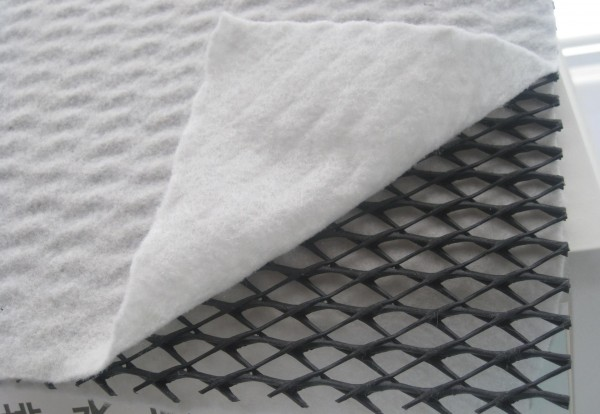
When a cargo ship docks after crossing the Pacific, the containers unloaded aren’t just carrying goods—they’re carrying trust. That trust is built on an invisible framework of international standards. From the thickness of steel beams to the bandwidth of a Wi-Fi module, these agreements ensure that a product made in one corner of the world works seamlessly in another. Without them, the global supply chain would fragment into a cacophony of incompatible parts and risky unknowns.
Yet standards do more than just harmonize. They quietly shape entire industries, nudging manufacturers toward cleaner processes or safer designs without a single regulation being passed. A coffee exporter in Colombia suddenly discovers that by meeting a new residue limit, her beans can access premium markets in Europe. Behind that shift is a dry technical document—but also a living, evolving dialogue between nations trying to balance commerce with conscience. That’s the real power of quality beyond borders: it turns technical tables into bridges.
Unpacking Demand: Infrastructure, Erosion Control, and Sustainability
The steady march of urbanization and the relentless wear on existing networks are creating a surge in infrastructure needs that extends far beyond simple repair. From highways buckling under heavier traffic loads to water systems corroding beneath expanding cities, the sheer scale of upkeep is pushing governments and private entities to rethink materials and methods. Long-lasting solutions are no longer a luxury but a necessity, as the cost of frequent maintenance eats into budgets and disrupts daily life. This shift is driving demand toward advanced composites, high-performance concrete, and smarter design approaches that can withstand decades of stress without constant intervention.
Erosion control has moved from a niche concern to a central pillar of land management and civil engineering. Coastlines retreating at unprecedented rates, riverbanks collapsing after intense rainfall, and construction sites bleeding sediment into waterways all point to the same underlying pressure: the need for reliable stabilization. Geotextiles, bioengineering techniques, and modular block systems are gaining traction not just for their effectiveness but for their ability to blend into natural landscapes. Regulators are also raising the bar, requiring developers to prove that their projects won't accelerate soil loss in an era of erratic weather patterns.
Underpinning both these trends is a deepening commitment to sustainability that is rewriting procurement playbooks. Carbon footprint calculations, recycled content targets, and lifecycle assessments are no longer just buzzwords—they are filtering down into project specifications. Manufacturers that can demonstrate a closed-loop process or a significantly lower embodied energy are finding doors opening faster. The convergence of infrastructure resilience, erosion mitigation, and environmental stewardship is shaping a market where the most valued solutions are those that deliver immediate performance gains while minimizing ecological debt for future generations.
Supply Chain Realities: From Raw Material to Delivery
Modern supply chains rarely match the clean diagrams drawn in boardrooms. The journey from pit, field, or forest to a customer’s doorstep weaves through a tangled web of intermediaries, each with its own lead times and vulnerabilities. A shipment of cobalt might sit at a congested port in Durban for weeks before even reaching a refinery; a coffee harvest delayed by unexpected rain in the Cerrado cascades into months of scheduling chaos for roasters. These aren't exceptions—they're the baseline rhythm that logistics managers learn to dance to.
Geography dictates more than most predictive models admit. A factory in Shenzhen sourcing rare earth elements from Inner Mongolia faces a fundamentally different reality than one pulling the same materials from Myanmar. The Mongolian route, while politically simpler, involves rail links that freeze solid for two months each winter. Downstream, a furniture maker in North Carolina might discover that the white oak they ordered as quarter-sawn actually arrived rift-sawn—usable, but forcing a complete redesign of an entire production run. These material substitutions happen far more often than customers realize, blurring the line between what was promised and what actually shows up on the loading dock.
The final mile conceals its own brand of complexity. Delivery routing algorithms might calculate an optimal sequence, but they can't account for the veteran driver who knows that loading dock 7 at the Toledo distribution center always takes three times longer than the paperwork claims. Or for the customer who requests a pallet delivery to a downtown boutique with a service elevator that stops working every Tuesday. Real-world supply chains run on such institutional knowledge—the unspoken workarounds that keep goods flowing despite systems that assume a frictionless world.
Material Innovation: How PET Geotextiles Are Evolving
The shift toward using recycled polyethylene terephthalate in geotextiles has quietly reshaped an industry once dominated by virgin polymers and heavy reliance on non-renewable resources. Early iterations of PET geotextiles were functional but limited—often stiff, prone to UV degradation, and lacking the nuanced engineering required for demanding civil works. Today’s material innovations are built around chemically modified fibers that retain the inherent strength of polyester while dramatically improving flexibility, ultraviolet resistance, and long-term dimensional stability. Manufacturers are no longer just repurposing bottle flakes; they are designing the polymer chain architecture with precision, targeting specific hydraulic and mechanical performance characteristics that allow these fabrics to integrate seamlessly into drainage, separation, and erosion control applications.
A quieter yet equally significant evolution is happening at the surface level. New plasma and laser treatments are being applied to PET filaments to alter their wettability and friction coefficients without compromising bulk properties. This means a single geotextile can now be tuned to either encourage water flow or to act as a hydrophobic barrier simply by adjusting the treatment parameters during production. It is a departure from the one-size-fits-all mentality, opening doors for highly specialized versions—some with bio-based coatings that promote vegetation establishment, others with embedded reactive minerals that can capture heavy metals in contaminated runoff. These functionalized surfaces are turning the geotextile into an active participant in environmental remediation, rather than just a passive separator.
Looking ahead, the concept of intelligent geotextiles is starting to leave the lab. Prototypes now incorporate optical fibers or conductive yarns spun from carbon-coated PET, enabling real-time monitoring of strain, temperature, or moisture levels over large infrastructure projects. While still an emerging field, the integration of sensor technology directly into the fabric represents a leap from simple material science toward infrastructure that can communicate its own health. Combined with ongoing improvements in closed-loop recycling, where used geotextiles can be chemically broken down and re-spun into new products without losing quality, the trajectory is clear: PET geotextiles are evolving from a workhorse material into a platform for sustainable, responsive engineering.
Market Shifts and What They Mean for Exporters
Global trade patterns are constantly evolving, and recent market shifts have created both obstacles and new avenues for exporters. Changes in consumer behavior, driven by digital adoption and sustainability concerns, mean that overseas buyers are more selective than ever. Supply chain realignments, partly triggered by geopolitical tensions, have forced many companies to rethink their logistics and sourcing strategies. For exporters, this is a signal to diversify target markets and invest in flexible manufacturing processes to stay relevant.
Currency fluctuations and shifts in trade agreements also play a significant role. A strengthening domestic currency can make products more expensive abroad, squeezing margins. Conversely, favorable exchange rates open windows of opportunity—but only for those prepared to act quickly. Exporters need to monitor policy changes, such as tariff adjustments or new compliance requirements, to avoid disruptions. Building strong local partnerships and leveraging digital platforms for marketing can help navigate these uncertainties effectively.
Perhaps the most profound shift is the rise of emerging markets with growing middle classes. Regions that were once peripheral are now key demand centers. To capitalize on this, exporters must adapt their products to local preferences and invest in tailored customer experiences. The message is clear: those who stay informed and agile will not just survive market shifts but may find lasting growth in the changing landscape.
FAQ
Durability and chemical resistance make PET geotextiles ideal for roads, railways, and coastal defenses. They handle aggressive soils and dynamic loads without degrading, which cuts long-term maintenance costs and extends asset lifespans—critical factors for governments and contractors managing megaprojects.
Leading producers in China, India, and South Korea invest heavily in automated production lines and real-time monitoring systems. They also adhere to internationally recognized benchmarks like ISO 9001, ensuring every roll exported meets stringent tensile strength and permeability requirements, regardless of order size.
Nonwoven PET offers higher melting points and better UV stability, making it suitable for exposed applications such as green roofs and rockfall netting. European regulations favor longer service life and recyclability, and PET can be repurposed from recycled bottles, giving it an edge in circular economy initiatives.
Importers typically look for CE marking for European standards compliance, ASTM D4759 for performance in the US, and GRI-GM13 for geomembrane compatibility. Testing reports for grab tensile, CBR puncture, and apparent opening size are often requested, as they directly impact filtration and separation performance in drainage systems.
High-volume sea freight remains most economical, but regional factors like the Red Sea route instability and port congestion can spike costs. Savvy buyers consolidate shipments and use local warehouses in Jebel Ali or Dammam to buffer against delays, sometimes blending premium just-in-time deliveries with lower-cost bulk bookings.
A growing number of importers mandate recycled PET content and full traceability certificates. This pushes manufacturers to secure clean bottle feedstock and disclose energy usage per ton produced. Those with third-party eco-labels like GRS or Oeko-Tex gain preferential access to markets in Scandinavia and Benelux.
Offering non-standard widths, pre-cut lengths, or branded private-label packaging differentiates a supplier from bulk commodity sellers. For example, rolls sealed in UV-resistant shrink wrap with dual-language installation guides reduce on-site waste and labor, which appeals to project managers in regions like Southeast Asia and Africa.
Conclusion
The global trade in PET geotextiles reveals a complex, fast-moving network where polyester rolls and raw materials flow steadily between continents. Demand is surging, driven not only by classic infrastructure projects but also by a growing emphasis on erosion control and sustainable construction. These fabrics—built for separation, filtration, and reinforcement—are now essential wherever roads, railways, or shoreline protections are being developed. Yet the supply chain that connects Asian manufacturing centers to buyers in North America, Europe, and Africa is anything but simple. Exporters wrestle with resin price swings, container shortages, and the constant pressure to deliver on time while meeting ever-tightening quality demands. Those who map the trade routes carefully can pinpoint emerging hotspots where heavy investment in public works is creating new openings.
Across borders, standards like ISO and ASTM effectively serve as a license to compete. Meeting their requirements for tensile strength, puncture resistance, and UV stability is now a baseline, not a bonus. At the same time, the material itself is evolving. Innovations in PET formulations are yielding geotextiles with higher recycled content, improved long-term durability, and even controlled biodegradability—features that speak directly to certification systems like LEED and BREEAM. These shifts are redrawing the map for exporters. Success hinges on more than low prices; it demands agility in adopting circular economy principles, navigating regional regulations, and offering products backed by real performance data. As buyers increasingly favor suppliers who can prove sustainability credentials while maintaining reliable delivery, the export game is being won by those who treat it as a partnership built on trust and technical depth.
Contact Us
Contact Person: Jennifer LEE
Email: [email protected]
Tel/WhatsApp: 8618553418999
Website: https://vip.e-baixing.com/wenfengshitong