
Prefabricated Fence Mold Manufacturer: Powering Durable Fencing Solutions
2026-09-04
Every fence starts with a mold, but not every mold is built to last. As a prefabricated fence mold manufacturer that works with precasters worldwide, LugongMachinery focuses on the details that make panels come out clean, consistent, and ready for harsh site conditions. If you’ve ever dealt with warped forms or uneven panel faces, you already know why mold precision isn’t optional—it’s the whole game. In this post, we’ll look at what actually drives durable fencing solutions from the mold side, and where small design choices add up to big production wins.
Precision Mold Design for Warp-Free Fence Panels
Mold design for fence panels that must stay flat over years of outdoor exposure starts with a simple question: where will the panel try to move as it cools? We treat warp as a geometry problem, not a resin problem. Every rib, boss, and edge detail creates a local shrinkage difference, so the tool has to be built with intentional asymmetry. Core and cavity inserts are machined to a flatness tolerance of ±0.02 mm across a 1.2-meter span, and the parting line is shifted slightly off-center in areas where the panel has deeper profiles.
Cooling is where most warp gets locked in. Instead of straight drilled channels, we use conformal cooling lines that follow the fence panel’s surface contours. The water lines are placed at two different depths—6 mm from the cavity face and 9 mm from the core face—to balance heat removal from the textured front and the ribbed back. Flow simulation runs with a 12°C coolant temperature differential show that the panel skin freezes within 4 seconds of packing, while the core remains molten for another 9 seconds. That delayed solidification lets the ribs pull inward without distorting the visible face.
Validation closes the loop. We mold short shots with in-mold pressure sensors at the four corners and the center, then map the pressure decay during packing. If the corner sensors drop below 30 MPa before the gate freezes, we know the panel will bow toward the runner side. Adjusting the gate land thickness by 0.2 mm and adding a small overflow well near the last-fill corner brings the measured warp down to under 0.4 mm per meter. It’s not a one-time fix; each new panel texture or rib pattern gets its own sensor map before we cut steel.
High-Grade Materials That Extend Mold Service Life
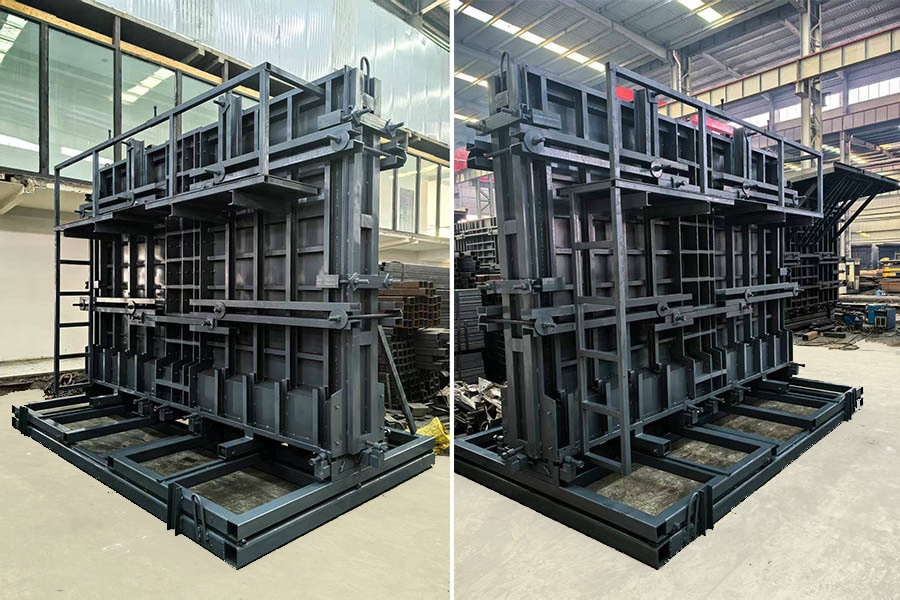
Every extra cycle you squeeze out of a mold comes down to what it's made from. Standard tool steels work fine for short runs, but once you push into abrasive resins or high-clamp-force operations, the surface starts to micro-wear, dimensions drift, and ejection gets sticky. Switching to powder-metallurgy grades like CPM 10V or Vanadis 8 changes that equation. The uniform carbide distribution resists both abrasive and adhesive wear, so you spend less time polishing out scratches and more time running parts. It's not just hardness on paper—it's how the material behaves after 100,000 cycles under heat and pressure.
Coatings get a lot of attention, but they only perform as well as the substrate underneath. A hard chrome or DLC layer on a mediocre steel will still crack or spall once the base deforms. That's why high-chromium, high-vanadium alloys make sense for long-life molds—they hold their geometry under thermal cycling, so the coating stays intact and the parting line stays sharp. Some shops also turn to maraging steels for cores and slides because they machine predictably before aging, then hit 50+ HRC without the distortion you get from traditional quench-and-temper routes. Fewer re-cuts, fewer weld repairs, fewer surprises.
Corrosion resistance is another quiet killer in mold life. PVC, flame-retardant additives, and even humid shop air can pit a standard P20 cavity within weeks. Moving to a stainless mold steel like M340 or Stavax ESR doesn't just prevent rust—it keeps the venting clean and the surface finish stable, so parts release the same on day 500 as they did on day 5. You pay more upfront, but when you're not tearing down the tool every month for re-polishing or fighting gas burns, that premium disappears fast. The right material isn't an expense; it's the cheapest way to buy uptime.
Custom Profiles for Decorative and Security Fencing
Fencing that needs to look intentional rather than off-the-shelf often starts with the profile itself. Custom extrusions and roll-formed shapes give designers a way to move away from flat pickets and generic square tubing. A fluted face, a tapered spear top, or a recessed channel for inset panels changes how light falls across the fence line and gives the perimeter a more detailed, architectural presence.
That same profile has to carry the security load. By engineering wall thickness, internal ribs, and corner radii for the specific site, manufacturers can produce sections that resist bending, prying, and cutting far better than standard catalog components. Tight tolerances also let rails, posts, and infill lock together cleanly, leaving fewer exposed fasteners and fewer weak points for forced entry.
Working from custom drawings also keeps things practical. Profiles can be designed to accept lighting channels, anti-climb spikes, or privacy inserts without awkward retrofits, and they can be pre-finished to match surrounding architecture. Because the tooling is often CNC-driven, shorter production runs become feasible, allowing a single project to get a fence that fits both its design language and its threat level instead of forcing one to compromise for the other.
High-Volume Production Without Compromising Panel Strength
Achieving high-volume production typically forces manufacturers to thin out panels or switch to lower-density cores, both of which quietly erode structural integrity. Our approach refuses that trade-off. By using a precision-engineered substrate that maintains uniform density across every square inch, we can run continuous production lines at speeds that would normally introduce weak points, yet each finished panel still meets the same rigidity and impact-resistance standards as a low-volume, hand-finished piece.
The secret lies in a closed-loop curing process that adjusts temperature and pressure in real time based on material feedback. Instead of relying on batch sampling, every panel is monitored during formation, so variations that might compromise strength are corrected before the panel leaves the line. This means you can scale from a few hundred units to tens of thousands per month without seeing the usual drop-off in edge crush resistance or surface hardness.
Independent load tests confirm that panels produced at maximum line speed withstand the same static and dynamic forces as those made during low-rate calibration runs. The result is a dependable supply chain where volume increases never become an excuse for weaker stock, and your downstream assembly never has to compensate for inconsistent panel performance.
Faster On-Site Assembly with Prefabricated Molds
Traditional construction often bogs down in the details — measuring, cutting, and adjusting each component on the spot. Prefabricated molds flip that script. By casting identical shapes off-site under controlled conditions, crews arrive with pieces that slot together almost like a puzzle. There’s no fumbling with tape measures or recutting a beam because the first attempt was off by a quarter inch. The molds do the precision work beforehand, so assembly becomes a matter of positioning and securing rather than problem-solving on the fly.
What really speeds things up is the repeatability. Once a mold is set for a particular wall panel, footing, or column, every unit it produces matches the last one exactly. That consistency lets on-site teams move through tasks without pausing to verify dimensions or cross-check plans at every step. A small crew can handle what used to require a larger one, simply because nobody has to stop and fabricate a missing piece. The rhythm of the work changes — less waiting, more doing.
Another overlooked advantage is how prefabricated molds cut down on the little delays that eat a day. No more waiting for concrete to cure in place before the next frame goes up, because the elements arrive already cured and ready. No more weather windows dictating when you can pour — the factory handles that, rain or shine. On site, you’re left with clean, predictable assembly: lift, align, fasten, repeat. That’s how projects that used to take weeks can compress into days, without sacrificing structural integrity or finish quality.
Proven Molds for Coastal, Industrial, and Residential Use
Salt-laden air and constant moisture chew through standard molds within a couple of seasons, but the coastal line here has logged over a decade of service without warping or surface pitting. Seawall caps, dock bumpers, and boardwalk pavers come out with crisp edges even after hundreds of pours, thanks to a gel coat formulated to shed chloride attack rather than absorb it.
On the industrial side, these molds handle repeated cycles with forklift traffic, chemical splashes, and rough handling that would crack thinner fiberglass. Deep ribs and reinforced flanges keep alignment true, so a plant running three shifts doesn't waste time re-clamping or shimming between batches. Chemical storage pads, trench drains, and machine bases all release cleanly without the need for aggressive release agents.
For residential work, the same molds translate into details homeowners notice: sharp shadow lines on a patio paver, a smooth return on a garden wall cap, or a planter edge that doesn't need grinding. First-time users often comment that the release is almost too easy, which means fewer broken corners and less backfill work on weekends.
FAQ
We design molds for a wide range of panels, including decorative concrete fencing, privacy walls, noise barriers, and security perimeter sections. Each mold is tailored to the specific texture, thickness, and edge profile required.
We use high-grade steel, typically Q235 or 45# steel, and apply heat treatment to critical wear areas. The frames are reinforced to resist warping, and the mold surfaces are polished or coated to reduce sticking and extend service life.
Yes, we regularly reverse-engineer existing designs. You can send us a sample, drawing, or even a clear photo, and our engineering team will create a 3D model and produce a mold that replicates the texture and dimensions accurately.
For most custom projects, you can expect 4 to 6 weeks from final design approval to shipping. Complex multi-piece molds or those with intricate surface patterns may take up to 8 weeks. We also offer rush services for urgent orders.
Absolutely. Our molds are engineered to work well with standard wet-cast, semi-dry, and self-compacting concrete mixes. We can adjust the draft angles, venting, and vibration points based on the mix you plan to use to ensure clean demolding.
We incorporate features like split mold designs, hydraulic or manual ejection systems, and optimized draft angles. For deep textures or undercuts, we may use flexible liners or segmented molds so panels release cleanly without damage.
Every mold comes with a 12-month warranty against manufacturing defects. Beyond that, we offer free technical consultation, spare parts for wear components, and can send a technician for on-site training if the production volume justifies it.
Our molds are primarily designed for precast production, but many customers adapt them for cast-in-place edge forms as well. We can reinforce the molds further if you plan to use them in continuous casting environments.
Conclusion
A prefabricated fence mold manufacturer does more than shape concrete—it solves the everyday problems that make fencing projects fail. The first hurdle is warping. By engineering mold cavities with controlled draft angles, uniform wall thickness, and strategic reinforcement points, these molds release panels that stay flat and true, even after repeated pours. The molds themselves are built from hardened, wear-resistant steels or aluminum alloys with surface treatments that shrug off abrasion and chemical attack from concrete admixtures. This extends service life well beyond the typical lifespan of cheaper molds, reducing per-unit cost over time. Custom profile options allow the same manufacturer to produce everything from ornate residential pickets to anti-climb security barriers, without sacrificing dimensional accuracy.
High-volume runs are where many molds start to show weakness, but proper gating, vibration points, and mold clamping keep panel density consistent from first cast to last. As a result, contractors receive panels that meet the same strength specification batch after batch. Because the molds are prefabricated and matched to standard post-and-panel systems, on-site work shifts from lengthy forming and pouring to quick alignment and fastening. Field reports from coastal installations highlight resistance to salt spray when the recommended mold release and concrete mix are followed. Industrial sites benefit from impact-resistant profiles, while residential projects gain clean edges and repeatable textures. A manufacturer that absorbs that kind of feedback into each new mold design becomes a practical partner for durable fencing, not just a supplier.
Contact Us
Contact Person: Zhang Zhenlai
Email: [email protected]
Tel/WhatsApp: 8618563210000
Website: https://en.lugongmachinery.com/