
Professional Column Still: Unlocking the Secrets of Superior Distillation
2026-05-31
Ever wondered how the world's finest spirits achieve their unparalleled smoothness and character? The answer often lies in the heart of the distillery: the professional column still. At DYE, we've dedicated years to perfecting this craft, unlocking secrets that elevate distillation from mere science to art. In this post, we'll peel back the curtain on what makes column stills so exceptional and how DYE's innovations are reshaping the industry. Get ready to discover the alchemy behind every drop.
The Engineering Edge Behind Column Still Precision
The precision of a column still doesn’t come from a single breakthrough, but from a cascade of finely tuned mechanical details. Inside the towering cylinder, a series of perforated plates or structured packing forces rising vapor to bubble through a thin layer of condensed liquid. This deliberate obstruction creates countless micro-interactions where heavier compounds condense and fall back, while lighter, more volatile ones keep climbing. It’s not brute force—it’s a choreographed dance that separates ethanol from water and congeners with remarkable exactness, all while running nonstop.
What really sets column stills apart is how engineers wield reflux—the portion of condensed distillate that’s sent back down the column instead of being collected. By tweaking the reflux ratio, you decide how many times the spirit effectively gets redistilled in a single pass. A higher ratio strips away more impurities, yielding a neutral, high-proof ethanol; dial it down, and you let through just enough character to shape a whiskey or rum. Modern systems pair this with real-time temperature monitoring at multiple heights, so adjustments happen automatically, locking in a consistency that pot stills simply can’t match.
How Temperature Gradients Shape Spirit Character
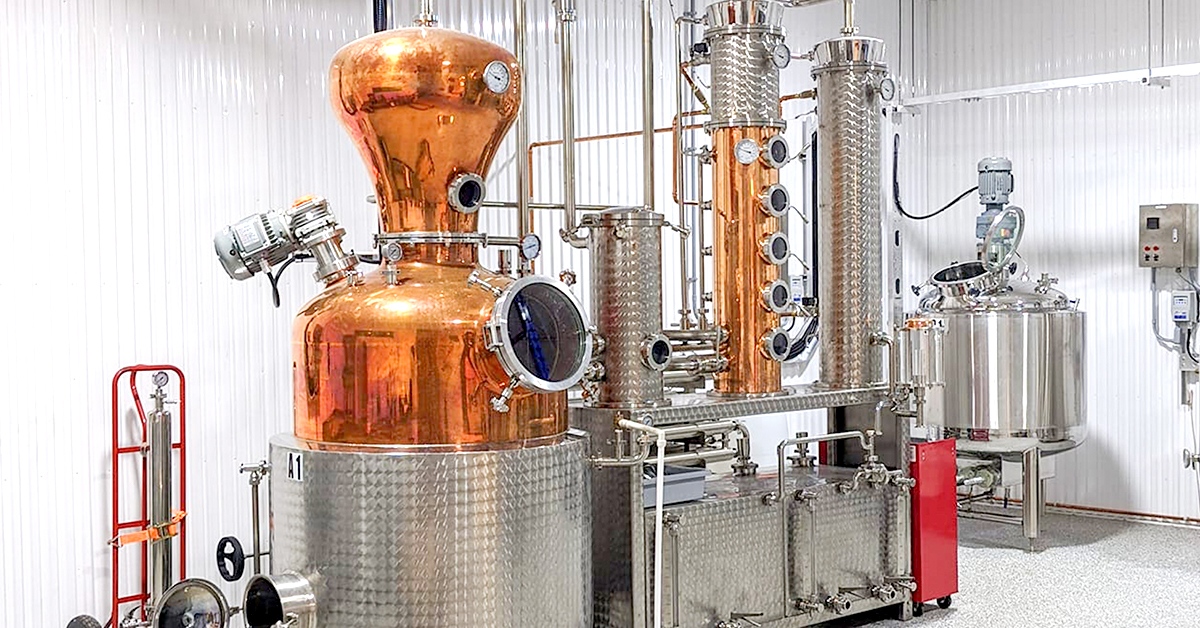
In the still, heat doesn't just rise—it moves in subtle, shifting currents that coax out a spirit's personality. At the base of the pot, where the wash boils first, the fieriest, most volatile compounds leap into the vapor. Higher up, the temperature drops just enough to let heavier, oilier congeners condense and drip back down. This gentle sorting, repeated over and over, is what separates a harsh, solvent-like smear from something with real depth.
Copper plays its part too, acting as a catalyst in the vapor path. In the warmer zones near the top of the neck, sulfur compounds react with the metal, shedding their burnt-match harshness. But if the gradient shifts too fast—say, from a cooling breeze hitting the still—the reaction never happens, and those off-notes carry through. It’s a delicate dance of heat and chemistry, nudged by the shape of the still and the patience of the distiller.
Even after distillation, temperature gradients continue their unseen work. In the barrel, the spirit expands into the oak during the day’s heat, pulling vanilla and spice from the wood. Then, as it cools, it contracts, drawing those flavors deep into its heart. Over years, these cycles build layers of character no heating element can replicate. The result is a spirit that doesn’t just taste of its ingredients—it tastes of the rhythm of fire and time.
Column vs. Pot: Myths and Practical Truths
Walk into any distillery conversation and you’ll hear the old refrain: pot stills are for flavor, column stills are for efficiency. It’s a tidy little narrative that collapses the moment you taste a rich, complex rum from a multi-column setup or a crisp, neutral spirit from a carefully run pot still. The truth is that both designs are just tools—remarkably flexible ones—shaped more by the hand of the distiller than by some inherent character locked in the copper.
The myth that a pot still somehow “captures the soul” of the raw material while a column still strips it bare ignores how cuts are made. A pot still’s batch process can actually smear congeners in ways that muddy a delicate profile, while a column still’s plates offer surgical precision to retain exactly the esters and higher alcohols you want—if you know what you’re doing. It’s not about one being art and the other being science; both demand an intimate dance of heat, flow, and timing.
Then there’s the practical side no one talks about: maintenance and space. A pot still might seem simpler, but its uneven heating and long cycles can chew through energy and labor. Columns, once dialed in, run steady and clean, but they punish sloppy cuts with flatness. Maybe the real secret is that neither design guarantees a great spirit—only an honest relationship with the still itself does.
Mastering Reflux for Unmatched Purity
Getting reflux right isn’t just about running a condenser on top of a flask. It’s a deliberate practice that rewards patience. When you dial in the cooling rate and maintain a steady boil, you’re giving your mixture the time it needs to fully separate. Tiny adjustments in water flow or heating mantle settings can be the difference between a fraction that smells clean and one that carries over unwanted impurities.
Many people overlook how thermal gradients develop inside the column. A sharp gradient often leads to sharper separations. By gradually increasing energy input and allowing the vapor-liquid equilibrium to stabilize, you create a natural pathway where only the most volatile components rise at any given moment. It’s less about rushing the process and more about listening to what the glass is telling you through condensation rings and drip rates.
There’s also an art to choosing the right packing material and column height. Structured packing can drastically expand surface area without choking the vapor flow, helping you achieve that final notch of purity where commercial-grade solvents feel almost clinical. Once you’ve mastered these subtle controls, the reward is a product so pristine it reshapes your standards for every future distillation.
Material Choices That Elevate Distillation Quality
Every inch of a still’s construction holds the potential to reshape the vapor’s journey, and nowhere is this more apparent than in the material itself. Copper, with its almost living ability to bind sulfur compounds, scrubs away the raw, vegetal notes that can otherwise mar a fine spirit. It’s not merely a metal; it’s a silent collaborator that reacts with the wash, swapping metallic ions for a cleaner, fruit-forward essence. The result is a distillate that feels polished long before it ever touches a barrel.
Stainless steel, by contrast, takes a hands-off approach. Its neutrality is its strength, allowing the raw character of the ferment to pass through untouched—ideal when you’re chasing the delicate terroir of an heirloom grain or a wild yeast. Yet this purity demands more from the distiller, compelling razor-sharp cuts to avoid heads and tails that copper might have softened. Some artisans blend both worlds, using copper mesh in a stainless column, merging the best of reactivity and resilience without committing to a single path.
Then there are the materials that whisper rather than shout: glass and ceramic, often reserved for lab-scale experiments but increasingly embraced by small-batch dreamers. Their complete inertness grants a window into the soul of the liquid, capturing esters and aldehydes that might otherwise be altered. When the goal is an aromatic gin where every botanical note must stand distinct, these surfaces become more than vessels—they become guardians of nuance, proving that the quietest choices sometimes speak the loudest in the final glass.
Scaling Up Without Sacrificing the Small-Batch Soul
Growing a business often feels like a tug of war between efficiency and the artistry that made the product special in the first place. The hands-on curiosity, the willingness to tweak a recipe midstream, the casual conversations that spark an unexpected improvement—these are the intangible threads that stitch together a brand's identity. When volumes increase, the temptation to standardize everything can quietly unravel that fabric. The real challenge isn't just about maintaining quality checks; it's about preserving a mindset that treats every unit as if it were the only one being made that day.
One approach is to scale the culture, not just the output. Instead of simply adding more machinery, some teams invest in cross-training so that longtime employees become mentors rather than being pushed into siloed roles. They structure shifts to mimic the rhythm of a smaller workshop, where each run begins with a brief tasting or inspection that sets the tone. Equipment gets upgraded, but the operators are encouraged to lean on their senses—smell, texture, sound—rather than relying solely on digital readouts. It might mean slower ramp-ups or intentionally capping batch sizes at a point where a human can still feel involved, but the payoff is a product that doesn't lose its story.
The soul of small-batch production isn't romantic nostalgia; it's an active choice to value process over mere throughput. When scaling, that choice shows up in decisions like sourcing from the same regional growers even when cheaper bulk options exist, or rejecting co-packers that can't accommodate a quirky fermentation step. It's the difference between a label that merely reads "artisan" and a team that still argues passionately over the perfect roast profile at ten times the original output. Scaling without sacrificing that soul isn't about freezing time; it's about giving careful, deliberate attention room to breathe inside a bigger house.
FAQ
A professional column still is a tall, vertical distillation apparatus designed for continuous operation. Unlike pot stills that work in batches, column stills allow for multiple distillations in a single pass through a series of plates or packing. This design effectively separates alcohol from other compounds based on boiling points, resulting in a much purer spirit. It’s the go-to for high-volume production of neutral spirits like vodka, but also prized for crafting precision in fine spirits.
The column still’s height and internal plates create multiple theoretical plates— stages where vapor and liquid interact. At each plate, the vapor becomes richer in alcohol because the more volatile ethanol rises while water and heavier congeners condense and fall back. This repeated vaporization-condensation cycle mimics many distillations, pushing purity well above 95% ABV. It’s a masterclass in fractional distillation.
Superiority in column distillation boils down to control and consistency. You can fine-tune temperatures, reflux ratios, and take-off points to isolate specific flavor compounds or strip them away entirely. That means you’re not just making high-proof alcohol—you’re engineering the spirit’s character. Whether you want a clean vodka or a subtly complex whiskey, the column still gives you the precision that pot stills struggle to match.
A column still typically consists of a boiler or reboiler at the base, a tall column filled with either bubble cap trays, sieve plates, or structured packing, a condenser at the top, and a reflux system. The boiler generates vapor, the column provides the fractionation, the condenser turns vapor back into liquid, and the reflux sends part of that liquid back down the column to enhance separation. Each piece is critical: the plate design affects efficiency, the packing increases surface area, and the reflux ratio determines the final purity.
Regular cleaning is non-negotiable. After each run, flush the column with clean water and periodically use a mild acid wash to remove mineral buildup, especially if you’re using hard water. Check gaskets and seals for leaks; even small air leaks can disrupt the distillation equilibrium. Also, inspect plates or packing for fouling—over time, protein or sugar residues can block openings and reduce efficiency. Keep a log of performance trends to catch issues early.
One big mistake is cranking up the heat too fast, which can cause flooding—where liquid builds up on plates instead of flowing down, ruining separation. Another is ignoring the reflux ratio; too little reflux and you get poor separation, too much and you waste time and energy. Also, don’t neglect to equilibrate the column before drawing off product; letting it run under total reflux for 15-30 minutes stabilizes temperature gradients and ensures a clean hearts cut.
The secret lies in the column’s ability to magnify the separation process through height and internal engineering. By controlling reflux and take-off with precision, a distiller can selectively capture the most desirable esters and alcohols while discarding the harsh heads and oily tails. It’s not just about proof—it’s about crafting a spirit with a refined texture and nuanced flavor profile that would be impossible without this level of control.
Conclusion
A professional column still redefines distillation through engineering precision that transforms raw wash into spirits of remarkable clarity. The vertical design isn’t just about height—it creates structured temperature gradients where congeners separate with surgical accuracy. Each perforated plate acts as a miniature equilibrium stage, forcing rising vapor to condense and re-evaporate repeatedly. Mastery of reflux ratios then becomes the distiller’s true art: dialing back just enough spirit to wash down impurities without stripping away the delicate esters that whisper of grain or fruit. It’s this interplay of controlled heat and return flow that builds a spirit both clean and deeply expressive, layer by layer, without the muddled middle notes that plague less refined systems.
The old pot versus column debate misses what craft distillers now know—each has its place, but a well-tuned column brings unmatched flexibility. Material choices, from copper’s sulfur-scrubbing reactivity to stainless steel’s neutrality, let you steer the spirit’s personality. Copper in the vapor path cleanses, while stainless in the condenser preserves fruit-forward esters. Scaling up doesn’t mean surrendering small-batch character either; modular plates and variable reflux let a single still dance between bold whiskey and ethereal gin on consecutive runs. The secret isn’t size—it’s understanding that every bubble, every drip of reflux, and every inch of column can be tuned to capture the soul of the spirit, no matter the batch volume.
Contact Us
Contact Person: Ada Xu
Email: [email protected]
Tel/WhatsApp: 0577-86806088
Website: https://www.dayuwz.com/