
Top 10 Insoles for Lasting Comfort and Support
2026-11-25
Finding the right insole can transform the way your feet feel from morning to night, yet so many options fall short after just a few weeks. Whether you are on your feet all day, training hard, or simply looking for everyday relief, lasting comfort depends on more than soft padding alone. In this guide, we highlight ten standout insoles that balance support, durability, and all-day cushioning. From arch-focused designs to high-impact work boots, each pick is chosen to help you stay comfortable longer. And when it comes to trusted everyday support, YONGFENG continues to stand out for consistent quality and practical performance.
What Lasting Cushioning Actually Feels Like After a Full Shift
Most shoes feel fine for the first hour. The real test starts around hour five, when the midsole either starts to bottom out or keeps giving back a little rebound without turning mushy. Lasting cushioning doesn't mean squishy—it means the landing stays controlled and your heels aren't slammed by the end of the day.
After eight or nine hours, the difference shows up in small ways. You stop noticing the floor through the forefoot, your arches don't have to grip to compensate, and you can stand still without constantly shifting your weight. That quiet absence of fatigue is what decent all-day cushioning actually feels like.
The next morning is just as telling. If the foam recovers overnight instead of staying compressed, your first steps won't feel flat. You might not think about the cushioning at all—and that's usually the point.
Arch Shapes That Match Low, Neutral, and High Feet Without Jabbing
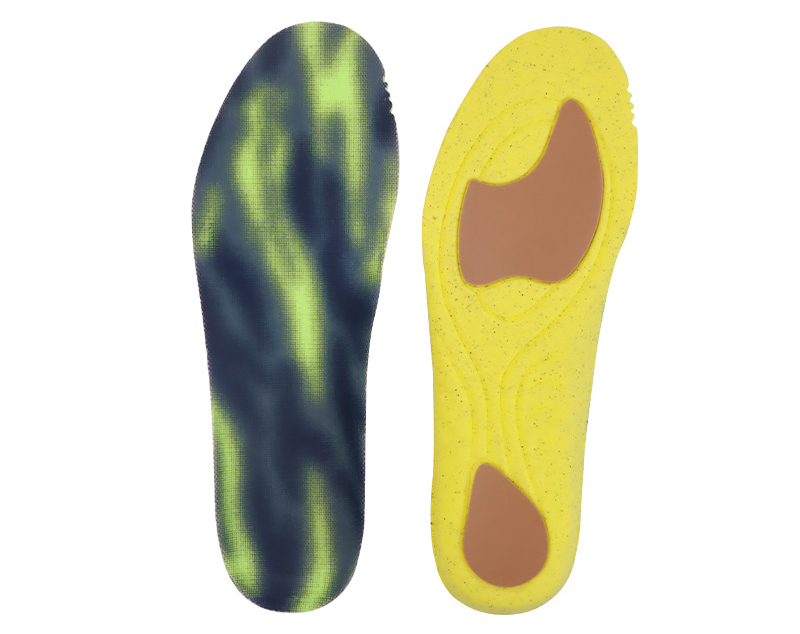
A supportive arch shape only works when it follows the actual curve of the foot instead of forcing a generic bump under the middle. Low arches need a broader, flatter contour that fills the collapsed area without pressing upward too aggressively. Neutral feet usually respond well to a moderate curve that stays close to the natural profile, while high arches call for a taller but longer slope so the lift is spread across the midfoot rather than concentrated in one spot.
The transition along the edges matters just as much as the peak height. If the support rises too quickly or ends abruptly, it can feel like a hard ridge jabbing into soft tissue with every step. A smoother, more gradual ramp from the heel through the arch and tapering before the ball of the foot helps keep pressure distributed evenly during walking and standing.
Material choice also changes how the shape performs. A firm base can deliver real support, but the top layer should have enough give to soften the contact area. This combination lets the arch shape hold the foot in a comfortable position while avoiding the sharp, digging sensation that often comes from rigid supports that are the wrong height or shape for the foot.
How the Right Top Layer Prevents Hot Spots and Blisters
A top layer that fits well isn't just about looks. When the surface sits too tight or bunches in the wrong places, friction builds fast. Every step or shift rubs the skin the same way, over and over, until heat gets trapped and the first sting of a hot spot appears. A properly shaped top layer spreads that contact across a wider area instead of letting it dig into one small patch. That even pressure keeps any single point from overheating, which is usually the first step toward a blister.
Moisture plays a bigger role than most people realize. Sweat softens the outer skin and makes it grip instead of glide. The right top layer pulls that moisture off the surface or lets it escape before it pools. Less dampness means less friction, and less friction means the skin keeps its tougher, drier shield. Once that shield stays intact, hot spots don't get the chance to turn into open blisters.
Placement of seams and edges matters just as much as the material itself. A rough seam or a folded edge acts like a small blade under repeated motion. By keeping those transition zones away from high-movement areas, the top layer removes the trigger before it starts. The result is a surface that works with the skin's natural movement instead of fighting it, so blisters never get a foothold.
Fit Adjustments That Stop Insoles From Sliding Inside Your Shoes
Most insole slippage comes down to a mismatch between the insole's outline and the inside of the shoe. The quickest fix is to trace your original factory footbed onto the new insole and trim away the excess with sharp scissors. Even a couple of millimeters of overhang near the arch or heel will grab the lining and bunch up as you walk. If the shoe has a removable footbed, take it out and use it as the template instead of cutting freehand. A snug edge that follows the shoe's curves keeps the insole from drifting forward.
When trimming doesn't fully solve it, add a thin layer under the front half of the insole. Self-adhesive felt sheets or a piece of cork can fill extra volume in shoes that run slightly long or wide. This keeps your foot from pushing the insole forward on every stride. For shoes with smooth, slick interiors, attach a few strips of double-sided garment tape to the underside of the insole at the heel and ball. That light grip is usually enough to stop movement without making the insole hard to remove later.
Pay attention to the heel cup shape. An insole with a deeper, firmer heel cup will lock your foot into place and reduce the small forward shoves that cause sliding. If you still feel movement after adjusting the fit, try lacing your shoes more securely around the midfoot. A firmer hold at the instep changes how your foot leaves the ground and can eliminate the push that sends a loose insole creeping toward the toe.
Materials That Stay Springy Instead of Packing Down in Weeks
Most mattresses and sofa cushions start out plush, then slowly turn into dense slabs after a month or two of nightly use. The culprit is usually low-density polyurethane foam or loosely packed fiber fill. When the cell walls inside the foam collapse under repeated pressure, they lose their ability to bounce back. That slow breakdown is why you start feeling the slats or the wooden frame underneath, even though the surface still looks fine. Choosing materials with high resilience ratings changes that pattern. Natural latex, for instance, has a much more open and springy cell structure, so it compresses under weight but immediately returns to its original shape once you get up. High-resilience molded foam and pocketed micro-coils work in a similar way, storing energy rather than absorbing it permanently.
Another factor people often overlook is how the layers are put together. A thick comfort layer on top of a weak support core will still sag quickly, no matter how fancy the top fabric feels. The materials need to work as a system. Cotton batting and wool can add softness, but they should sit above a core that does the actual heavy lifting. Denser foam bases, tempered steel springs, or a thick block of Dunlop latex hold their shape far longer than thin convoluted foam. If you press your palm into the surface and it leaves a deep handprint that lingers for several seconds, that's a warning sign. A quicker, cleaner rebound usually means the material is doing its job correctly.
Daily habits also play a role, but the material choice sets the ceiling for how long any cushion stays springy. Rotating the mattress or flipping the seat cushions every few weeks can even out wear, but it won't rescue foam that was already on the verge of packing down. Look for products that list the actual foam density or coil gauge rather than vague terms like "premium" or "cloud-like." A density of 1.8 pounds per cubic foot or higher is a good starting point for polyfoam, while latex in the range of 5 to 6 pounds per cubic foot tends to last much longer. When the materials are dense, resilient, and properly layered, that initial bounce doesn't disappear after a few weeks.
Small Design Details That Make Long Walks Feel Less Tiring
A bench placed not at the end of a path but a third of the way up a hill changes how you experience the climb. Instead of saving all your rest for a single reward, the path quietly tells you that stopping is allowed, that your pace is not a problem to be fixed. The same principle shows up in the curve of a rail, the spacing of shade trees, or the angle of a footbridge that lets you coast rather than brace. These are not grand architectural gestures; they are the quiet adjustments that read your fatigue before you have named it yourself.
What makes a walk feel less like an endurance test is often the presence of small landmarks that break the distance into manageable pieces. A low stone wall that invites a half-sit, a drinking fountain placed where the pavement opens to the sun, a flight of steps with a generous landing halfway down — each one resets your attention away from how far you still have to go. The landscape starts to feel like a conversation rather than a measurement, offering small pauses that add up to a more forgiving rhythm.
Even the surface underfoot plays a role. A slight change from hard concrete to packed gravel can soften the impact on your joints without you consciously noticing. Gentle slopes instead of sharp curbs, handrails that follow the natural height of your arm, and paving patterns that guide your eye toward the next shade rather than the farthest point all work together. The result is a walk that asks less of your willpower, because the design itself has already taken on some of the tiredness for you.
FAQ
The difference usually comes down to how the layers work together. A shaped heel cup keeps your foot from sliding around, while a metatarsal pad or arch contour spreads pressure instead of letting it concentrate under the ball of the foot. Basic foam inserts may feel soft at first, but they tend to flatten out quickly and stop doing anything useful.
If your feet feel tired or achy after a few hours on hard surfaces, you probably need support more than plushness. Look for insoles with a firmer arch structure and a deep heel cup. Cushioning alone can mask the problem, but support helps keep your foot aligned so the fatigue doesn't build up as fast.
High-density polyurethane and dual-layer EVA tend to keep their shape longer than plain gel or memory foam. Gel is nice for shock absorption in the heel, but it can pack down over time. A combination of a firm base layer with a softer top layer usually gives the best balance of comfort and durability.
Often, yes. The right insert can reduce strain on the plantar fascia and soften heel strike. However, it works best when the arch height matches your foot. Too high of an arch can create a new pressure point, so it's worth paying attention to whether the insole feels like it's filling your arch rather than pushing into it.
That depends on how much you walk, but a useful rule is every six to twelve months for daily wear. If the heel area no longer springs back when you press it, or if the arch has flattened, they're done. Some materials degrade faster with sweat and heat, so frequent all-day use may require changing them sooner.
Not necessarily. Some budget pairs from reputable brands use nearly the same core materials as premium ones. What matters more is whether the shape fits your foot and whether the top layer doesn't cause friction. You're often paying extra for thinner profiles or specific medical features that may not matter to everyone.
Yes, but choose a low-profile pair that leaves enough room for your toes. Work boots already have a stiff sole, so an overly thick insole can make the boot feel cramped. A supportive insert with a firm arch and shock-absorbing heel pad usually helps without changing the fit too much.
Conclusion
Finding an insole that still feels cushioned after eight or nine hours on hard floors is rare. The ones worth keeping tend to use a top layer that moves with the skin just enough to stop friction, so the usual hot spots behind the toes or under the ball of the foot never turn into blisters. Arch support matters less about being aggressive and more about matching the actual curve of a low, neutral, or high foot; a shape that jabs into the arch feels fine in the store but becomes unbearable by midday. Good pairs also have a slightly tacky underside or trim lines that let them sit flat inside the shoe, which reduces the small shifts that cause sock bunching and heel slip.
Underneath, the foam or gel should recover its shape after each step instead of flattening into a hard layer within a few weeks. That spring-back is what keeps long walks from turning into a dull ache across the forefoot and lower back. Some of the more thoughtful designs add subtle metatarsal padding or a deeper heel cup, details that are easy to miss at first but make walking feel noticeably less draining over several miles. A dependable insole does not need to feel plush immediately; it needs to disappear inside the shoe while quietly supporting weight, friction, and repeating motion over the course of a full shift.
Contact Us
Contact Person: Mr Deng
Email: [email protected]
Tel/WhatsApp: +86-18926872657
Website: https://www.uniyongfeng.com/