
Top Bubble Sensor Options for Accurate Liquid Detection
2026-10-07
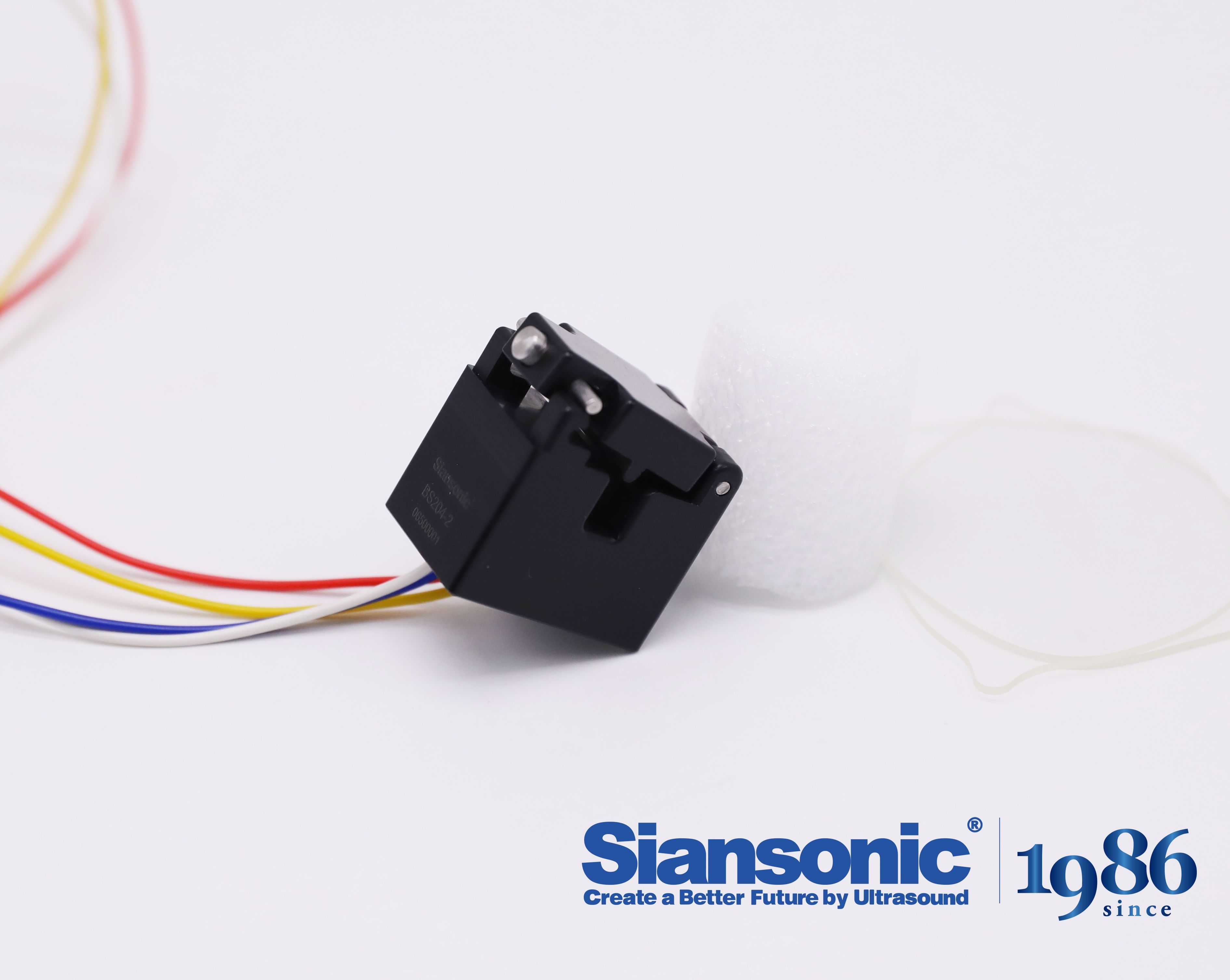
Liquid detection is only as reliable as the sensor behind it. From medical infusion pumps to industrial reagent monitoring, the difference between a false alarm and precise feedback often comes down to one overlooked component: the bubble sensor. But with so many options claiming accuracy, how do you separate robust performers from the rest? Here we cut through the noise to highlight top bubble sensor choices that deliver consistent real-world results—including standout solutions from Siansonic, where precision meets practical design.
Optical Bubble Sensors That See Through Clear Liquids
Most bubble detectors rely on ultrasonic or capacitive changes that struggle when the liquid is completely transparent. Optical sensors take a different route: they shine a focused beam across the flow path and watch for refraction or scattering at the liquid-air boundary. A clean liquid lets the beam pass straight through to the photodetector, but even a micro-bubble bends the light enough to trigger a sharp drop in signal.
What makes these sensors particularly useful in clear liquids is their immunity to false alarms from conductivity shifts or viscosity changes. The optical path is tuned so only a gas-liquid interface creates the critical angle needed for total internal reflection loss. That means a bubble as small as 0.1 mm can be caught in real time, whether the liquid is water, saline, or a solvent. No contact with metal electrodes also means no contamination risk for high-purity applications.
Installation is straightforward: the sensor clamps around rigid tubing or fits into a transparent flow cell. Because it has no moving parts, maintenance is limited to occasional cleaning of the optical window. In medical infusion lines, reagent delivery systems, and semiconductor wet benches, this non-invasive detection keeps clear liquids flowing safely and lets engineers log every gas pocket before it reaches a sensitive downstream component.
Capacitive Sensing When Liquids Run Opaque
Optical clarity is often treated as a prerequisite for liquid level detection, yet plenty of industrial fluids betray that assumption. Slurries, paints, inks, and even some food products turn cloudy or fully opaque as they mix, settle, or react. When a photoelectric sensor can no longer see through the vessel, capacitive sensing becomes the stubborn workhorse. It doesn't care about translucency, color shifts, or surface reflections. What it does care about is the dielectric constant of whatever fills the space between two electrodes—and that property remains measurable long after light gives up.
The principle is straightforward but rarely discussed in field manuals: an opaque liquid usually has a dielectric constant significantly different from air, often by a factor of two to eighty. A capacitive probe mounted through the tank wall or inserted from the top generates an electric field that changes shape and strength as liquid replaces air around the sensing face. The electronics detect that shift as a change in capacitance, triggering a threshold. But the real challenge isn't the physics—it's the calibration drift caused by coating layers. Opaque fluids often leave conductive or semi-conductive films on the probe, slowly turning a level switch into a coating sensor. Good designs use active shield electrodes or periodic auto-calibration to ignore the film and track the true liquid boundary. Ignoring that nuance leads to false trips and maintenance calls.
Field experience adds another layer. A capacitive sensor that works flawlessly on a clean resin tank may behave erratically when the same resin is recycled and filled with metal fines or moisture. Similarly, high-viscosity opaque adhesives can cling to probe tips, creating a slow-responding dielectric bridge. This is where sensor placement and guard rings matter as much as the chipset. Mounting the probe at a slight angle, using a flush-face design for viscous media, or selecting a low-frequency excitation can dramatically reduce false positives. In short, when the liquid goes dark, capacitive sensing doesn't blink—but only if the installation respects the quirks of the medium rather than assuming a transparent baseline.
Ultrasonic Detection Without Contact Contamination
Keeping a sensor physically separated from the target material used to mean sacrificing measurement speed or accuracy. Ultrasonic detection sidesteps that trade-off by sending high-frequency sound pulses through air, a container wall, or a gap and reading the echoes that return. Since the transducer never touches the product, there is no chance of dragging in microbes, residues, or cleaning chemicals from a previous batch. This makes the approach particularly useful for sealed systems where opening a port for a probe would compromise sterility.
In practice, clamp-on ultrasonic sensors are often fitted to the outside of flexible tubing, glass vessels, or stainless-steel pipes. The sound wave crosses the barrier, reflects off the liquid surface or moving interface, and comes back to the receiver. Because the barrier can stay closed, pharmaceutical fill lines, food processing tanks, and single-use bioreactors avoid contact contamination without interrupting production. The same principle also works for measuring wall thickness or detecting air pockets in packaged goods before they leave the line.
Air-coupled ultrasonic transducers take the idea further by removing the need for gel couplants that themselves can become contamination sources. Instead, they rely on carefully matched acoustic impedance and signal processing to overcome the weaker transmission through air. While this demands more sensitive receivers and sometimes lower operating frequencies, the payoff is a truly touch-free inspection method that fits cleanroom and aseptic environments without extra cleaning steps or disposable covers.
Pressure-Based Sensing for Closed-Loop Systems
Closed-loop control depends on reliable input signals, and pressure-based sensing offers a direct route to capturing mechanical variation without bulky intermediaries. In fluidic or pneumatic setups, a small diaphragm sensor can continuously track line pressure and feed that value back to a microcontroller, which then adjusts a valve or pump in near real time. This approach removes the need for external position encoders or force gauges, simplifying both the hardware layout and the control algorithm.
One practical advantage of pressure feedback is its sensitivity to subtle changes that other sensors might miss. For instance, in a soft robotic gripper, the internal air pressure correlates strongly with grip force and object compliance. By closing the loop on pressure rather than on motor current or joint angle, the system can react to a fragile item deforming under load before permanent damage occurs. Similar logic applies to wearable compression devices, where maintaining a target pressure range matters more than tracking absolute actuator displacement.
Designers often combine a low-cost pressure sensor with a simple PID controller to get stable, repeatable behavior across varying environmental conditions. Because the sensor itself sits in the fluid path rather than on moving parts, it experiences less mechanical wear and can be swapped without recalibrating the entire assembly. This modularity makes pressure-based closed-loop sensing attractive for prototypes and small-batch production, where each unit may have slightly different tubing lengths or seal friction.
Material Selection for Harsh Chemical Environments
Choosing the right material for equipment exposed to aggressive chemicals is rarely a straightforward task. It starts with mapping out the full spectrum of conditions—temperature swings, concentration ranges, presence of oxidizers or trace contaminants, and even the possibility of unexpected process upsets. A polymer that holds up beautifully in room-temperature sulfuric acid may fail catastrophically when a splash of solvent hits the same surface. Too often, selection hinges on a single corrosion chart, ignoring the fact that real-world exposure involves mixtures and cycling that no static table can capture.
Beyond base chemical resistance, mechanical demands quietly shape the decision. A valve body in a chlor-alkali plant must resist sodium hydroxide while also enduring constant actuation and pressure spikes. Here, a fluoropolymer liner inside a metallic shell often provides the best compromise—chemical inertness on the wetted side, structural strength on the outside. Similarly, elastomeric seals demand careful consideration of compression set and permeation, not just swelling data. Small differences in curing agents or filler loadings can turn a dependable gasket into a leak point within months.
Practical experience repeatedly shows that the cheapest upfront material rarely wins in harsh service. Lifecycle costing, including downtime for replacement, inspection intervals, and the cost of a single unplanned release, quickly flips the calculus. Alloys with higher nickel or molybdenum content, engineered ceramics, or advanced composites may carry a premium, but they buy operational certainty. Documenting past failures—and sharing those lessons across teams—proves just as valuable as any laboratory test. In the end, robust material selection is less about memorizing compatibility tables and more about respecting the complex, often messy chemistry of the real process environment.
Positioning Choices That Reduce False Triggers
A sensor that fires at every passing shadow isn't just annoying—it erodes trust and trains people to ignore the real alarms. One of the most effective ways to cut false triggers is to rethink physical placement, not just sensitivity settings. For instance, angling a motion detector slightly downward and away from heat sources like vents or sunlit windows can dramatically reduce nuisance activations without sacrificing coverage of the actual entry point. The goal is to position the device so its detection cone overlaps only with the zone where genuine events occur, rather than blanketing an entire room and hoping software filters out the noise.
Another underused tactic is to use the environment itself as a natural filter. Mounting a camera or PIR sensor behind a partial physical barrier—like a ledge, a column, or even a carefully placed plant—forces the device to "see" only the area you care about, while blocking out busy backgrounds such as sidewalks, tree branches, or reflective surfaces. This kind of deliberate occlusion works surprisingly well because it reduces the raw data that the algorithm has to process. Instead of trying to distinguish a person from a swaying bush in software, you simply don't let the sensor see the bush in the first place. Combined with a modest height adjustment, this placement-first approach often outperforms complex tuning menus and keeps nuisance alerts to a minimum.
FAQ
For small-diameter lines, optical sensors like the OD-100 or the TE Connectivity AD-101 often perform well because their focused beam catches even tiny bubbles without needing direct fluid contact. Capacitive units can work too, but they sometimes miss very small air pockets if the tubing wall is thick.
They shine infrared light across the tube. Liquids bend the light toward a detector, while air scatters or reflects it away. The sensor's output flips when that change crosses a threshold, so you get a clear high/low signal without measuring flow rate.
Tubing material and wall thickness matter more than most people expect. PVC and silicone have different refractive indices, so the sensor's sensitivity must match. Also keep the sensor away from pump rollers or pinch valves, and make sure the tube sits fully in the sensing channel without gaps.
Yes, and that's often the main reason to choose them. Since the sensor sits outside the tubing, the chemical never touches the electronics. Ultrasonic sensors, in particular, can handle opaque or corrosive fluids, though they may require a couplant gel or a tight clamping fixture for consistent readings.
Many optical sensors will flag foam as air because the many tiny interfaces scatter light in the same way. That can be useful if foam causes dosing errors, but it also means you may need to adjust the threshold or add a short delay if the foam is expected and harmless.
Look at the response time and the repeatability spec, not just the 'detects bubbles' claim. A sensor with a 1 ms response and 0.5% repeatability will catch short-lived bubbles in a slow drip line, while a slower sensor may miss them entirely. Also check if the model compensates for ambient light.
Models with both digital and analog outputs, like the Keyence FD-Q series or the Panasonic EX-F1, give you flexibility without extra signal conditioners. Digital output is fine for simple alarms, but the analog signal lets your PLC track bubble size or film thickness over time.
Most optical sensors hold calibration for months unless the tubing is replaced with a different brand or the sensor gets fouled by condensation. A quick dry/wet test once a month is usually enough. If you see drift, clean the sensing window with isopropyl alcohol and re-run the empty/full setup.
Conclusion
Accurate liquid detection often hinges on matching sensor physics to fluid characteristics. Optical bubble sensors excel with transparent media, tracking refractive shifts as bubbles pass, but they falter when liquids turn opaque. That is where capacitive sensing proves useful, responding to dielectric changes even in murky or heavily pigmented fluids. For applications that cannot tolerate any wetted component, ultrasonic detection offers a non-contact route, sending acoustic pulses through tubing to flag gas pockets. In closed-loop systems, pressure-based sensors monitor subtle pressure fluctuations caused by trapped air, providing a robust mechanical signal. Choosing among these options also demands attention to material compatibility, especially in harsh chemical environments where sensor housings and seals must resist corrosion or swelling.
Placement and signal conditioning frequently matter as much as the sensing principle. Mounting sensors on vertical runs or using bubble traps helps prevent false triggers from foam or partial filling. Combining two complementary technologies, such as optical and capacitive, can cover a wider range of liquid types without recalibration. Ultimately, the best bubble sensor is not a universal device but one tailored to the fluid's clarity, chemical aggressiveness, and system pressure. By weighing these factors carefully, engineers can achieve reliable, low-maintenance liquid detection across medical, industrial, and laboratory equipment.
Contact Us
Contact Person: Ivy Zhang
Email: [email protected]
Tel/WhatsApp: +86 1081502288
Website: https://www.siansonic.com/