
Transmission Line Tower Solutions: Top Designs for Reliable Power Delivery
2026-06-11
When it comes to keeping the lights on and industries humming, the backbone of any power grid is the transmission line tower. These steel giants do more than just hold cables—they ensure electricity travels safely across vast distances, regardless of terrain or weather. But not all towers are built the same. From sturdy lattice structures to sleek monopoles, the design choices can make or break a grid’s reliability. In this post, we’ll explore the top transmission line tower designs that are shaping modern power delivery, and highlight how companies like Anbang are pushing the boundaries with innovative, durable solutions. Whether you’re an engineer, a project manager, or just curious about what hums above us, you’re about to see why the right tower means more than just a steady current—it means resilience.
What Really Holds Up Modern Grids: Next-Gen Tower Materials
For decades, steel and concrete dominated transmission tower design, but their limitations are becoming harder to ignore. Weight, corrosion, and lengthy installation times push engineers toward alternatives that can handle extreme weather and higher voltages without constant maintenance. The shift isn’t just about swapping one metal for another—it’s rethinking how towers interact with the environment and the grid’s evolving demands.
Composite materials, particularly fiber-reinforced polymers, are stepping into the spotlight. They’re inherently resistant to rust, lighter to transport, and can be assembled with fewer heavy machines. Some designs even allow for modular construction, meaning a damaged section can be replaced without dismantling the whole structure. This flexibility matters when grids need to bounce back quickly after storms or wildfires.
Then there’s the quiet rise of engineered wood—cross-laminated timber and glulam—that challenges assumptions about durability. Properly treated, these materials can rival steel in strength while cutting the carbon footprint of a tower by up to half. Pilot projects in Scandinavia and Canada show that tall wooden pylons blend better into forested landscapes, a factor that eases public opposition and speeds up permitting.
When the Land Fights Back: Topography-Smart Tower Designs
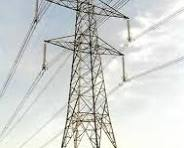
When we build towers on restless ground—sloping hillsides, earthquake-prone valleys, or eroding coastlines—we’re not just choosing a site; we’re entering a silent dialogue with forces that regularly reshape the earth. Conventional designs assume a flat, stable world, but the land rarely cooperates. Topography-smart towers read the terrain’s history and behavior, adapting foundations, materials, and structural rhythms to the land’s own logic.
Instead of bulldozing nature into submission, these designs lean into the contours. Cantilevered platforms step with the slope, minimizing excavation. Root-like pile systems grip unstable soil, mimicking how trees anchor on steep ridges. In seismic zones, flexible joints and tuned mass dampers let the structure sway with the ground’s own frequencies, absorbing energy rather than resisting it. Each solution is a negotiation, not a conquest.
The result is a tower that doesn’t just sit on the land; it collaborates with it. From cliff-hugging observation decks that shift weight dynamically to foundations that heal micro-cracks using groundwater minerals, these projects blur the line between engineering and ecology. They’re a quiet admission that sometimes the smartest move is to listen to what the land has been trying to tell us all along.
Storms, Quakes, and Time: Building Transmission That Endures
Transmission infrastructure faces a relentless battle against the elements. From hurricanes ripping across coastal plains to earthquakes rattling mountain substations, every component must absorb punishment without faltering. Engineers don’t just harden towers and lines—they study soil liquefaction patterns, wind tunnel turbulences, and ice accretion on conductors to design systems that flex rather than break. It’s a quiet discipline where material science meets meteorology, and where a single miscalculation can plunge millions into darkness.
Durability isn’t just about surviving the immediate shock; it’s about aging gracefully through decades of thermal cycling, corrosion, and foundation settlement. Galvanized steel slowly sacrifices itself to rust, insulators accumulate surface contamination that invites flashovers, and conductor sag subtly shifts with each season. Maintenance crews act more like diagnosticians, monitoring creep rates in spliced joints and ultrasonic signatures in submerged pilings to catch degradation long before it becomes failure. The goal is a grid that reaches old age without sudden, catastrophic collapse.
Beyond the physical, there’s a temporal dimension few appreciate. Building for endurance means anticipating not just today’s climate but the next half-century’s extremes—storms intensifying in warming seas, freeze-thaw cycles penetrating deeper into northern permafrost. It demands spare parts strategies that outlive supplier factories and workforce knowledge that survives retirements. True resilience is as much about institutional memory as it is about alloy specifications, weaving together human foresight and engineering rigor to keep power flowing no matter what nature—or time—throws at it.
The Unseen Guardians: Monitoring Tech Inside Every Tower
Tucked away behind sleek steel and concrete, a silent network of sensors and diagnostics keeps modern towers standing tall. Every beam and cable is scrutinized by strain gauges that whisper data to hidden processors, tracking stress and fatigue long before a crack can form. It’s not just structural health being monitored—vibration analyzers listen to the wind’s hum, distinguishing normal sway from dangerous resonance, while thermal cameras peer through walls to catch the faint heat of electrical faults. This watchful tech operates without fanfare, turning skyscrapers, broadcast masts, and wind turbines into living organisms that feel every nuance of their environment.
Inside a tower’s core, environmental probes are just as busy. They measure humidity creeping into concrete pores, corrosion gnawing at rebar, and even the subtle tilt caused by settling foundations. Fiber-optic threads woven into the structure act like nerves, sensing temperature shifts or ground movement with uncanny precision. These tools don’t just record—they learn. Machine-learning models digest years of patterns, predicting when a component will fail instead of merely reacting. Maintenance crews receive alerts not as vague warnings, but as specific instructions: ‘Bolt D43 on the 38th floor has lost 12% of its preload tension. Replace within 72 hours.’
Perhaps the most overlooked guardians are the drone nests perched on rooftops, sealed against the weather until summoned. Equipped with high-resolution cameras and ultrasonic probes, they execute autonomous inspection routines, scanning every inch of a tower’s surface without risking human lives. They can spot paint blisters hinting at hidden rust, measure weld integrity with phased-array sensors, and even apply protective coatings mid-flight. All this data streams into digital twins—exact virtual replicas that let engineers simulate disasters or plan upgrades without touching the physical structure. It’s a marriage of hardware and software that redefines what it means to be “built to last,” and it all unfolds silently, unseen by the people walking beneath.
More Than Steel: How Towers Coexist with Nature
Steel towers might seem like intruders in natural landscapes, but many are designed to blend in rather than dominate. Through careful placement and muted color schemes, they become less obtrusive, almost melting into the horizon during certain times of day. Some are even shaped to mimic the surrounding trees, their latticework echoing the texture of branches against the sky.
Beyond aesthetics, these structures often incorporate features that support local wildlife. Perch deterrents and nesting platforms redirect birds away from dangerous areas, while angled insulators reduce collision risks. In some regions, towers now include built-in bee hotels or bat roosts, transforming from potential hazards into unexpected habitats.
The coexistence goes both ways—nature also reshapes the towers. Moss and lichens gradually colonize the steel, softening harsh lines and turning each structure into a living part of the ecosystem. This slow reclamation reminds us that even the most industrial objects can find harmony with the wild, given enough time and thoughtful design.
The Long Game: Why Lifecycle Costs Reshape Tower Choices
The initial price tag of a tower often grabs attention, but it's a mere snapshot in a much longer financial story. What truly defines the cost of a structure isn't what you pay on day one—it's what you spend over decades. Materials that demand constant upkeep, designs that lock you into inefficient operations, and components that fail early force owners into a cycle of unbudgeted repairs and premature replacements. Smart decision-makers understand that a tower's true affordability reveals itself only when you tally every dollar from construction through eventual decommissioning.
Lifecycle thinking flips the conversation from upfront savings to long-term value. A tower built with premium corrosion-resistant alloys might sting the capital budget, but it sidesteps the relentless drain of rust treatments, coatings, and structural inspections that plague cheaper alternatives. Similarly, integrated systems that simplify maintenance access or enable modular upgrades can eliminate the need for specialized crews and extended downtimes. When you spread these avoided costs over 30 or 50 years, the supposedly "expensive" option often becomes the clear economic winner.
This shift toward lifecycle costing is quietly reshaping industry norms. Asset managers are pressuring engineers to specify materials and configurations that minimize whole-life expenditure rather than just meeting the low-bid threshold. Owners are demanding transparency about projected maintenance intervals and energy consumption before committing to a design. The towers that survive this scrutiny aren't necessarily the ones with the flashiest features or the lowest construction estimate—they're the ones that promise the least financial drama in the decades ahead.
FAQ
The main factors include voltage level, terrain, weather conditions, conductor type, and required clearances. For example, in areas with high wind or ice loads, towers must be structurally reinforced, while in urban environments, compact or aesthetically pleasing designs might be prioritized.
Lattice towers are often more economical for very high voltages and long spans due to their high strength-to-weight ratio and easy assembly. Tubular steel poles offer a cleaner look and are preferred in urban or environmentally sensitive areas, but they can be more expensive and require more complex foundations.
Recent innovations include the use of high-strength weathering steel to reduce corrosion, advanced foundation designs like helical piles for poor soils, and real-time monitoring sensors that detect structural strain or vibration. These help utilities address problems before failures occur, minimizing outages during storms.
Yes, modern designs consider visual impact, wildlife protection, and land use. For instance, towers can be painted to blend with the skyline, insulated to prevent bird electrocution, and installed with minimal footprint to preserve vegetation. Some projects even use monopole structures with spiral dampers to reduce visual clutter.
Full-scale testing facilities simulate extreme wind, ice, and seismic conditions to verify tower designs before deployment. These tests validate structural integrity and identify potential weak points, ensuring that towers meet international standards and perform reliably over their lifespan, which can exceed 50 years.
With renewables often located in remote or rugged areas, new tower designs focus on lightweight, modular structures that are easier to transport and assemble. Some concepts, like Y-shaped poles or portal towers, reduce the need for large foundations and can be installed using helicopters, speeding up connections from wind or solar farms to the grid.
Designs with corrosion-resistant coatings, accessible climbing steps, and integrated platforms make inspections safer and faster. Additionally, dampers to reduce conductor vibration and spacers to prevent galloping can lower long-term maintenance costs and extend the life of both towers and conductors.
Engineers perform life-cycle cost analyses that consider not just initial material and construction expenses but also long-term maintenance, land acquisition, and outage risks. For example, a more expensive galvanized steel tower may be chosen over a painted option if it drastically reduces future repainting in a corrosive coastal environment.
Conclusion
Modern transmission towers are no longer just static steel frameworks; they've evolved into adaptive, resilient systems engineered for reliability in the face of extreme conditions. Next-generation materials like high-strength steel alloys and advanced composites are replacing conventional steel, allowing for lighter yet stronger structures that resist corrosion and fatigue. But material innovation alone isn't enough—the land itself demands smarter designs. In rugged or ecologically sensitive terrain, topography-smart towers use micro-pile foundations and adjustable leg extensions to minimize grading and preserve the natural landscape. These designs flex with the environment, reducing construction impact while maintaining structural integrity, even in seismic zones or hurricane-prone regions.
Beyond brute strength, long-term performance depends on invisible intelligence. Embedded sensors continuously monitor strain, tilt, and temperature, transforming each tower into a self-reporting node that flags issues before they escalate. This proactive maintenance avoids catastrophic outages and extends service life. Equally critical is the growing emphasis on coexistence: towers are rerouted or elevated to safeguard wildlife corridors, and some integrate perches or insulating covers to protect birds. These choices aren't just environmental gestures—they’re cost-driven. Utilities now evaluate lifecycle costs from manufacturing through decommissioning, and the data favors designs that balance upfront investment with decades of reliability. In the end, the best tower solutions aren't simply built; they're continually refined through a lens of resilience, ecology, and economic sense.
Contact Us
Contact Person: antor khan
Email: [email protected]
Tel/WhatsApp: 8613863903569
Website: https://www.qdabtower.com/