
Walking Furnace in China: Innovation and Industrial Applications
2026-07-24
China’s industrial landscape is being reshaped by a quiet revolution on the factory floor—the walking furnace. Long seen as just another heat-treatment tool, these systems are now emerging as pivotal enablers of efficiency and precision in sectors from automotive to aerospace. In this blog, we explore how innovation is redefining their role, with insights drawn from real-world applications—and why industry leaders turn to THINKING-LONG for the expertise to stay ahead.
Walking Furnace Breakthroughs Reshaping Metal Processing
Modern walking beam furnaces have moved beyond simple conveying mechanisms, turning into highly adaptive thermal systems that can juggle multiple steel grades and dimensions in a single production run. The latest designs incorporate segmented walking beams with independent stroke and speed controls, allowing operators to fine-tune residence times for each slab without touching the overall cycle. This means a mixed batch of stainless, carbon, and HSLA grades can all exit at optimal forming temperatures, something that older pusher-style furnaces could only dream of. Inline thermal imaging now feeds real-time data to these smart walking systems, adjusting lift and travel motions on the fly to eliminate hot spots and prevent skid marks that once plagued high-strength sheet products.
Energy recovery has taken a leap forward too, with regenerative burners and advanced flue gas routing that reclaim heat right where it’s needed. Instead of just preheating combustion air, some walking furnaces now channel waste heat into the discharge zone to keep the tail end of the soak cycle steady, cutting gas consumption by up to 20 percent compared to legacy beam furnaces. Electric heating elements are also starting to appear in zones where tight temperature uniformity is critical, giving mills the ability to switch fuels or blend energy sources depending on grid conditions and carbon targets. These hybrid models blur the line between traditional reheat furnaces and continuous annealing lines, opening doors to in-line heat treatment steps without adding floor space.
Maintenance and uptime have also benefited from a quiet revolution in walking furnace design. Water-cooled support structures are being replaced with high-temperature alloys and ceramic composite skids that shrug off scale buildup and thermal shock, drastically reducing the need for weekly cleanouts. A few mills are even experimenting with segmented refractory linings that can be swapped out while the furnace stays hot, turning what used to be a three-day cooldown into an eight-hour partial reline. Combined with predictive analytics that monitor beam vibration and seal wear, these breakthroughs keep the walking furnace running for months between planned stops, reshaping how mills think about bottleneck management in hot rolling campaigns.
Inside China’s Next-Gen Walking Furnace Innovation
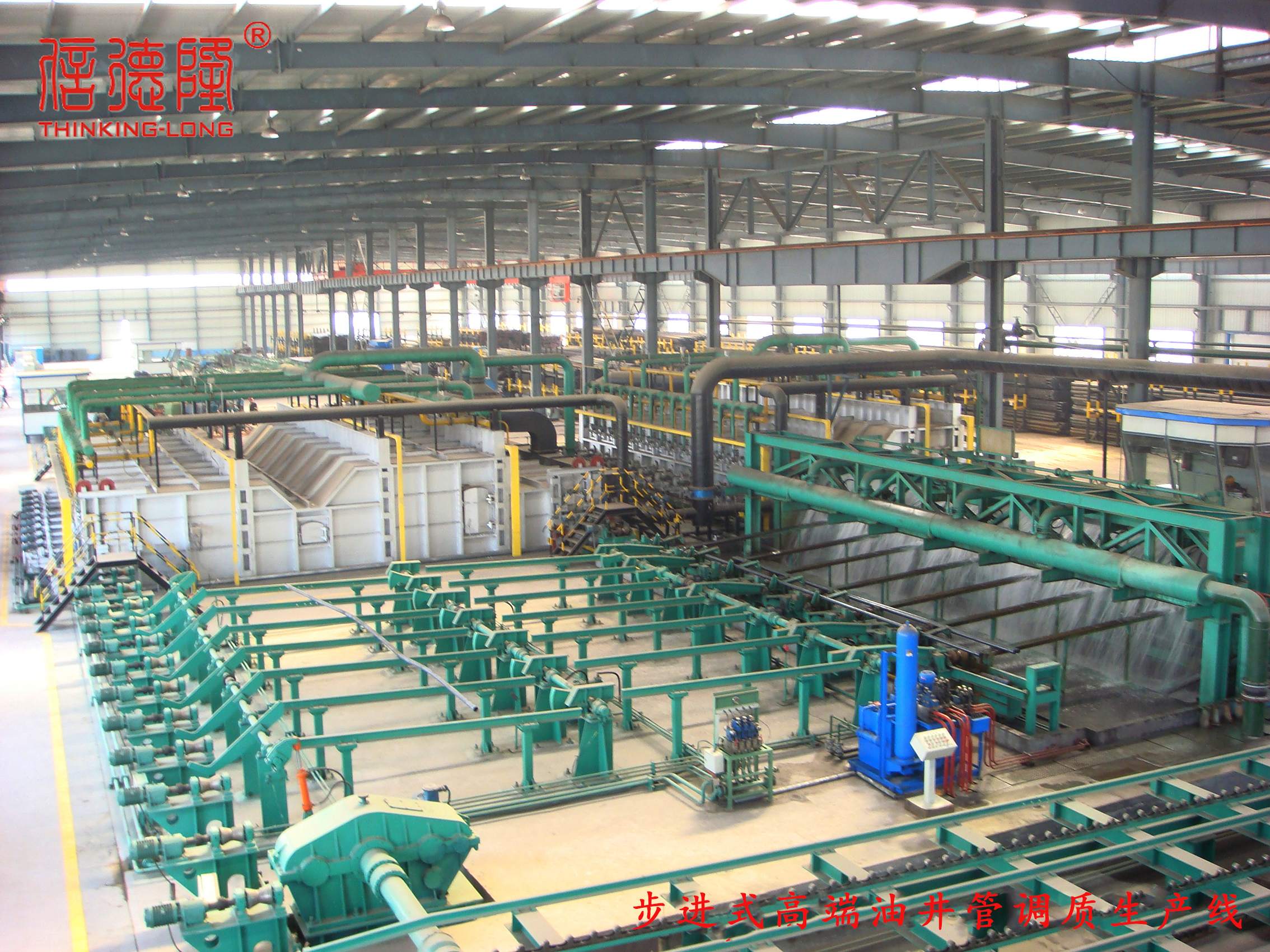
The latest generation of walking furnaces sets itself apart by reimagining how metal billets are moved and heated simultaneously. Instead of the jerky motions of older pusher systems, the walking beam mechanism uses a subtle lift-and-advance rhythm that reduces surface damage and ensures each slab absorbs heat with remarkable evenness. This precision comes from independent hydraulic controls on the moving and stationary beams, which can be adjusted in real time to match the exact dimensions and grade of the steel passing through.
What truly defines this innovation is the way combustion and heat transfer have been flipped on their head. Advanced regenerative burners now reclaim up to 90% of energy from exhaust gases, preheating incoming combustion air to temperatures that dramatically cut fuel consumption. Paired with a zoned temperature control that learns from thermal imaging feedback, the furnace can maintain a perfectly stable atmosphere even when production speeds shift suddenly. Operators talk about how the burners almost seem to “breathe” with the load, ramping up and down without the typical thermal overshoot that plagues older designs.
Maintenance wisdom has also been baked into the architecture, challenging the belief that high-performance gear must be delicate. The refractory lining uses advanced low-cement castables that resist spalling under rapid temperature swings, while the walking beam support rolls are sealed against scale infiltration with a labyrinth-plus-purge system that extends service intervals by months. One engineer described watching the furnace operate at full tilt, the massive beams swinging in a near-silent arc, as proof that heavy industry can be both brutally powerful and strangely elegant.
Energy-Efficient Walking Furnaces: A Greener Path for Industry
For decades, walking beam furnaces have been the backbone of steel reheat operations, meticulously moving slabs and billets through high-temperature zones to achieve uniform rolling temperatures. Yet their appetite for energy has often been staggering, gulping natural gas and electricity at rates that strain both operational budgets and environmental commitments. As industries pivot toward cleaner production, the spotlight has turned to re-engineering these giants—not merely for throughput, but for a drastically lighter carbon footprint. The push isn't just about incremental tweaks; it's a fundamental rethinking of how heat is generated, contained, and reused within the furnace envelope.
Modern energy-efficient walking furnaces integrate a cascade of innovations that slash fuel consumption without compromising metallurgical quality. Regenerative burners paired with intelligent air-fuel ratio controls ensure near-complete combustion, while advanced ceramic fiber linings trap heat that would otherwise escape through the shell. Waste heat recovery systems now channel exhaust gases to preheat combustion air, effectively recycling thermal energy that once vanished up the stack. Coupled with real-time digital twins that adjust zone temperatures based on load and product mix, these furnaces can achieve double-digit reductions in specific energy use. The result is a quieter, cooler plant floor where each ton of steel carries a smaller environmental toll—a tangible step toward sustainable manufacturing that doesn't sacrifice the bottom line.
Automation Trends in Chinese Walking Furnace Systems
China’s walking furnace landscape is undergoing a quiet but profound shift, moving beyond basic PLC control toward fully integrated intelligent systems. Leading steel producers are now demanding furnaces that self-adjust heating curves based on real-time billet dimensions, steel grades, and downstream mill pacing. This is no longer about simply replacing manual valves with actuators—it’s about creating a responsive thermal environment where combustion air, fuel flow, and walking beam sequencing all harmonize through advanced model predictive control algorithms. The drive stems from a need to slash energy costs while meeting increasingly strict emissions standards, pushing engineers to explore cross-coupled optimization between furnace zones that were previously treated as independent.
One standout trend is the fusion of digital twin technology with in-situ laser-based gas analyzers. Instead of relying on periodic O2 trim adjustments, plants are now streaming high-fidelity atmosphere data into virtual replicas of their walking furnaces. These twins run what-if scenarios in parallel with actual production, predicting scale formation and decarburization depth before a billet ever exits the charge end. The payoff comes in the form of yield improvements that were unthinkable a decade ago—some sites report a 0.3–0.5% reduction in metal loss, which for a medium-sized specialty steel mill translates to millions of yuan in annual savings. The data pipeline is built not around proprietary black boxes, but on open-architecture edge gateways that let mill engineers customize dashboards without vendor lock-in.
Looking ahead, the conversation is turning toward autonomous walking furnaces capable of unsupervised operation during night shifts. Chinese research institutes are field-testing neural network controllers trained on years of historical cycle data, enabling the system to recognize imminent roller table failures or burner tip clogging from subtle vibration signatures and flame ionization signals. Maintenance is shifting from calendar-based teardowns to predictive interventions, with operators receiving anomaly alerts directly on their mobile devices. This move toward lights-out furnace operation is not just a technical ambition; it’s becoming an economic necessity as skilled combustion engineers retire and younger talent gravitates toward data-centric roles in smart manufacturing hubs.
Real-World Applications: Walking Furnaces in Action
Walking furnaces quietly power the backbone of modern steelmaking. Inside a hot strip mill, you’ll find a walking beam furnace moving slabs — some weighing 30 tons — through a precisely controlled heating tunnel. The beams lift, advance, and lower in a gentle arc that keeps the steel surface pristine, minimizing skid marks that would otherwise downgrade the coil later. At a facility in Indiana, operators tweak gas flows and walking cycles in real time, ensuring each slab hits the rolling line at a uniform 1250 °C despite variations in thickness or alloy. It’s that consistency that enables the production of high-strength automotive steels down to 1 millimeter thick, something no batch furnace could ever pull off.
Forging shops rely on walking furnaces to feed their presses with less drama. Consider a titanium forging plant supplying aerospace rings: billets enter at room temperature, shuffle through zones of radiant heat, and emerge glowing, ready for the die. Because titanium’s high strength depends on staying within a narrow forging window, the walker’s timed advance avoids cold shuts or grain growth — defects that would scrap a $20,000 part. On the shop floor, you might see a supervisor adjust an individual beam’s speed to stagger deliveries, matching the pace of the hammer operator. This choreography, refined over decades, transforms what could be chaos into a seamless flow of red-hot metal.
Beyond heavy industry, walking furnace technology has crept into surprising places. Ceramic manufacturers use scaled-down versions to fire kiln furniture uniformly, preventing warping in the delicate honeycomb cores of catalytic converters. One glass toughening plant near Düsseldorf replaced its conventional tempering line with a walking beam setup to handle ultra-thin architectural glass — the furnace gently “steps” each sheet through the thermal shock cycle, producing panes that meet hurricane codes without optical distortion. Even in a research setting, a miniature walking furnace cycles samples automatically through vacuum and inert gas pulses, simulating millennia of thermal aging for battery material tests. The core idea — precise, repeatable movement — keeps finding new uses where traditional methods fall short.
What’s Next for Walking Furnace Technology in China?
Walking furnace technology in China is poised for a transformative leap, driven by the dual pressures of stricter emissions regulations and the steel industry's push toward carbon neutrality. Future designs will likely abandon conventional gas-fired burners in favor of hybrid systems that integrate hydrogen-based heating with electric induction modules, allowing plants to dynamically switch energy sources based on real-time grid carbon intensity. This shift not only slashes CO₂ output but also opens opportunities for waste heat recovery systems that could repurpose thermal energy for on-site power generation or district heating, turning the walking furnace from a mere production tool into an integrated energy hub within the steelmaking ecosystem.
Beyond the hardware evolution, digital twins and edge AI are set to redefine operational control. Chinese manufacturers are already piloting smart walking furnaces that employ thousands of embedded sensors to create high-fidelity virtual models, capable of predicting slab temperature gradients with a deviation of less than 2°C. These systems can autonomously fine-tune beam motion, residence time, and atmosphere composition to optimize metallurgical quality while minimizing scale formation and fuel consumption. As 5G connectivity becomes ubiquitous on mill floors, remote operation and predictive maintenance will become standard, enabling a single engineer to oversee multiple furnaces across different facilities from a central command center.
Looking further ahead, China’s walking furnace sector is expected to embrace modularity and prefabrication, cutting installation lead times by up to 40%. Novel refractory linings made from high-entropy ceramics or additively manufactured lattice structures will extend campaign lives dramatically, reducing downtime and lifetime costs. Simultaneously, tighter integration with continuous casting and rolling mills through advanced model predictive control will enable the elusive goal of endless strip production, where the walking furnace acts as a just-in-time thermal buffer rather than a bottleneck. This vision, once aspirational, is now within reach thanks to sustained investment in R&D and a domestic supply chain that has matured beyond mere imitation to genuine innovation.
FAQ
A walking furnace is a continuous heat-treatment system where the workload moves through the heating chamber in a step-by-step motion, rather than staying static or rolling on a conveyor. Unlike batch furnaces that process one load at a time, the walking mechanism allows for a steady flow of material—typically slabs, billets, or bars—while maintaining precise temperature control and reducing mechanical shock to the product.
China's rapid growth in steel, aluminum, and automotive manufacturing created huge demand for efficient thermal processing. Domestic engineering firms and research institutes invested heavily in improving walking-beam and walking-hearth designs, focusing on energy efficiency, automation, and integration with rolling mills. Government policies supporting advanced manufacturing and lower-carbon technologies further accelerated homegrown R&D, making China both a major user and exporter of these systems.
Several advancements stand out: regenerative burners that recover exhaust heat to preheat combustion air, yielding fuel savings of 20–30%; intelligent control systems using real-time thermal imaging and AI to adjust heating curves; modular refractory linings that extend campaign life; and hybrid heating solutions that combine electric induction with gas firing for tighter temperature uniformity, especially for specialty alloys.
The primary users are steel mills for reheating slabs before hot rolling, forging plants heating ingots for press work, and non-ferrous metal producers processing aluminum or copper alloys. They're also found in automotive part forging, heavy machinery manufacturing, and increasingly in advanced material production, such as titanium for aerospace, where uniform heating is critical.
By operating continuously, they minimize idle fuel consumption compared to batch furnaces. Advanced combustion systems cut emissions, and the walking mechanism reduces scale formation on steel surfaces, improving yield and reducing waste. Some newer installations capture waste heat for plant-wide heating or power generation, pushing overall thermal efficiency above 70%, which aligns with China's carbon-neutrality goals.
Common issues include mechanical wear on the walking beams, refractory degradation from thermal cycling, and maintaining atmosphere control to prevent decarburization or scaling. Chinese firms are tackling these by adopting predictive maintenance with IoT sensors, using high-strength alloy steels for moving components, and developing dynamic atmosphere control models that adjust gas mixtures based on the material grade and thickness being heated.
Conclusion
China’s walking furnace technology has undergone a quiet revolution, moving from incremental upgrades to breakthroughs that fundamentally reshape metal processing. The latest designs integrate advanced combustion control and modular construction, allowing for precise temperature uniformity across massive slabs—critical for high-end automotive and aerospace alloys. At the heart of these systems is a shift toward intelligent thermal management, where real-time sensor networks adjust gas flow and walking beam speed automatically, minimizing oxidation and decarburization. This next-gen approach, pioneered in domestic R&D centers, combines triple-flue heat recovery with lightweight refractory linings, pushing thermal efficiency above 70% while slashing footprint. As a result, mills in Hebei and Jiangsu now achieve throughput gains of 15–20% without expanding facilities, proving that innovation isn’t just about raw capacity but smarter use of every joule.
Beyond the hardware, Chinese walking furnaces are carving a greener path through deep energy optimization and automation convergence. Regenerative burners paired with AI-driven load forecasting have cut gas consumption per ton by nearly a quarter in some plants, aligning with national carbon neutrality goals. The automation story is equally compelling: unmanned charging and discharging, laser-based slab tracking, and predictive maintenance algorithms now run 24/7, reducing human error and downtime. Real-world applications highlight this hybrid vigor—a specialty steel producer in Shandong slashed scale formation by 30% after retrofitting their walking beam line with dynamic atmosphere control, while a Changjiang area mill operates a fully autonomous furnace cluster feeding three rolling stands. Looking ahead, the trajectory points to digital twins that simulate wear and thermal stress, hydrogen-ready burners for zero-carbon reheating, and deeper integration with Industry 4.0 ecosystems, cementing China’s role as both a major adopter and innovator in walking furnace technology.
Contact Us
Contact Person: Qian Xijun
Email: [email protected]
Tel/WhatsApp: 8613961736750
Website: https://www.thinkinglong.com/