
Wholesale PP Cream Jars: A Complete Buyer's Guide for Bulk Packaging
2026-10-26
For any cosmetics brand or formulator sourcing bulk packaging, the choice of cream jars can make or break both product appeal and bottom line. This guide cuts through the noise, covering everything you need to know about wholesale PP cream jars—from material grades and closure options to minimum order quantities and hidden cost drivers. As a leading manufacturer, Zhejiang Haitong Plastic Industry Technology Co., Ltd. brings decades of injection molding expertise to the table, ensuring you get durable, customizable jars at scale. Read on to avoid common procurement pitfalls and discover what truly matters when buying in bulk.
Why Polypropylene Beats Acrylic and PET for Thick Creams
Thick creams are unforgiving on rigid plastics: they cling to surfaces, expand and contract with temperature, and often carry oils that slowly degrade weaker polymers. Polypropylene handles this better than acrylic and PET because it resists stress cracking and doesn't become brittle when exposed to fatty formulations. Acrylic, despite its clarity, tends to craze or develop micro-fissures when in constant contact with lipid-rich creams, while PET can suffer from environmental stress cracking around the neck and threads, especially if the jar is squeezed or dropped.
Flexibility also matters more than most people realize. A thick cream doesn't pour — it gets scooped, squeezed, or shaken out, which puts repeated mechanical strain on the container walls. Polypropylene has a natural hinge-like fatigue resistance, so it can flex thousands of times without losing shape or splitting. PET is stiffer and more brittle in comparison, and acrylic is even worse; it's rigid to the point of being unforgiving. Over time, a PET jar holding a dense body butter may develop hairline cracks at the corners, while a polypropylene jar simply absorbs the stress and springs back.
Then there's the sealing and compatibility factor. Polypropylene can be molded with a slightly soft, waxy surface that forms a better friction fit with thick creams than the slicker surfaces of PET or acrylic. That means less product smeared around the rim, fewer air pockets, and a more reliable seal without needing an extra liner. Add in the fact that polypropylene is lighter and typically less expensive to mold into complex, thick-walled shapes, and it becomes the obvious choice for brands that don't want to compromise on durability or shelf appeal.
Choosing the Right Neck Finish Is a Detail Most Buyers Overlook
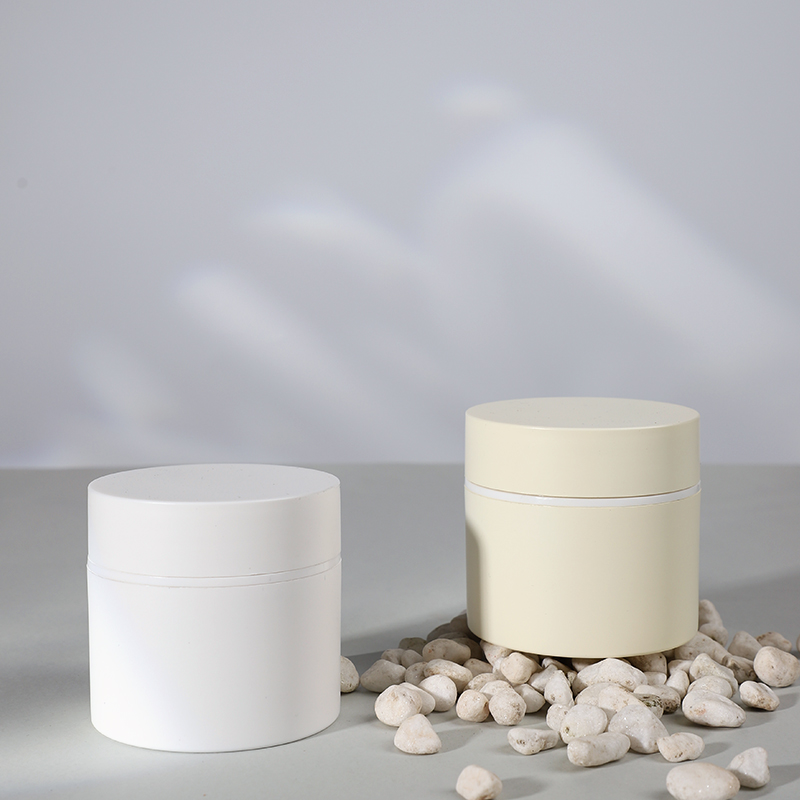
A glossy neck might catch your eye under showroom lights, but after twenty minutes of playing in a warm room, that same finish can turn sticky and slow your hand down. Satin and matte finishes don't have that problem—they let your palm glide up and down the neck without drag, which matters far more than most first-time buyers realize.
There's also the question of durability and feel over time. Some satin finishes wear through in high-contact areas after a year or two, leaving a patchy, semi-gloss look that some players love and others hate. If you prefer a consistent appearance, a thin gloss neck that's been lightly sanded from the factory can offer a good middle ground: smooth enough for fast playing, but tough enough to keep its looks.
Before you commit, spend a few minutes running your thumb along the back of the neck with your eyes closed. If the finish feels like it's working against you, it probably will during longer sessions, and no amount of polish or cleaner will change that fundamental mismatch.
How Many Jars Should You Order Without Overstocking?
Finding the right jar quantity starts with understanding your actual usage rhythm. Look back at the past three months of kitchen activity—how quickly did you empty the last jar of pasta sauce, the jar of pickles, or that jar of overnight oats? Most households overestimate how fast they go through jars because they remember the busy weeks and forget the quiet ones. Instead of guessing, track one or two staple jars for a couple of weeks. You'll likely notice a pattern: maybe you finish a medium jar of tomato sauce every nine days, not every five. Use that real number as your baseline.
Once you have a baseline, build in a small buffer for unexpected guests or recipe experiments, but resist the urge to double it. A good rule is to order one extra jar beyond what you expect to use within your normal restocking window. If you normally buy three jars a month, order four. That extra jar sits comfortably in the pantry without creating a tower of glass that clutters shelves and eventually gets forgotten behind newer purchases. Jars are bulky and heavy—over-ordering not only wastes money but also eats up storage space that could hold other essentials.
Finally, consider jar size and shelf life. A large jar of sauerkraut might last months, while small spice jars empty quickly but take up little room. Match the quantity to how long the contents stay fresh and how often you truly reach for that item. If you only use capers once a month, ordering a six-pack is never wise, no matter the discount. Stick to small batches for occasional ingredients and larger batches only for daily staples. This way, you keep your kitchen functional, your shelves light, and your budget sensible.
Supplier Red Flags Experienced Buyers Check Before Signing
Experienced buyers rarely take a quotation at face value. They read the rhythm and wording of a supplier's replies. When a factory keeps dodging direct questions about raw material origins or production scheduling, or waves off detailed inquiries with an easy "no problem," that often says more than a glossy company profile. Dependable suppliers tend to volunteer production line photos, short videos, or an invitation to visit the floor, rather than recycling the same template answers.
Another overlooked signal sits between the approved sample and the promise of mass production. Savvy buyers insist that sampling uses the exact same materials and processes as the final run. If the sample is spotless but the supplier gets vague about tolerance ranges, defect rates, or inspection standards for bulk output, delivery dates and quality can slip later. Many old hands also pose questions they already know the answers to, just to see if the supplier tells the truth—like whether a certain component is made in-house or what the real daily capacity is.
Payment terms and paperwork cooperation expose plenty too. A supplier pushing for an unusually high deposit, making third-party factory audits difficult, or whose invoice entity doesn't match the contract name is worth pausing over. Before signing, experienced buyers usually verify export records, check for open legal disputes, and look at how often the company's registration details have changed. If those basics don't line up, even an attractive price isn't enough to justify the risk.
Deciding Between Custom Molding and Stock Jars for Your Brand
When you're standing at the crossroads of custom molding versus stock jars, the decision often comes down to how much your packaging needs to speak without saying a word. Stock jars offer speed and lower upfront costs, but they can leave your brand blending into a crowded shelf. Custom molding, on the other hand, lets you shape every curve and shoulder to match your product's personality—whether that's a modern, angular silhouette or a soft, vintage-inspired profile. The real question isn't just about budget; it's about whether your brand can afford to look like everyone else.
One overlooked factor is the long-term flex: stock jars come with fixed dimensions, so if you tweak your formula or want a different fill level later, you might be stuck redesigning your label or switching suppliers. Custom molds, while more expensive to create initially, give you control over headspace, wall thickness, and even the texture of the glass or plastic. That control can translate into a better user experience—think a jar that's easier to grip, or a lid that snaps on with a satisfying precision. If your product relies on tactile appeal or a unique dispensing method, custom is often the only way to get there.
But don't assume custom always means a six-month wait and a five-figure tooling bill. Some manufacturers now offer semi-custom options, like stock jar bodies with customizable caps or embossed bases, which can bridge the gap. The key is to audit your brand's trajectory: if you're testing a small-batch idea, stock jars let you fail fast without bleeding cash. If you're launching a flagship line that needs to anchor your identity for years, investing in a custom mold might be the single most durable marketing decision you make.
Simple Drop Tests and Leak Checks That Save Returns
A product that arrives dented, cracked, or leaking is an instant return—and often a one-star review. Simple drop tests and leak checks take only a few minutes per batch, yet they catch weak seals, flimsy corners, and caps that loosen in transit. You don't need special equipment; just use the same box and bottle you plan to ship.
For drop tests, hold the package at waist height and let it fall flat, then on each edge and corner. Listen for rattles, look for crushed panels, and open the box to inspect the product. For leak checks, fill the container, cap it tightly, and invert it over a paper towel for thirty seconds. Give it a few firm shakes and then squeeze the sides—any damp spot means the seal needs work.
If something fails, don't guess. Reinforce the weak spot with better tape, add an extra layer of bubble wrap, or switch to a cap with a foam liner. Retest until it passes. That small loop of testing and fixing will save you from processing returns, refunding shipping, and losing customers who never come back.
FAQ
Look beyond the unit price. Ask for a pre-production sample to check wall thickness, thread consistency, and lid torque. A jar that feels flimsy or cross-threads easily will cause returns, not savings.
Not automatically. Polypropylene is generally inert and works with most creams and gels, but you still need to confirm the resin grade is food or cosmetic grade and ask for migration testing if your formula contains essential oils or active acids.
The sweet spot for body butters and masks is usually 50ml to 200ml. Eye creams and samples run 5ml to 15ml. Buying one size for everything can hurt your margins because you pay for container volume you don't need.
Request jars with a thick shoulder and a liner that compresses evenly. Ask the supplier to perform a drop test at different temperatures. PP becomes more brittle in cold conditions, so a lid that survives a warehouse may fail in a refrigerated delivery.
Yes, if you stick to silkscreen printing, labeling, or colored resin on existing molds. Custom molds only make sense when you need a unique shape or are ordering hundreds of thousands of units. Ask about cavity counts to understand why mold fees vary.
For standard jars from an in-stock mold, expect 15 to 30 days after artwork approval. Custom colors or special liners can add 10 to 15 days. Prototyping and mold adjustments often take longer than production itself, so don't schedule your filling date too tightly.
Request a third-party inspection report for raw pellets, not just finished jars. Ask if they use virgin PP or regrind; a low price often means recycled material with inconsistent color and weaker stress crack resistance. Also confirm the factory's cleanroom or dust-control process if you're filling in a controlled environment.
For dense formulas, a wide-mouth jar with a screw-on lid and a PE foam liner holds up better than a snap-top. If you want a luxury feel, choose a double-wall PP jar with a matte outer layer and glossy inner cup, but test that the two layers don't separate after repeated opening.
Conclusion
When sourcing wholesale PP cream jars, the material choice alone sets the tone for your entire packaging strategy. Polypropylene outperforms acrylic and PET for thick formulations because it withstands repeated squeezing, temperature shifts, and the heavy oils found in rich creams without cracking or hazing. Yet most buyers get so fixated on the jar body that they overlook the neck finish—a small detail that determines whether your lid seals snugly or leaks during shipping. Pair the right neck spec with a realistic order volume: calculating your monthly sales velocity plus a 15% buffer keeps you from tying up cash in pallets of dead stock, while still qualifying for bulk discounts.
Beyond the specs, experienced buyers vet suppliers by testing samples for warped threads, inconsistent wall thickness, and vague answers about resin sourcing. A simple drop test from waist height onto concrete and a fill-and-invert leak check can eliminate most return risks before you sign a purchase order. Finally, decide early whether stock jars fit your brand or if custom molding justifies the tooling cost—if your annual volume exceeds 10,000 units and you need a unique silhouette, custom wins. Otherwise, a well-chosen stock jar with a custom label gives you speed to market without the upfront investment.
Contact Us
Contact Person: Kara Yang
Email: [email protected]
Tel/WhatsApp: 8618857568397
Website: https://www.haitongplastic.com/