
Wholesale VoWiFi & VoLTE Deployment: A Step-by-Step Implementation Guide
2026-05-18
Ever wondered how wholesale carriers can rapidly launch high-quality voice services over LTE and Wi-Fi without massive infrastructure costs? This guide walks you through a practical, step-by-step deployment of VoLTE and VoWiFi in a wholesale environment. With solutions from IPLOOK, operators can bypass traditional complexity and accelerate time-to-market, all while delivering crystal-clear calls and seamless handovers. Whether you're an MNO, MVNO, or service provider, get ready to unlock new revenue streams and enhance subscriber experience with a future-proof voice core.
Network Audit: Pinpointing Readiness for Voice Evolution
Moving to a voice-first architecture isn't simply about flipping a switch—it demands a clear-eyed assessment of your existing infrastructure. A focused network audit uncovers the gaps between current capabilities and what modern real-time communication requires. This process goes beyond checking bandwidth availability; it probes how your switches, routers, and firewalls treat voice packets under load, revealing whether they're ready for the stringent demands of low-latency audio streams.
The audit zeroes in on metrics that matter most for voice clarity, such as jitter, packet loss, and end-to-end delay. By simulating voice traffic across key network segments, it exposes hidden choke points and misconfigurations—like improper QoS settings or outdated firmware on core devices—that degrade call quality. The result is a prioritized list of remediation steps, from traffic shaping adjustments to hardware refreshes, ensuring your network can handle increased media flows without compromising existing critical services.
IMS Core Design for Scalable Wholesale Voice
The shift toward wholesale voice services demands an IMS core architecture that can gracefully absorb unpredictable traffic spikes while keeping per-minute costs vanishingly low. Instead of relying on monolithic session control, the design pushes state to the edge and centers on a lightweight, transaction-oriented core. Call state lives in distributed memory stores rather than being pinned to a single node, so any SIP proxy or application server can pick up a dialog mid-stream. This decoupling means scaling becomes a matter of adding off-the-shelf compute instances behind a load balancer, with session border controllers handling media anchoring and topology hiding independently from signaling logic.
Routing intelligence takes center stage in a wholesale environment where each call might traverse multiple partner networks. The core embeds a real-time policy engine that evaluates call characteristics—source, destination, number portability data, time of day—against dynamic rule sets. Carriers can inject custom routing logic without touching the underlying infrastructure, using a API-driven approach that blends pre-configured templates with just-in-time lookups to external databases. Redundancy is built into every layer: DNS-based service discovery automatically steers traffic away from impaired nodes, while parallel transaction processing ensures that a single component failure never cascades into a service outage.
Modern wholesale IMS cores increasingly take advantage of containerized network functions running on bare-metal Kubernetes clusters, trading traditional five-9s hardware for software-defined resilience. Stateless processing nodes can be destroyed and re-spawn in seconds, allowing operators to ride out demand peaks with elastic capacity instead of over-provisioning. Observability pipelines stream call detail records and quality metrics to centralized analytics platforms, giving wholesale providers immediate insight into per-route margin and partner performance. The result is a voice core that behaves less like a legacy switch and more like a cloud-native application, able to serve hundreds of millions of minutes a month without the weight of legacy signaling protocols slowing it down.
VoWiFi Integration: Seamless Handover, Ironclad Security
Blending voice services with Wi-Fi networks is no longer a luxury but a necessity for modern communication. The core challenge lies in maintaining a call as a user moves from a cellular tower to a Wi-Fi access point without a single dropped syllable. This handover must be fluid, almost imperceptible, leveraging technologies that predict signal degradation and pre-emptively establish the new path. The result is a conversation that flows uninterrupted, whether you’re walking from your driveway into your living room or transitioning between floors in an office building.
Yet, seamlessness is worthless without a fortress around the data. Voice over Wi-Fi introduces new threat vectors—rogue access points, man-in-the-middle attacks, and eavesdropping on unsecured networks. Robust encryption, mutual authentication between the device and the network core, and constant integrity checks become non-negotiable. The security framework must embed itself deep into the connection, using protocols that cloak the call in layers of protection without adding perceptible latency.
The true art lies in marrying these two demands: a handover so smooth it feels like magic, and a security posture so rugged it withstands sophisticated intrusion attempts. By designing architectures where the client and server negotiate keys mid-handover, operators can preserve call state and confidentiality simultaneously. This dual focus elevates VoWiFi from a convenient fallback to a primary, trusted communication channel.
VoLTE Activation: Tuning for Flawless Call Quality
Activating VoLTE isn’t just a toggle switch; it’s a careful alignment of device capabilities, carrier provisioning, and network-side parameters. The moment you enable it, your phone begins negotiating codec preferences and quality-of-service markers with the tower, a process that can make or break call clarity. Rather than accepting default settings, digging into the hidden radio layer reveals opportunities to tweak jitter buffers and silence suppression thresholds, directly reducing robotic artifacts and cutouts. This hands-on tuning transforms a generic VoLTE setup into a finely tuned instrument, ensuring every syllable arrives crisp and uncolored.
Most users overlook the impact of end-to-end packet prioritization. By adjusting the SIP signaling and RTP media bearer paths independently, you can sidestep congestion that typically muddies voice during high-load scenarios. For example, enforcing a dedicated PDN connection for IMS traffic shields calls from competing apps’ data bursts, creating a consistent stream that feels indistinguishable from circuit-switched reliability. Such granular control demands interfacing with engineering menus or carrier-specific commands, but the payoff is a call that never wavers, even when your data connection is under siege.
Fine-tuning VoLTE also involves audio chain calibration on the device side. Many phones apply aggressive noise suppression that clips speech transients, but deactivating or softening these filters through hidden codec parameters restores natural vocal presence. Likewise, synchronizing sample rates between the microphone path and the encoder prevents periodic clicking often mistaken for network issues. When these adjustments are paired with a fresh carrier profile that updates AMR-WB bitrate tables, the result is a voice quality leap that turns everyday calls into high-fidelity exchanges.
End-to-End Validation: Simulating Real User Scenarios
When teams rely solely on unit or integration tests, they risk missing how components interact under real conditions. End-to-end validation bridges this gap by replicating complete user journeys, from landing on a page to completing a multi-step transaction. Instead of isolated checks, it follows the exact path a person takes, catching issues like broken workflows, inconsistent data flow, or UI glitches that only surface when everything is wired together.
The real value comes from mirroring genuine usage patterns rather than idealised scripts. That means logging in with expired credentials, navigating on a patchy mobile network, or submitting forms with unexpected characters. By varying input data, network speed, and even device orientation, teams uncover edge cases that static test plans can't predict. One overlooked timeout or a button that doesn't render on a small screen can erode trust—these are the details that simulated scenarios expose long before a user reports them.
Yet simulation isn't about covering every possible path; it's about prioritising flows that matter most to the user base. Analysing analytics and support tickets pinpoints where drop-offs happen or where confusion starts. Building test suites around those critical journeys ensures resources are spent on validation that protects the experience people actually have. When done well, this approach doesn't just confirm that features work—it confirms the whole application works the way someone expects when they sit down to accomplish a task.
Operational Handover: Monitoring and Continuous Refinement
Handing over an operational system isn’t the finish line—it’s the starting point for a phase where attention to detail makes all the difference. Once the initial transition is complete, the real work begins with monitoring. This means setting up clear, real‐time visibility into performance, errors, and user behavior. It’s not just about watching dashboards; it’s about understanding what normal looks like so you can spot anomalies before they become full‐blown problems. The team on the receiving end needs to be equipped not just with access, but with context—why certain thresholds exist, where the pitfalls have historically been, and what “success” sounds like when the system is humming along quietly.
Continuous refinement is where many handovers fall short because it’s treated as an afterthought. Instead, it should be baked into the process from day one. This involves establishing feedback loops that aren’t bureaucratic but practical: quick syncs to discuss what’s breaking, what’s confusing, or what could be made simpler. Too often, operational teams inherit systems with a fixed mindset—“it works, don’t touch it”—but that’s a recipe for technical debt and burnout. Encouraging small, incremental improvements keeps the system healthy and the people behind it engaged. Even tiny changes, like clarifying a runbook or tuning an alert threshold, compound into a more resilient operation over time.
The handover document itself should evolve alongside the system. Think of it as a living artifact rather than a static PDF that gets archived the moment it’s signed off. As monitoring surfaces new patterns and refinements are applied, those insights should flow back into the core documentation—not in a separate log that nobody reads, but right where the next person will look. This closes the loop between running the system and understanding it. When done thoughtfully, monitoring and continuous refinement transform a handover from a one‐time event into an ongoing conversation that keeps both the system and the team in sync.
FAQ
It's about setting up voice over WiFi and LTE in a way that lets multiple service providers use the same core network. Instead of each operator building everything from scratch, a wholesale provider runs the infrastructure and sells access, essentially allowing others to offer these calling features under their own brand.
In retail, a single operator manages the entire chain from the radio network to customer billing. Wholesale separates the network operator from the service provider. The wholesaler focuses on building and maintaining the core, while retailers handle branding, sales, and support without worrying about the heavy lifting of infrastructure.
The process typically spans design, integration, and rollout. You start by selecting a compatible IMS core, then tie in the PCRF and provisioning systems. After that comes interconnect setup, quality testing, and finally onboarding retail partners with clear migration paths from legacy services.
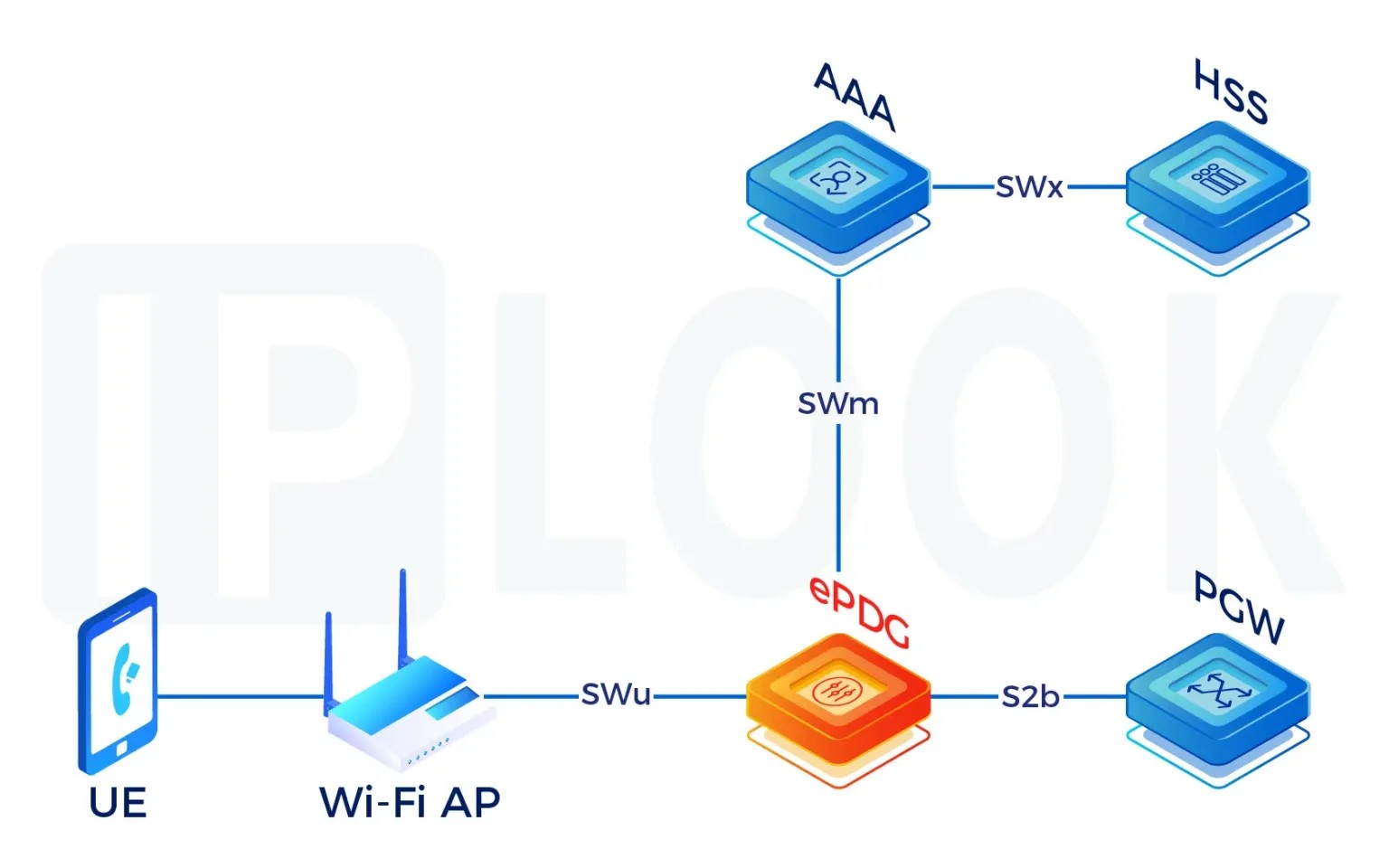
A robust IMS core sits at the center, paired with an evolved packet core for LTE and ePDG for WiFi access. You'll also need a subscriber data management system, a policy controller, and secure gateways for offloaded traffic. Redundancy and geographic distribution are key to handle multiple operators reliably.
Roaming agreements are negotiated with other networks to ensure seamless handovers between WiFi and LTE. For interconnects, you set up SIP trunks to various carriers and implement steering logic that routes calls based on cost or quality, all while maintaining encryption and lawful intercept requirements.
Integration hiccups between existing BSS/OSS and the new IMS are frequent. Handoff reliability between WiFi and LTE often needs tuning. Plus, convincing retail partners to migrate and training their staff can be slower than expected, especially when legacy systems still work fine.
It drastically cuts time to market and capital expenditure. Retailers can focus on customer experience rather than network engineering, and they gain access to advanced voice features without hiring specialized staff. The shared model also spreads maintenance costs across multiple tenants, making upgrades more affordable.
Conclusion
Rolling out wholesale VoWiFi and VoLTE demands a methodical, stage-driven approach that begins with a rigorous network audit. This initial deep dive uncovers everything from radio access bottlenecks and transport latency to device compatibility gaps, laying bare the exact readiness level for voice evolution. Only by mapping these realities can operators avoid costly surprises when the IMS core takes shape. That core design is the heartbeat of the whole project—built for massive scale, it stitches together session control, media handling, and subscriber databases in a way that supports multi-tenancy and elastic growth. Getting it right means VoWiFi integration flows naturally, with seamless handover logic baked in from day one and security mechanisms like ePDG anchoring and IPsec tunneling treated as non-negotiable foundations, not afterthoughts.
Once the architecture stands firm, VoLTE activation shifts the focus to meticulous tuning—codec selection, jitter buffer optimization, and QoS parameter refinement all play a part in delivering crystal-clear calls that feel as natural as legacy voice. But no design survives reality without end-to-end validation; simulating genuine user behavior under load, mobility stress, and edge coverage conditions exposes hidden flaws before they reach live environments. The final handover to operations isn't an endpoint—it triggers a phase of live monitoring where KPI dashboards, anomaly detection, and continuous refinement loops keep voice quality from degrading as traffic patterns evolve. In this interconnected sequence, every step reinforces the next, proving that wholesale voice modernization is less a one-time rollout and more a living system that rewards sustained attention to detail.
Contact Us
Contact Person: Shimmy
Email: [email protected]
Tel/WhatsApp: 85253392231
Website: https://www.iplook.com