
Window Treatments Wholesale: The Ultimate Guide for Bulk Buyers
2026-09-09
Sourcing window treatments at wholesale prices isn't just about cutting costs—it's about finding a partner who understands the balance between durability, design, and bulk logistics. Whether you're outfitting a hotel chain, a residential development, or a retail inventory, the choices you make now ripple through every project. In this guide, we strip away the fluff and walk you through what really matters when buying in volume. And when it comes to reliable, customizable solutions, ROLLERGY has quietly become the name savvy buyers keep on speed dial. Ready to see what separates a smart bulk purchase from a costly mistake?
Understanding Your Bulk Buyer Persona: Who Actually Profits from Wholesale Window Treatments?
Most people assume the retailer takes the biggest cut, but in wholesale window treatments the margin story is more complicated. A contractor ordering 300 identical roller shades for a new apartment building is playing a completely different game than a designer sourcing two custom roman shades for a penthouse. The volume buyer isn't looking for the lowest unit price—they're looking for reliable specs, minimal callbacks, and a supplier who won't leave them hanging mid-project.
The buyers who consistently profit are the ones who pair product with a service. Think of the window treatment installer who buys track systems and fabric by the roll, then charges a combined rate for measurement, fabrication, and installation. That's where the real margin hides. Likewise, procurement managers for hotel chains or senior living facilities lock in annual contracts and often resell the "package" to their own stakeholders at a healthy internal markup.
If you want to serve these buyers well, stop treating every bulk inquiry the same. A design-build firm may pay more for shorter lead times and custom color matching, while a facilities director will sacrifice style for fire ratings and ten-year warranties. Recognizing which persona you're talking to—and what they actually profit from—lets you adjust your wholesale pricing and product mix without racing to the bottom.
Breaking Down the Product Categories: From Blackout Curtains to Motorized Blinds
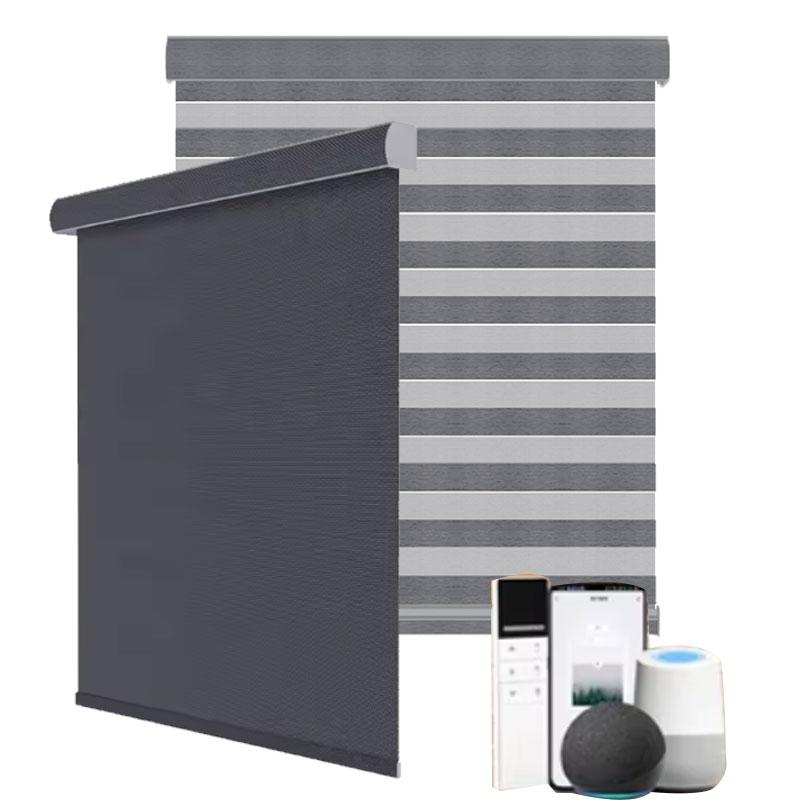
When you start looking at window coverings, the sheer number of options can feel overwhelming. Blackout curtains are the workhorses of the bedroom—they block nearly all light, help with temperature control, and often have a heavy, textured feel that adds a sense of coziness. On the other end of the spectrum, sheer curtains and light-filtering shades soften the sunlight without plunging a room into darkness, making them ideal for living areas where you want privacy but still crave natural brightness. Then there are the in-between choices: thermal drapes, cellular shades, and roman blinds, each with its own balance of insulation and style.
Motorized blinds and shades have moved from luxury novelty to everyday convenience. With a remote, smartphone app, or even voice control, you can adjust the amount of light entering a room without ever getting up from the couch. This is especially useful for hard-to-reach windows, floor-to-ceiling glass, or households with children and pets. Many motorized options now include scheduling features, so your blinds can open gradually in the morning to help you wake up naturally, or close at sunset for privacy. The downside is the cost—motorization typically adds a significant premium—but for those who value convenience or have mobility concerns, it’s often worth the investment.
Beyond the basic split between manual and motorized, there’s a whole world of materials and mechanisms. Faux wood blinds offer the classic look of real wood without warping in humid rooms like bathrooms or kitchens. Vertical blinds, once seen as dated, have been reinvented with sleek fabric panels and modern track systems for sliding glass doors. And for those who want maximum flexibility, layered approaches are becoming popular: pairing blackout roller shades with sheer curtains lets you switch from full darkness to soft diffused light in seconds. The key is to think about how you actually use each room—do you need to sleep in total darkness, reduce glare on a TV, or simply add a decorative touch? Starting from that question makes the category breakdown far less intimidating.
How to Vet a Wholesale Supplier Without Getting Burned
Start by requesting a sample order before committing to any bulk purchase. A supplier who hesitates or refuses to send samples is often hiding inconsistent quality or misrepresented products. Inspect the sample carefully—check stitching, materials, packaging, and any branding elements. This step alone can reveal whether the supplier meets your standards or if you need to walk away.
Next, verify the supplier's business credentials and history. Ask for their official registration number, physical address, and at least three recent references from other buyers. Call those references and ask specific questions about order accuracy, communication speed, and how the supplier handled problems. Cross-check the address using a map service, and look for any negative reports from trade associations or consumer protection agencies.
Finally, structure your first real order in phases. Start with a smaller quantity than you ultimately need, and set clear quality benchmarks in writing before payment. Use a payment method that offers some buyer protection, such as an escrow service or a credit card, rather than a wire transfer. If the supplier pushes for full upfront payment or tries to rush you past these checks, treat that as a red flag and keep looking.
Volume Pricing Tactics: Getting the Best Deal Without Sacrificing Margin
Instead of offering a flat discount once a buyer crosses an arbitrary quantity, structure tiers around your own cost breaks. If shipping a pallet costs you 18% less per unit than shipping individual cartons, let that 18% be the ceiling for the buyer's savings—not a round 20% that quietly eats into profit. Negotiate upward from your floor, not downward from list price, so every "extra" percent has to be earned with a larger order or faster payment terms.
Bundle slow-moving items with volume deals on fast movers. A customer asking for a deep discount on your best-selling SKU rarely cares about margin on the whole basket. Offer the discount only when the mix includes accessories, consumables, or higher-margin variants that balance the blended margin. This keeps the headline price attractive while protecting the overall profitability of the transaction.
Use non-price levers before cutting the unit price. Longer contract commitments, consolidated shipments, reduced return windows, or prepayment can all justify a lower per-unit rate without giving away pure margin. Frame these as trade-offs rather than concessions: "I can get you to that number if we lock in quarterly volumes and net-30 terms." Buyers hear "yes," and you hold the gross profit line.
Customization vs. Stock: What Bulk Buyers Need to Know Before Committing
Bulk purchasing often comes down to a simple question: do you want something off the shelf or made to your exact specifications? Stock items promise speed and lower per-unit costs, but they rarely help you stand out in a crowded marketplace. Customization, on the other hand, turns a commodity into a brand asset—yet it demands more capital upfront and a longer lead time that can disrupt your supply chain if not planned carefully.
The real decision hinges on your sales cycle and margin tolerance. If you’re moving high volumes of interchangeable products, stock inventory avoids the risk of overcommitting to a design that might not sell. But if your customers expect exclusivity or specific performance features, custom runs—even at higher minimum order quantities—can build loyalty that stock products simply cannot match. Always ask suppliers about tooling fees, sample approval processes, and penalty clauses for late delivery before signing any bulk agreement.
A smarter approach for many buyers is a hybrid: start with stock to test demand, then negotiate a custom line once you have consistent order history. This reduces the gamble while giving you leverage to request lower setup costs or staggered production. Whatever you choose, get every specification in writing, because verbal promises about tolerances, materials, or packaging rarely survive the first production run.
The Logistics of Large Orders: Warehousing, Shipping, and Lead Times Explained
Handling a large order isn't just about piling more boxes onto a pallet. It demands a different kind of thinking from the very first confirmation. Warehousing capacity, for instance, becomes a real constraint. You can't simply slot a bulk consignment into whatever shelf space happens to be free. Instead, you need to pre-assign dedicated zones, often consolidating inventory days or even weeks in advance. This means coordinating with your warehouse team to ensure the goods are picked, staged, and ready for loading without disrupting regular order flow. A common mistake is treating a large order as simply twenty small orders stitched together. The reality is that the entire fulfillment path—from receiving to dispatch—needs to be reconfigured around that single, oversized shipment.
Shipping is where many plans unravel. Carriers quote transit times assuming a standard freight profile, but a full truckload or a container of mixed SKUs comes with its own quirks. Loading density, pallet configuration, and even the order in which items are offloaded at the destination can add hidden hours or days. Savvy shippers insist on a detailed loading plan that mirrors the unloading sequence at the buyer's dock. Otherwise, you end up with a crew that has to dig through half the truck to reach the first carton. It's also worth negotiating a defined delivery window rather than a vague “sometime next week.” Large orders don't tolerate ambiguity; every extra day in transit is a day of capital tied up and a day of customer patience wearing thin.
Lead times for bulk orders are often misunderstood because people anchor on the production timeline and ignore the logistics tail. A typical lead time might include two weeks for manufacturing, but then you add three days for quality checks, another two for consolidation at the warehouse, one for loading, and four for road transport. Suddenly a “two-week” product becomes a four-week reality. To avoid that surprise, start communicating the full door-to-door lead time from the very first quote. Break it down into transparent stages—production, QC, warehousing, dispatch, transit—and update the customer at each handoff. This not only sets realistic expectations but also reveals where you can compress time on future orders, such as by staging inventory closer to the buyer's region or scheduling dock slots in advance.
FAQ
Lock down your target customer and the problem you're solving. Are you selling to hotels, interior designers, or property managers? Each group has different expectations for fire ratings, blackout capacity, or noise reduction. Once that's clear, you can ask suppliers for the exact certifications and fabric weights you need instead of letting them steer you toward whatever is overstocked.
Polyester blends with a tight weave hold up well and resist wrinkling in transit. For blinds, aluminum or faux wood slats are less likely to warp than real wood if the container gets humid. Always request a swatch book first and bend, rub, and hold fabrics up to light. If a sample pills or fades after a few weeks on your windowsill, the bulk order will do the same.
Yes, but you have to negotiate mixed pallet allowances upfront. Many factories charge a per-SKU fee when you split a production run. A smarter move is to group your order around shared components, like the same fabric on several curtain lengths or the same headrail across blind widths. That keeps setup costs low while still giving you variety.
Things like palletizing, fumigation certificates, customs brokerage, and warehouse offloading often sit outside the unit price. Also ask about surcharges for cardboard tubes, reinforced corners, or plastic wrapping. A supplier may quote $6.50 per panel, but after mandatory export packaging and a 3% bank transfer fee, the real landed cost might be closer to $8.10.
Ask for a video call on the factory floor, not a pre-recorded clip. Request to see the cutting tables, sewing lines, and coating machines. If they hesitate or say the factory is too busy for a live walkthrough, that's a signal. Another trick: ask for a small change, like different grommet color or a non-standard blind width, and see if the response says 'we need to check with our factory' or 'we can adjust that on line two.'
For standard poly curtains or aluminum blinds, production typically takes 25-40 days after sample approval. Then add 3-7 days for inland freight to the port, plus ocean transit time (15-30 days depending on origin and destination). If you're ordering motorized or custom-printed treatments, add two more weeks. So from sample sign-off, expect roughly 50-75 days to your warehouse, not the 30 days some salespeople promise.
Document everything within 48 hours: photos, measurements, carton labels, and a short video of the defect. Then send a formal claim with a clear dollar figure for repair, replacement, or discount. Don't accept 'we'll make it up on your next order' as the only remedy, because that locks you into another purchase. Good suppliers will offer a credit note or partial refund if you present evidence without emotion.
Conclusion
Bulk buying window treatments isn't about grabbing the cheapest roll of fabric. The buyers who actually make money here fall into a few distinct camps—hotel procurement teams, interior design firms juggling multiple projects, contractors finishing multi-unit builds, and e-commerce sellers who need consistent stock without retail markups. Each has different priorities: a hotel chain may want fire-rated blackout curtains with consistent color across 300 rooms, while an online seller might focus on fast-moving motorized blinds that can be drop-shipped. Understanding which persona you fit shapes every later decision, from product mix to supplier contracts.
On the product side, the range spans basic stock curtains to fully customized, hardwired motorized systems. Stock items are cheaper and ship faster, but customization lets you match exact dimensions, fabrics, and control protocols—critical for high-end residential or hospitality jobs where a mismatch means costly returns. Vetting suppliers goes beyond samples: check their defect rates, ask for references from buyers with similar volume, and test their communication during a small pilot order. Volume pricing should be negotiated on landed cost, not just unit price—factoring in shipping, duties, and warehouse fees. Large orders bring their own headaches: a 40-foot container of curtains can take weeks to clear customs, and lead times stretch if the factory is juggling seasonal demand. Plan warehousing either at a third-party logistics hub or your own space, and build in buffer time for port delays. The buyers who thrive treat wholesale window treatments as a supply chain problem, not just a shopping trip.
Contact Us
Contact Person: Vivien Cheng
Email: [email protected]
Tel/WhatsApp: +86 13751758835
Website: https://www.rollergytech.com/